
No products in the cart.
Games
Best Secret Characters in Indie Games and Why Hidden NPCs Keep Fans Hooked
Introduction
Secret characters have always fascinated players, but in the world of indie games they hold an even greater power. These hidden figures are not simply extra bosses or optional NPCs. They embody mystery, challenge, and storytelling depth that make smaller titles feel larger than life. When fans talk about the best secret characters in indie games, they are celebrating more than a gameplay mechanic. They are pointing to moments of surprise that shaped entire communities.
To decide which characters truly deserve a place on this list, we need clear criteria. Some are included because the conditions to unlock them are so demanding that discovering them feels like an achievement in itself. Others stand out because they add layers of lore that transform a simple adventure into a myth. There are characters remembered for emotional side quests that leave players shaken, and there are those who became cultural icons thanks to the way fans embraced them long after release.
In the sections ahead, you will meet hidden characters who check one or more of these boxes. From The Lost in The Binding of Isaac to Krobus in Stardew Valley, each of them proves that indie developers know how to use secrets not as gimmicks but as lasting experiences. These are the figures that continue to inspire theories, fan art, and passionate discussions, keeping their games alive for years.
Next are the characters that redefine the challenge according to the criteria above.
Characters That Redefine the Challenge
The Lost in The Binding of Isaac
The Lost is arguably the most notorious hidden character in The Binding of Isaac, remembered as both a punishing challenge and a community milestone. Unlike most characters that expand options or add variety, The Lost redefines how the game is played by stripping away the most basic safeguard: health. From the moment it spawns, The Lost has no hit points. A single mistake ends the run instantly, turning every room into a trial of focus and precision.
Unlocking The Lost has gone through two very different phases. In the original Rebirth release, the process was borderline absurd. Players had to perform a strict chain of deaths in the right order: Isaac must die to a Mulliboom, Magdalene must die from her own bomb, Judas must be killed by Mom, and Azazel must fall to Satan. Missing the sequence meant starting over. This secret was so obscure that it spread across forums like a cryptic riddle until the community pieced it together. Later expansions simplified the process. In Afterbirth and beyond, The Lost is unlocked by acquiring the Missing Poster trinket and dying in a Sacrifice Room while holding it. Still harsh, but at least understandable.
The addition of Holy Mantle transformed the character from nearly impossible to brutally fair. Once a player donates 879 coins to the Greed Donation Machine, The Lost begins each run with Holy Mantle, which grants one free hit per room. This change elevated The Lost from a novelty to a viable option, allowing skilled players to demonstrate consistency instead of relying purely on luck.
What cements The Lost’s reputation is not just difficulty but the culture it inspired. Players share stories of their first victories, upload run footage as proof, and even create memes celebrating the ordeal. For many, conquering The Lost is less about finishing a run and more about proving mastery over a game known for its unforgiving nature. The combination of arcane unlock requirements, relentless fragility, and lasting community impact is why The Lost remains one of the best secret characters in indie games.
Reize Seatlan in Shovel Knight
Reize Seatlan is one of the wandering traveler encounters in Shovel Knight: Treasure Trove, a group of optional bosses that appear on the world map after certain stages. Unlike the Order of No Quarter, these travelers are not required to complete the story. They move around the map, and if the player’s path intersects with them, a duel begins. This system makes the fight with Reize easy to miss, since casual players can finish the campaign without ever crossing his path.
Reize’s combat style sets him apart. He wields twin chakrams that bounce and ricochet across the screen, filling the arena with unpredictable projectiles. The fight is more chaotic than most early-game bosses and demands tight reflexes. Winning does not grant a new relic or story advancement, but players earn gold, achievements, and the satisfaction of overcoming a foe designed to push their skills.
What makes Reize notable is his origin. He was added to the game as part of Yacht Club Games’ Kickstarter campaign, based on a character created by a high-tier backer. Instead of being a throwaway cameo, the developers gave him a distinct personality, animations, and a full boss battle. This decision showcased the studio’s commitment to its community and proved how fan-driven projects can enrich a finished game.
Reize later reappears in other campaigns within Treasure Trove, such as Plague of Shadows and Specter of Torment, ensuring that each protagonist can face him in their own storyline. Beyond Shovel Knight, he has even cameoed in other indie titles through collaborations, reinforcing his status as a recognizable figure among indie fans. His unusual origin, combined with challenging gameplay and community-driven fame, secures Reize as one of the most memorable secret characters in indie games.
Characters That Deepen the Lore
The Mask Maker in Hollow Knight
The Mask Maker is one of the most enigmatic figures tucked inside Hollow Knight, hidden away in the winding passages of Fog Canyon. Unlike merchants or quest-givers who clearly influence progression, the Mask Maker does not offer material rewards or alter the player’s abilities. Instead, he provides fragments of dialogue that deepen the game’s overarching themes of identity, survival, and the fragile nature of existence.
Finding him is easy to miss. His workshop sits off the beaten path, and many players complete the game without ever opening his door. The chamber is filled with unfinished masks, lifeless shells, and an atmosphere that feels more like a shrine than a shop. When spoken to, the Mask Maker talks in riddles about how masks define a being’s place in the world, suggesting that without them, creatures lose their identity and purpose.
This cryptic lore resonates with the core design of Hollow Knight. Masks in the game represent health, defense, and life itself. By tying his dialogue to this system, the Mask Maker connects the player’s tangible progress to the metaphysical questions of the story. He never explains everything outright, leaving his words open to interpretation and fueling countless community theories about Hallownest’s true nature.
What makes the Mask Maker stand out among indie secrets is precisely this ambiguity. He is not a boss to conquer or a puzzle to solve but a narrative device hidden in plain sight. For players who discover him, the encounter lingers, prompting reflection on the world they are traversing. This ability to inspire debate and interpretation without offering tangible gameplay benefits elevates the Mask Maker into one of the most memorable secret characters in indie gaming.
W.D. Gaster in Undertale
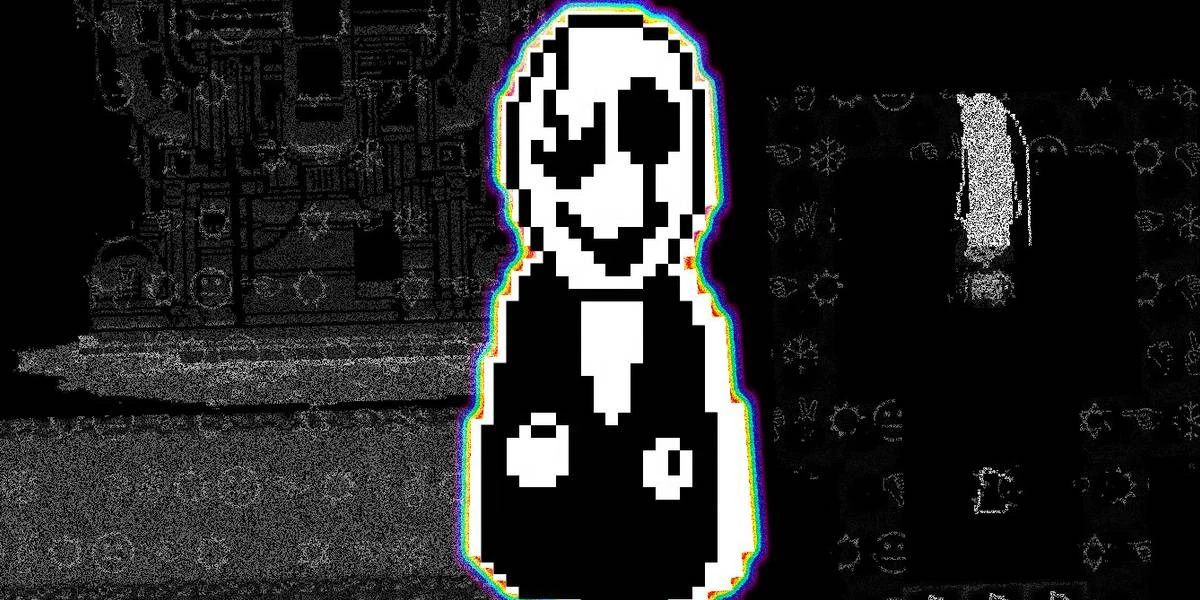
W.D. Gaster is one of the most mysterious figures in Undertale, and he exemplifies how a secret character can become larger than the game itself. Unlike typical hidden NPCs, Gaster cannot be encountered through exploration or optional side quests. Instead, his presence is tied to the game’s underlying code, making him feel more like a ghost embedded in the software than a traditional character.
Unlocking encounters with Gaster is not straightforward. The game uses an internal variable known as the “fun value,” which determines whether rare events will trigger. Only at certain random values can players stumble upon cryptic characters known as Gaster’s Followers, who speak in strange fonts and fragmented sentences. These moments sometimes reference a scientist who “fell into his creation,” hinting at Gaster’s fate. In extremely rare cases, players may be teleported into hidden rooms where more unsettling fragments of his story appear. Because of the randomness, many fans complete dozens of playthroughs without ever seeing a trace of him.
The lore surrounding Gaster suggests that he was the Royal Scientist before Alphys, responsible for dangerous experiments with Determination. At some point, he fell into his own creation, scattering his existence across time and space. This explains why evidence of him is broken, incomplete, and often presented in corrupted text. Rather than clarify, each hint deepens the mystery.
What elevates Gaster into legend is how the community embraced him. Despite barely existing in the actual game, he has inspired massive amounts of fan art, theories, mods, and videos. For many, Gaster is the ultimate example of Undertale’s layered design, an intentional secret that thrives on speculation. By existing primarily in whispers and fragments, he embodies the idea that sometimes the most powerful characters are those the player never fully sees. This combination of elusive design, eerie backstory, and cultural impact secures W.D. Gaster as one of the best secret characters in indie games.
Characters That Touch Emotion
Misery in Cave Story
Misery is one of the most memorable secret characters in Cave Story, not because she is hidden away in some obscure location, but because the full weight of her story only comes into focus for players who pursue deeper routes and alternate endings. At first glance, she appears to be a recurring antagonist, a powerful sorceress who uses magic to obstruct the protagonist’s progress. However, the more the player uncovers about her past, the clearer it becomes that Misery is less a villain and more a tragic figure trapped by forces beyond her control.
Her curse ties her to the Demon Crown, a powerful artifact that enslaves its bearer and those bound to it. This twist transforms Misery’s antagonism into a form of imprisonment. She fights the player not out of malice but out of compulsion, forced to act in service of a destructive will. Only by reaching certain endings and piecing together hidden dialogue can players understand that Misery is another victim of the Crown’s corruption. This secret context alters how players view every encounter with her, reframing her role from enemy to captive.
What makes Misery powerful as a hidden character is the emotional shift she brings. Battles that once felt like straightforward boss fights become tinged with sympathy once her backstory is revealed. Instead of triumph, victories carry a sense of melancholy, as the player realizes they are defeating someone who has no choice in their actions. Few indie games at the time explored such layered characterization through secrets and branching narratives.
The community continues to hold Misery up as one of the most haunting characters in Cave Story. She demonstrates that hidden depth does not always come from optional dungeons or unlock conditions, but from the emotional resonance tucked inside alternate paths. By turning an antagonist into a tragic victim through secret lore, Cave Story showed how indie games could deliver emotional storytelling equal to or greater than their mainstream counterparts. Misery’s blend of mystery and sorrow secures her place among the best secret characters in indie games.
Badeline in Celeste
Badeline is one of the most striking hidden figures in Celeste, though her role is not hidden behind obscure conditions but behind the deeper themes of the game itself. She appears as the darker half of Madeline, the protagonist, embodying her anxiety, self-doubt, and fear of failure. While she is central to the story, her true depth only reveals itself through the way the game uses her as both an adversary and a catalyst for growth.
In her earliest appearances, Badeline takes on the role of antagonist. She mirrors Madeline’s movements, launches energy attacks, and creates platforming sections where the player must endure relentless pursuit. These stages are some of the hardest in the main story, reflecting the crushing weight of internal struggles. At this point, Badeline feels like a force to be defeated, a representation of the part of oneself that must be overcome.
However, as the story progresses, the meaning of Badeline changes. The turning point comes when Madeline stops trying to suppress or destroy her dark side and instead accepts it as part of who she is. In gameplay terms, this is represented by the moment when Madeline and Badeline fuse, giving the player enhanced abilities that make the final ascent of the mountain possible. What was once an obstacle becomes a source of strength, a metaphor for self-acceptance and resilience.
Optional B-Side and C-Side levels expand this theme further. These secret, extremely challenging stages show Badeline continuing to test the player’s resolve, reinforcing the lesson that struggles never fully vanish but can be integrated into growth. This hidden depth transforms Badeline from a mere story device into one of the most meaningful characters in indie gaming.
What secures Badeline’s legacy is how she resonated with the community. Fans embraced her as a symbol of mental health awareness, producing countless pieces of art, essays, and discussions about her significance. She is proof that a secret character does not always need to be locked behind convoluted mechanics to be powerful. Sometimes the hidden treasure lies in the narrative itself, waiting for players to interpret and connect with on a personal level. Badeline’s ability to transform hardship into empowerment is why she stands among the best secret characters in indie games.
Characters That Build Community Popularity
Krobus in Stardew Valley
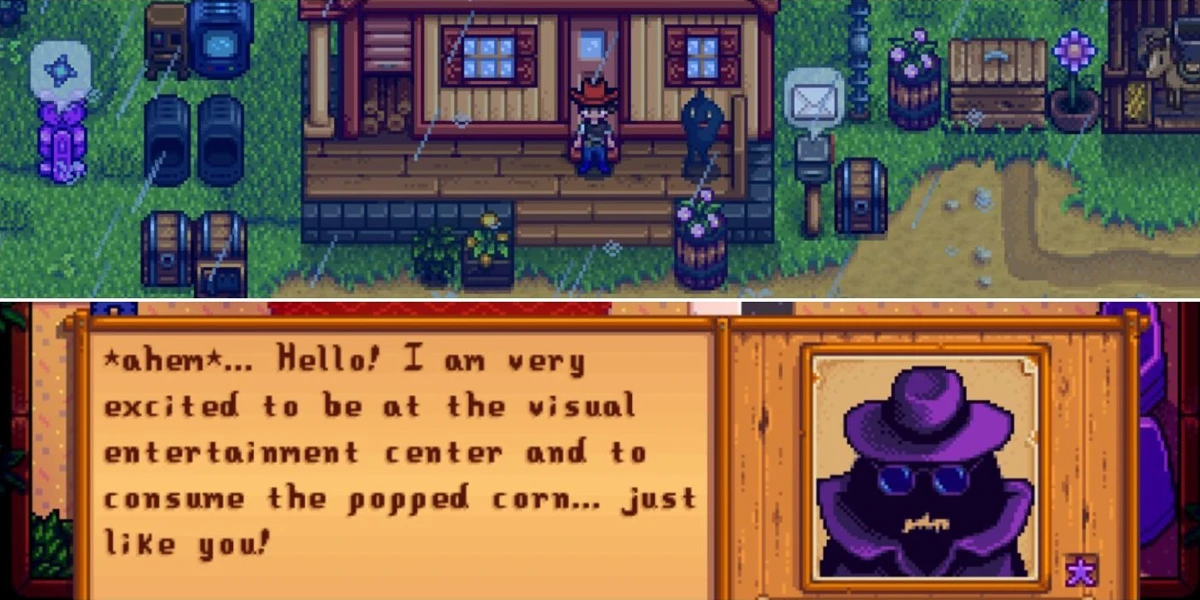
Krobus is one of Stardew Valley’s most beloved hidden characters, beginning as a mysterious figure living in the sewers and eventually becoming a full-fledged companion. Unlike the familiar townsfolk in Pelican Town, Krobus belongs to the race of shadow people, creatures usually portrayed as hostile in the mines. Discovering him requires acquiring the Rusty Key, which grants access to the sewer entrance. For many players, stepping into the dark, eerie tunnels and meeting Krobus for the first time is an unexpected and memorable moment.
Initially, Krobus operates as a secret shopkeeper. He sells unusual goods, from rare recipes and unique decorations to valuable resources like the Stardrop and the Return Scepter. This inventory makes him vital for players looking to optimize their farms, but it also emphasizes his otherness. His merchandise is not just practical but thematic, reinforcing that Krobus straddles the line between the human world and the shadow realm.
Over time, updates expanded Krobus’s role and turned him into more than a vendor. He can move into the player’s farmhouse as a roommate, something no other non-romanceable character can do. This shift was a revelation for fans who had grown attached to his quirky dialogue and gentle personality. Choosing Krobus as a housemate highlights his loneliness and his need for connection, themes that contrast strongly with the cheerful lives of the villagers above.
Krobus became a cultural favorite precisely because he breaks expectations. A character introduced as a hidden monster transforms into one of the most endearing allies in the game. His uniqueness sparked waves of fan art, discussions, and even memes that celebrate his awkward yet heartwarming presence. Krobus demonstrates that a secret character does not need extreme difficulty or elaborate unlock sequences to make an impact. Sometimes mystery, relatability, and emotional depth are enough to elevate a hidden figure into one of the best secret characters in indie games.
The Ghost in Spelunky
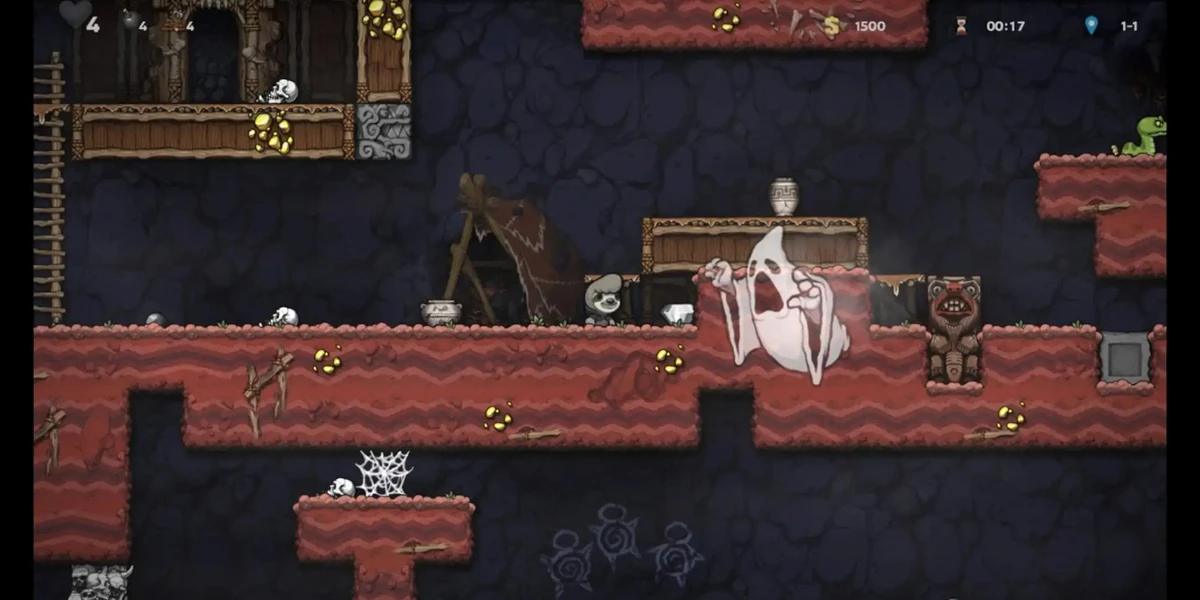
The Ghost in Spelunky is a secret character unlike any other. It is not a traditional NPC with dialogue or backstory but a looming presence that appears when the player lingers too long in a level. After two and a half minutes, the Ghost drifts into the stage, moving slowly but relentlessly toward the player. It cannot be harmed, and contact means instant death. For newcomers, the first encounter is terrifying, transforming a lighthearted treasure hunt into a desperate scramble for survival.
At first, the Ghost seems designed purely as a punishment to discourage players from wasting time. Yet skilled players uncovered an unexpected layer of strategy. When the Ghost passes over gems, it turns them into diamonds worth far more gold. This discovery created the advanced tactic known as “ghosting,” where players deliberately summon the Ghost and maneuver around it to maximize profit. Suddenly, the same entity that terrified beginners became a tool for experts chasing high scores.
The dual nature of the Ghost is what makes it so memorable. On one hand, it enforces pace and tension, keeping every run moving forward. On the other, it rewards daring players willing to risk everything for massive gains. This balance of fear and opportunity reflects the heart of Spelunky’s design, where exploration and risk management go hand in hand.
The Ghost also grew into a cultural icon. It became a meme across the community, a shared symbol of the moment every player realizes that Spelunky has no mercy. It is both a rite of passage and a badge of mastery. Few hidden mechanics in indie games achieve this level of impact. By embodying both punishment and possibility, the Ghost stands as one of the best secret characters in indie games, shaping how fans remember and celebrate the series.
Why These Characters Stand Out
What ties these secret characters together is not just their rarity but the way they reshape the games they belong to. The Lost in The Binding of Isaac proves that an unlock condition can itself become legendary, turning a single fragile character into a badge of mastery. Reize Seatlan in Shovel Knight shows how a backer-created figure can surprise players and elevate a community-driven project into something timeless. Characters like the Mask Maker in Hollow Knight and W.D. Gaster in Undertale deepen the lore in ways that leave fans debating theories for years.
Others stand out for their emotional impact. Misery in Cave Story and Badeline in Celeste remind us that even secret or hidden figures can carry heavy themes, from the weight of curses to the battle with inner demons. Krobus in Stardew Valley represents how a minor hidden NPC can evolve into a fan favorite, bridging isolation and companionship in a way that resonates with players who crave connection. The Ghost in Spelunky demonstrates that a simple mechanic can transform into an iconic symbol of both fear and mastery, embraced by the community as part of the game’s identity.
Together, these characters show that secrets in indie games are never trivial. They reward curiosity, shape culture, and elevate small projects into lasting phenomena.
Conclusion
Secret characters in indie games are more than curiosities hidden in code. They are challenges that test skill, fragments of lore that fuel imagination, emotional beats that stay with players, and cultural touchstones that unite communities. The best of them prove that hidden content is not just filler but a deliberate design choice that adds richness and longevity to a game.
For fans, celebrating these figures extends beyond gameplay. Many express their love through fan art, cosplay, and collectibles. Some even wear their passion with pride, turning favorite characters into daily fashion. If you want to see how this culture lives on, explore our collection of game graphic tees, where fandom becomes a part of everyday style.
