
No products in the cart.
Games
Saros Explained: Story, Gameplay, and Why It’s Not Just Returnal 2
Saros Explained: Story, Gameplay, and Why It’s Not Just Returnal 2
Introduction
Housemarque has built a reputation for pushing the limits of science fiction gaming on PlayStation. In 2021, the studio released Returnal, a title that quickly became a showcase of what the PlayStation 5 could deliver in terms of speed, atmosphere, and mechanical depth. The game earned praise for its intense roguelike loop and fluid combat, yet it also divided opinion due to its unforgiving difficulty and fragmented storytelling. For many players, it was both a triumph and a challenge, leaving a lasting impression that shaped expectations for what the studio would create next.
That next step is Saros, announced as a new PlayStation 5 exclusive with a release window in 2026. Unlike a direct sequel or continuation of existing work, Saros is presented as a brand-new intellectual property. Its world, its protagonist, and its systems are designed from the ground up, yet it clearly carries the DNA of Housemarque’s earlier experiments. The result is a game that feels both familiar and ambitious, setting the stage for what could become another defining franchise for Sony’s platform.
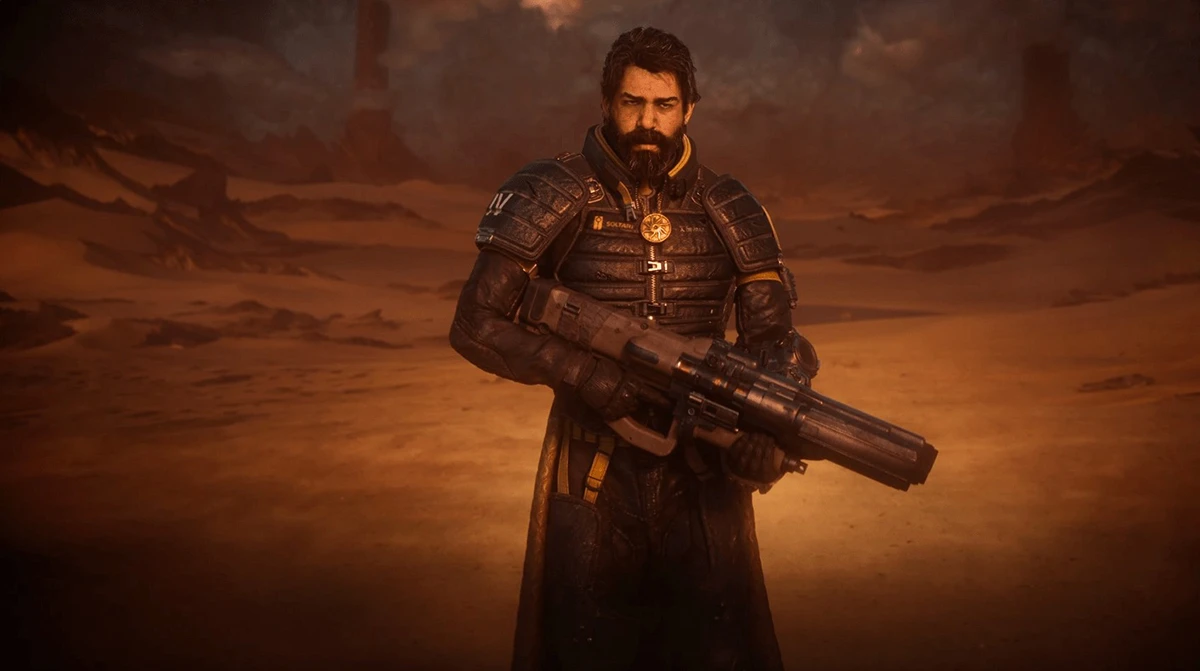
The setting alone signals a different tone. Saros unfolds on Carcosa, a distant colony shrouded in the shadow of an ominous eclipse. Players step into the role of Arjun Devraj (voiced by Rahul Kohli), a Soltari Enforcer navigating this lost world. Official descriptions highlight fast-paced third-person action and a structure built around permanent upgrades that carry over between sessions, allowing players to evolve their loadout across runs. It is a system intended to preserve the tension of repeated runs while offering clearer long-term progression than Returnal did.
This article will examine what is currently known about Saros, from its confirmed mechanics and story foundation to its broader significance within PlayStation’s catalog. It will also highlight the differences that set it apart from Returnal and explain why Saros should be seen not as a sequel but as a new chapter in Housemarque’s evolution. Where details are uncertain, the discussion will acknowledge speculation, making a clear distinction between confirmed information and reasoned assumptions. The aim is to provide a complete picture of why Saros matters and how it could redefine Housemarque’s role in shaping modern science fiction games.
Housemarque’s Legacy: From Returnal to Saros
Housemarque is not a newcomer to bold experiments. Before Returnal, the Finnish studio was best known for arcade-style shooters such as Resogun and Nex Machina. These earlier titles cemented its reputation for precision gameplay and visually striking effects. When the studio transitioned into larger projects, Returnal became its breakout work, selling over 1 million copies in its first year and earning multiple Game of the Year nominations, proving that it could take the fast, responsive design philosophy of its smaller games and apply it to a complex, narrative-driven experience.
Returnal stood out because of how it blended roguelike mechanics with a cinematic third-person shooter format. Each death reset the player to the beginning, but the world itself shifted slightly, keeping exploration unpredictable. The haunting atmosphere, fluid combat, and use of PlayStation 5 features like the DualSense controller’s adaptive triggers made it a landmark exclusive. However, the game also highlighted the risks of Housemarque’s approach. Many players found its difficulty overwhelming, and its storytelling was delivered in fragments that left some audiences unsatisfied.
Saros emerges in this context. By announcing a new intellectual property rather than a direct continuation, Housemarque signals both confidence and ambition. The studio has acknowledged the strengths of Returnal while also showing a willingness to address the criticisms. With Saros, the design philosophy remains rooted in fast-paced action and repetition, but the promise of permanent upgrades and a more structured narrative suggests a shift toward accessibility and cohesion.
This progression reflects the studio’s broader trajectory. From tight arcade shooters to ambitious roguelike storytelling, Housemarque has consistently sought to evolve rather than repeat itself. Saros can be seen as the next logical step in that journey, one that may define not just the studio’s future but also the shape of PlayStation’s exclusive catalog in the years ahead.
The World of Saros: Carcosa Setting and Main Character
At the center of Saros is its setting, the planet Carcosa. Official descriptions portray it as a lost off-world colony hidden beneath the shadow of an ominous eclipse. This image alone suggests an environment shaped by darkness, decay, and the struggle for survival. The backdrop of a colony severed from the wider universe provides fertile ground for themes of isolation and resilience, qualities that align well with Housemarque’s reputation for creating intense and atmospheric experiences.
Players will step into the role of Arjun Devraj (voiced by Rahul Kohli, known for roles in Midnight Mass and The Fall of the House of Usher), a Soltari Enforcer. Unlike Returnal’s Selene, who was characterized through fragmented memories and ambiguous storytelling, Arjun is introduced with a clear identity and professional role. This signals a narrative approach that may focus more directly on character development and external conflict rather than purely psychological or abstract themes.
The name Carcosa also carries cultural resonance. While the game’s creators have not explicitly connected it to literary origins, the word appears in works of gothic and cosmic horror dating back to the nineteenth century. Writers like Ambrose Bierce and Robert W. Chambers used Carcosa to describe unsettling, mysterious realms, and the name later influenced the works of H.P. Lovecraft. It is reasonable to speculate that Housemarque chose this name deliberately to evoke a sense of unease and to align the game’s atmosphere with traditions of dark science fiction and horror. Housemarque has not officially commented on literary inspirations. This is interpretation rather than confirmed fact, but the choice of language alone adds layers of meaning for audiences familiar with the term. For more on the literary origins, see the Wikipedia entry on Carcosa.
Together, Carcosa and Arjun form the foundation of Saros’s narrative. The planet offers a stage that feels alien and foreboding, while the protagonist provides a lens through which players can engage with its mysteries. If Returnal placed emphasis on personal memory and surreal loops, Saros appears poised to anchor its story in a more tangible setting, with a character defined by duty and circumstance. This distinction may be critical in shaping how fans perceive the game and how it differentiates itself from its predecessor.
Saros Gameplay Mechanics
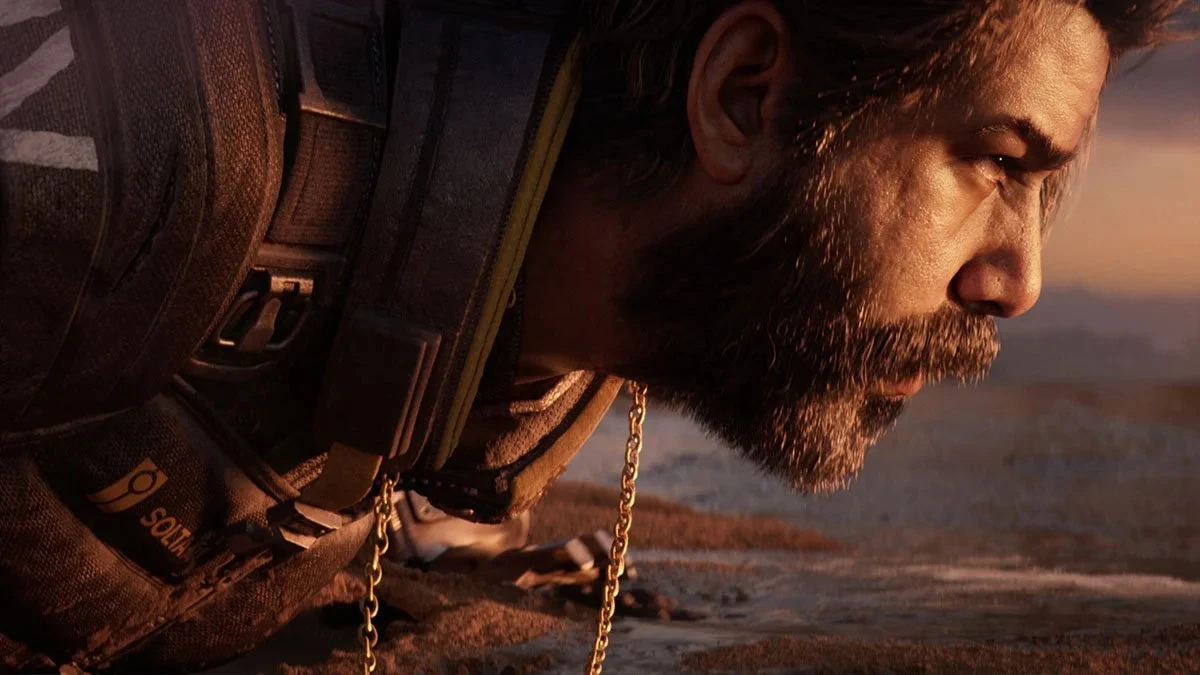
From the information released so far, Saros is designed as a third-person action game built specifically for PlayStation 5. Combat is expected to be fast and responsive, drawing from Housemarque’s long history of arcade precision. Players will control Arjun Devraj in environments shaped by the eclipse-darkened colony of Carcosa, fighting enemies while making use of both ranged and suit-based abilities.
A defining system highlighted in official descriptions is permanent progression. Unlike many roguelike experiences where each death erases almost everything gained, Saros will allow players to carry certain upgrades and resources across runs. This design choice is intended to preserve the tension of repeated attempts while reducing the sense of futility that some players expressed in Returnal. The phrase “permanent upgrades after every death” has been used directly in promotional material, signaling a core identity for the game. Watch the cinematic announce trailer for a glimpse into these mechanics.
Progression is not only about keeping resources. It appears tied to the transformation of Carcosa itself. The official PlayStation page mentions that the world will change after each death, suggesting that runs will alter more than just the player’s abilities. While the precise details have not been clarified, one can reasonably infer that environments may shift, new paths may open, or enemies may adapt. This is speculation rather than confirmed fact, but it aligns with Housemarque’s tradition of dynamic level design.
Taken together, these mechanics indicate a balance between accessibility and challenge. Saros aims to maintain the unpredictability and intensity that defined Returnal while offering clearer long-term goals. If executed well, this could appeal to both players who enjoyed Returnal’s relentless loop and those who were put off by its lack of persistent progress. The mix of fluid combat, permanent progression, and an evolving world positions Saros as a natural but distinct evolution of Housemarque’s design philosophy.
How is Saros Different from Returnal (and Why It’s Not Returnal 2)
Ever since Saros was announced, comparisons to Returnal have been unavoidable. Both games share a science fiction setting, a looping structure built around death and rebirth, and the unmistakable influence of Housemarque’s arcade design roots. Yet the studio has made it clear that Saros is not a sequel. Understanding the distinctions is essential to appreciating why this new project stands on its own.
The first major difference lies in narrative presentation. Returnal told its story through fragmented memories and surreal sequences that often left players piecing together meaning on their own. Saros, by contrast, introduces a defined protagonist, Arjun Devraj (voiced by Rahul Kohli), with an explicit role as a Soltari Enforcer. This alone suggests a more direct narrative, one where character motivations and external events guide the experience instead of ambiguous symbolism.
Progression also sets the two apart. In Returnal, each death stripped away nearly all upgrades, leaving players to restart with only a few small advantages. Saros has been described as offering permanent upgrades after every death, creating a sense of cumulative growth. This shift may be a response to feedback from players who found Returnal’s loop too punishing. While it is still a roguelite system, the design points toward a more accessible structure that encourages persistence rather than attrition.
The world of Carcosa is another distinguishing factor. While Returnal’s Atropos leaned heavily into alien surrealism and psychological horror, Carcosa appears rooted in a narrative of colonial collapse under an ominous eclipse. Thematically, it leans closer to dark science fiction with hints of cosmic horror, offering a stage that feels more grounded in societal and environmental decay than in personal memory. It is speculation to say whether this will make the story easier to follow, but the choice of setting alone marks a tonal shift.
Finally, there is the question of identity. Returnal was a breakout experiment that established Housemarque as capable of delivering large-scale exclusives. Saros represents a continuation of ambition but not of story. It borrows mechanics that worked, refines them with clearer progression, and sets them within a new world with a new hero. The result is not Returnal 2 but rather the next evolution of the studio’s design philosophy. For fans, this distinction is important. Saros can be appreciated as part of a lineage while still being recognized as something entirely its own. For more details on the announcement, check out this Gamespot preview.
FAQs: Common Questions About Saros
What kind of game is Saros?
Saros is a third-person action title with roguelite elements, developed exclusively for PlayStation 5. It blends fast combat with a progression system designed to reward repeated attempts. Players control Arjun Devraj, a Soltari Enforcer operating on the planet Carcosa, where each death not only resets the loop but also leaves lasting changes on both the character and the world.
Is Saros multiplayer?
No. Sony and Housemarque have confirmed that Saros is a single-player experience. While multiplayer speculation appeared in early discussions among fans, official sources describe the game as focused on narrative and personal progression rather than cooperative or competitive play.
Will Saros be on PS4?
No. Saros is being developed exclusively for PlayStation 5, taking advantage of the hardware’s capabilities such as near-instant loading through the SSD, advanced haptic feedback, and adaptive triggers. A PS4 release is not planned, and the game has been marketed as part of the PS5’s next-generation lineup.
Is Saros related to Returnal?
Not directly. Saros is a completely new intellectual property with its own characters and setting. While it shares similarities in mechanics and atmosphere with Returnal, there is no indication that the two games exist in the same universe. The resemblance comes from Housemarque’s design philosophy rather than any canonical link. Learn more from the Saros Wikipedia page.
Will Saros be easier than Returnal?
There is no confirmed information about difficulty balance. However, the inclusion of permanent upgrades after every death suggests that Saros will be more forgiving than Returnal, based on developer interviews hinting at “more accessible loops.” This is speculation based on design choices rather than official confirmation, but many fans expect that the game will offer a smoother progression curve while still retaining challenge.
When is the Saros PS5 release date?
Saros is scheduled for release in 2026. No specific day or month has been announced, but Sony has consistently referred to it as a PlayStation 5 exclusive expected that year.
These questions reflect the most common concerns and curiosities expressed by the community. Where clear answers are available, they are based on official announcements. Where uncertainty remains, speculation is clearly marked to avoid confusion. This distinction is important in understanding Saros as it continues to develop toward launch.
Fan Expectations and Speculation
The announcement of Saros immediately raised hopes among fans who admired Housemarque’s earlier work but wanted certain refinements. A key expectation is a stronger focus on storytelling. Returnal was praised for its atmosphere but often left players uncertain about the meaning of its fragmented narrative. With Arjun Devraj introduced as a defined protagonist in a tangible colony setting, many believe Saros will deliver a clearer and more engaging story.
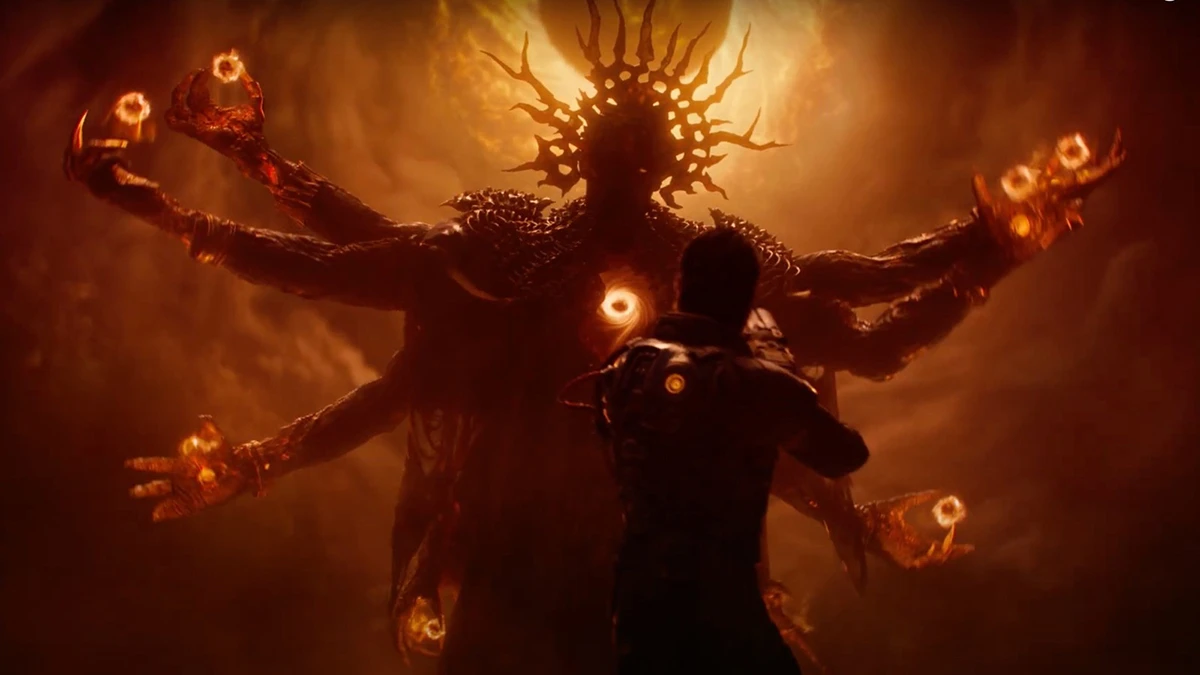
Another area of anticipation is the variety of environments. Returnal’s biomes were striking but could feel repetitive after many loops. Carcosa, by contrast, is described as a colony shaped by an ominous eclipse, which opens possibilities for diverse settings such as industrial ruins, collapsed habitats, or areas overtaken by alien growth. While these specific locations have not been confirmed, it is a reasonable assumption that Housemarque will design a broader range of spaces to keep the experience fresh.
Fans are also speculating about combat depth. The inclusion of permanent upgrades suggests the possibility of broader weapon customization or skill trees. While no official details confirm these systems, players are discussing whether Saros will allow more flexible playstyles compared to the strict loop of Returnal. If you love the sci-fi graphic designs inspired by games like Saros, check out our game graphic tees collection to bring that style into your everyday wardrobe.
Lastly, questions about additional content remain open. Could Saros receive expansions, DLC, or special challenges after launch? Sony has not provided information, but given the way Returnal was supported with free updates and DLC, it is plausible to expect post-launch additions. This reflects the kind of long-term engagement that players hope for.
Together, these expectations show how Saros is positioned in the minds of fans: as a chance to refine what was admired in Returnal, while smoothing out the pain points. Even without full details, the combination of narrative potential, environmental diversity, and progression systems gives the community strong reasons to be optimistic.
The Future of Saros and PlayStation’s Strategy
For Sony, Saros represents more than a single release. It is part of a broader strategy to sustain the PlayStation 5 library with exclusives that highlight the console’s strengths. Housemarque proved with Returnal that it could deliver a technically demanding game that pushed the hardware, and Saros appears to be the studio’s opportunity to expand that achievement into something more enduring.
If Saros succeeds, it could become the foundation of a new franchise. PlayStation has long relied on flagship series such as God of War, Horizon, and Spider-Man to define its platform identity. A science fiction property with roguelite mechanics and a distinctive narrative could add variety to that lineup. Some fans even speculate that Saros could evolve into a trilogy, offering a long arc of story and gameplay refinement. This is only speculation, but it reflects how strongly players view the potential of the game.
The exclusivity to PlayStation 5 is also significant. By committing Saros entirely to the latest hardware, Sony emphasizes its push for experiences that cannot be replicated on older systems. Features such as rapid loading from the SSD, advanced haptic feedback, and adaptive triggers are more than technical talking points; they are meant to immerse players in ways that other platforms may struggle to match. This exclusivity, while limiting availability, strengthens PlayStation’s image as the home of ambitious science fiction titles.
At the same time, Saros also carries risks. Returnal, despite its acclaim and strong critical reception (Metacritic 86/100), did not reach the same sales heights as Sony’s more mainstream franchises. Saros will need to balance accessibility with innovation to capture a wider audience while maintaining Housemarque’s signature challenge. If it succeeds, it will solidify Housemarque as one of Sony’s most valuable studios. If it struggles, it may reinforce perceptions that experimental roguelite titles appeal only to a niche.
In either case, Saros is not simply a standalone project but a test of how Sony nurtures new intellectual properties in an era dominated by sequels and established brands. The outcome could influence the company’s approach to future exclusives and determine whether experimental design can thrive alongside blockbuster series.
Conclusion
Saros arrives as more than just the next project from Housemarque. It represents the studio’s effort to refine the lessons of Returnal while establishing a brand-new identity. With a defined protagonist, a world shaped by an ominous eclipse, and a progression system built around permanent upgrades, the game promises to combine intensity with long-term growth. These choices mark a clear departure from the ambiguity and relentless difficulty of Returnal, positioning Saros as a distinct experience rather than a continuation.
The decision to create an entirely new intellectual property signals ambition on both Housemarque’s and Sony’s part. It shows confidence that players are ready for something fresh, even if the comparisons to Returnal will continue. The success or failure of Saros will likely shape how Sony views future experiments, determining whether daring science fiction properties can stand alongside its blockbuster franchises.
While many details remain unknown, the direction is clear. Saros is not Returnal 2, but it is an evolution of the same creative DNA. It carries the potential to become a defining science fiction series for PlayStation 5 and beyond. For fans of atmospheric action games, it is a release worth following closely as 2026 approaches.
And for those who want to celebrate their passion for gaming culture outside the screen, exploring collections like our game graphic tees offers another way to stay connected with the worlds they love.
