
No products in the cart.
Games
The Old Republic Era Explained – A Complete Starter Guide for Star Wars Fans
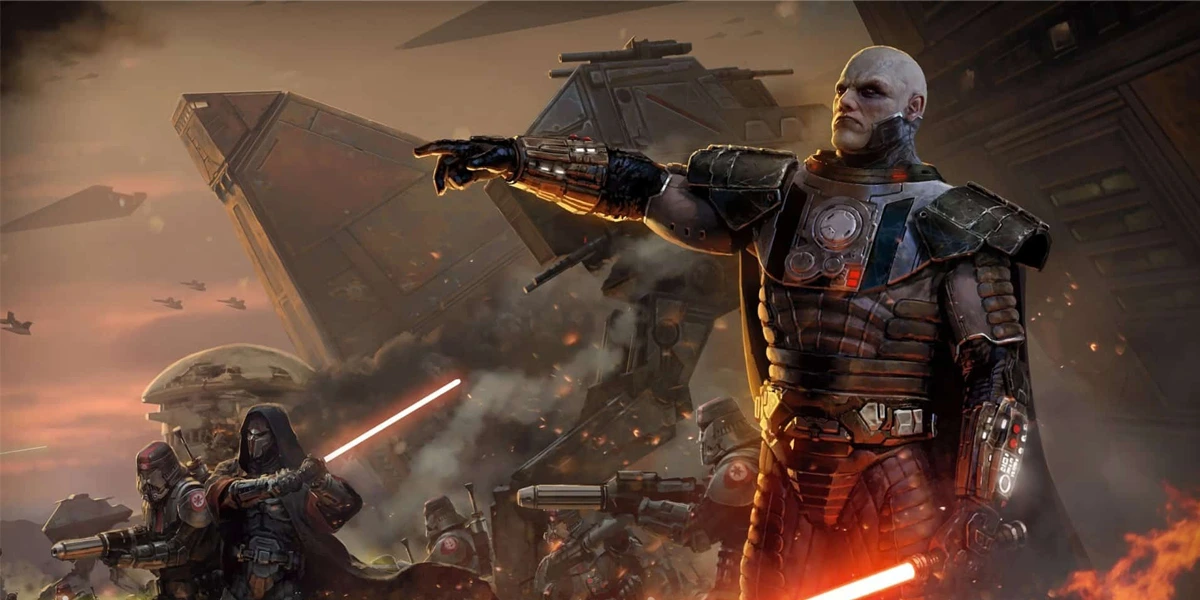
You do not need to be a lore expert to feel the pull of the old republic era. It usually starts with a small moment, maybe you see the name Revan mentioned again and again, maybe you notice Sith designs that feel older and heavier than anything in the movies, or maybe someone tells you this era feels more like myth than modern sci fi. If that curiosity brought you here, this guide is meant to give you a complete mental map in one read.
If you want to explore the visual side of the saga while you read, you can start with the star wars t-shirt collection, then come back. The more you understand this era, the more those symbols and references begin to feel intentional rather than random.
Canon and Legends Explained
When people talk about the Old Republic, they often mix two different ideas without realizing it. One is the Old Republic as an era, a way to place stories on the Star Wars timeline. The other is a group of famous stories that most fans discovered through older games and Expanded Universe material.
Modern Star Wars has an active canon continuity that connects recent films and shows with newer books, comics, and games. In 2014, older Expanded Universe stories were labeled Legends. Legends does not mean unimportant or forgotten. It simply means those stories are not automatically part of the current canon timeline.
Most of the detailed and beloved Old Republic storytelling lives in Legends, especially Knights of the Old Republic and Star Wars The Old Republic. This era works best when you treat it as a complete and self contained mythology. You can enjoy it fully without worrying whether it will directly connect to current screen projects.
Where the Old Republic Fits in Star Wars?
Think in layers rather than exact years. The old republic era takes place thousands of years before the Skywalker story. That distance gives the era its unique tone. It feels ancient, like a legend passed down through generations rather than a recent historical account.
In the films, history moves quickly. One villain rises, one rebellion ignites, and a single generation reshapes the galaxy. In the old republic era, history moves slowly and heavily. Institutions rise, fracture, repair themselves, and fracture again. Wars last long enough to wear down ideals, and peace rarely feels permanent. This slower rhythm is a big reason the era feels more tragic and reflective.
The Core Idea of the Old Republic Era
The Republic grows into a galaxy wide civilization, the Jedi become its protectors, and a schism within the Jedi tradition gives birth to the Sith, creating an ancient rivalry that repeatedly erupts into galaxy scale conflict.
Everything else you hear about this era grows from that foundation. Mandalorian wars, Jedi civil wars, Sith empires, treaties, betrayals, ancient temples, and legendary figures are all different expressions of the same long storm.
The Story Spine of the Old Republic
New readers often meet the old republic era through fragments, a character name here, a planet there, a striking symbol on a piece of art. To really understand it, you only need to follow a clear chain of cause and effect.
First, the Republic and the Jedi become powerful enough to shape history. The Republic is more than a single government. It is trade routes, shared laws, alliances, and the promise that worlds can exist under one system. The Jedi are not just wandering warriors. They are an Order with training, leadership, and a public role as guardians of that system.
Second, the Sith are born from a fracture, not from nowhere. This schism matters because it turns the conflict into an ideological one. The Sith become a rival tradition with its own worldview. Power is not just a temptation. It is an identity. Control is not only a tactic. It is a belief.
Third, war becomes the repeating rhythm of history. A Sith power rises, the Republic responds, the Jedi are drawn into war, the Republic survives but is damaged, and peace arrives as a temporary solution. Over time, this cycle repeats. Even victory leaves scars, and the galaxy is never fully restored.
Fourth, personal legends emerge inside institutional wars. Figures like Revan and Malak matter because they represent how easily defenders can become conquerors. Their stories capture the central tension of the era, that identity can shift under pressure without anyone noticing until it is too late.
Finally, the SWTOR mood, a peace that never feels secure. During the SWTOR period, the galaxy is rebuilding after immense destruction. Treaties exist, but trust does not. Espionage, proxy conflicts, and political maneuvering are as important as open battles. This is why many fans describe the era as feeling like a long strategic game rather than a clear heroic campaign.
Inside the Major Powers
The Republic is a political system that depends on legitimacy. It needs allies, resources, fleets, and public trust. During war, it must constantly choose between its ideals and survival. Those choices give Old Republic politics a sharp edge.
The Jedi Order is both spiritual and institutional. It has rules, leadership structures, and a shared culture that shapes how Jedi think and act. Jedi struggle in this era because they are asked to remain disciplined and compassionate while serving a Republic that often demands compromise.
The Sith function less as a single villain and more as a system. Ambition is normal. Betrayal is expected. Power is hierarchical. Even when united under an empire, internal rivalry never truly disappears. This makes the Sith dangerous, but also unstable.
The forces in between are never background noise. Mandalorians, smugglers, bounty hunters, criminal syndicates, and neutral worlds control supply lines and information. In an era shaped by war, these groups often decide who survives and who is forgotten.
Key Figures You Should Know
This is not a full biography list. It is the minimum context needed to follow Old Republic discussions.
Revan is the defining legend of the era, associated with identity, loyalty, and the question of whether the Force represents destiny or choice.
Malak represents devotion curdling into tyranny, often remembered as the cautionary shadow of Revan’s story.
Satele Shan stands as a central Jedi leader figure in the SWTOR era, embodying endurance and the attempt to preserve an Order under constant strain.
Darth Malgus represents the relentless war driven side of the Sith, a symbol of conquest and ideological certainty.
The Mandalorians matter because their wars force the Republic and the Jedi into decisions that echo for generations.
Iconic Old Republic Worlds
Korriban represents ancient Sith power, tombs, tradition, and the idea that strength always demands a price.
Tython symbolizes Jedi origins, rebuilding, and reflection after periods of intense conflict.
Coruscant remains the Republic’s heart, but in this era it often feels politically fragile and visibly scarred by war.
Nar Shaddaa is the criminal mirror of the Republic, where survival and profit define daily life.
Dromund Kaas evokes Sith imperial dominance, harsh environments, and power projected through intimidation.
Old Republic Glossary
Canon the current official Star Wars continuity.
Legends the label for older Expanded Universe stories.
Republic the galaxy wide political order based on law, trade, and diplomacy.
Jedi Order the Force tradition focused on discipline and service.
Sith the rival Force tradition centered on power and control.
Schism the ideological break that gives rise to the Sith.
Treaty a fragile pause after war that often precedes renewed conflict.
Do You Need to Play the Games?
No. The games provide detail and personal perspective, but the era itself is easy to understand once the foundation is clear. Republic and Jedi rise, a schism creates the Sith, wars repeat, and peace never fully heals the damage. Games are a deeper experience, not a requirement.
The Big Picture Recap
The old republic era is the ancient foundation of Star Wars. It is defined by the rise of the Republic, the Jedi as its protectors, the birth of the Sith through ideological fracture, and long cycles of war followed by uneasy peace. Its legends endure because they explore how power reshapes identity.
If you want to carry that Old Republic energy into everyday life, browse the star wars t-shirt collection and choose a piece that reflects your place in the galaxy.
