
No products in the cart.
Games
Exploring The Legend of Zelda Universe: Iconic Characters, Dungeons, and Gameplay Innovations
Introduction
The Legend of Zelda series stands as one of video games’ most enduring and influential franchises. Since its debut in 1986, it has offered players a rich fantasy universe, unforgettable characters, inventive dungeon design, and gameplay innovations that continue to shape the action-adventure genre. In this article, we’ll take a broad look at the Zelda universe: the characters who define it, the dungeons and structures that form its core gameplay, and the major innovations that have kept the series fresh. This piece is intended to be a foundational article, a comprehensive overview that sets the stage for future deep dives into specific aspects of the series.
Origins and Historical Context
The Legend of Zelda series was created by Japanese game designers Shigeru Miyamoto and Takashi Tezuka for Nintendo. Released in Japan on February 21, 1986 for the Famicom Disk System with rewritable disk saves, The Legend of Zelda arrived on NES in 1987 using one of the first battery-backed cartridges to preserve progress. At its release, The Legend of Zelda marked a new era for console gaming. It provided players with a large unified world to explore, a save function built into the cartridge, and the freedom to chart one’s own path rather than being constrained to a strictly linear sequence.
The original game established many of the foundational elements that would become hallmarks of the series: a hero (Link) embarking on a quest in the kingdom of Hyrule, a princess (Zelda) in need of rescue, a dark force threatening the land, the concept of exploring a map, solving puzzles, fighting monsters, and searching for key items. Over time the series evolved from its 2D roots to fully 3D adventures, from more linear dungeon-based designs toward open-world exploration.
The Zelda Universe: Hyrule, Timeline and Mythology
The setting most associated with the series is the kingdom of Hyrule and the race of Hylians, often represented by the hero Link and Princess Zelda. In broad strokes, the mythology begins with three Golden Goddesses: Din (Power), Nayru (Wisdom), and Farore (Courage), who created the world and left behind the sacred Triforce, a relic capable of granting any wish.
Because the story of the series spans many titles, Nintendo officially published a timeline in the book Hyrule Historia in 2011, which attempted to place the games in a chronological order. Nintendo’s 2011 Hyrule Historia formalized a three-branch split after Ocarina of Time. In late 2024, Nintendo placed Echoes of Wisdom on the Fallen Hero branch, while BOTW and TOTK remain shown outside the classic branches on the official site. Because of the many games and re-interpretations, the lore remains somewhat flexible. Part of the charm of the franchise is that each game offers its own version of the hero’s quest.
Across these games, the recurring pattern is: a chosen hero (Link) rises, a princess (Zelda) holds the wisdom of the land, a dark force (often Ganon) threatens, the Triforce is involved, and the land of Hyrule (or allied lands) needs saving. This repeated structure gives each title familiarity, yet the variations in characters, geography, and mechanics keep things fresh.
Iconic Characters
In this section we’ll examine three major characters who form the core of the Zelda mythos: the hero Link, Princess Zelda, and the antagonist Ganon (or Ganondorf). Then we’ll touch on notable supporting characters and the wider cast.
Link
The hero of the series, the green-clad, pointy-eared figure known simply as Link, is the player’s avatar in nearly every mainline game. He is often of the Hylian race, though his incarnations vary from game to game. Link’s role is that of the chosen one, undertaking a quest to rescue Zelda and defeat the forces of evil. Although the exact details and incarnation change each game, that foundational role remains.
What makes Link memorable is also that he is designed as a silent protagonist, allowing the player to project themselves into the hero role. The recurring visual elements: green tunic, cap, Master Sword, Hylian Shield, build cumulative recognition across decades of games.
Princess Zelda
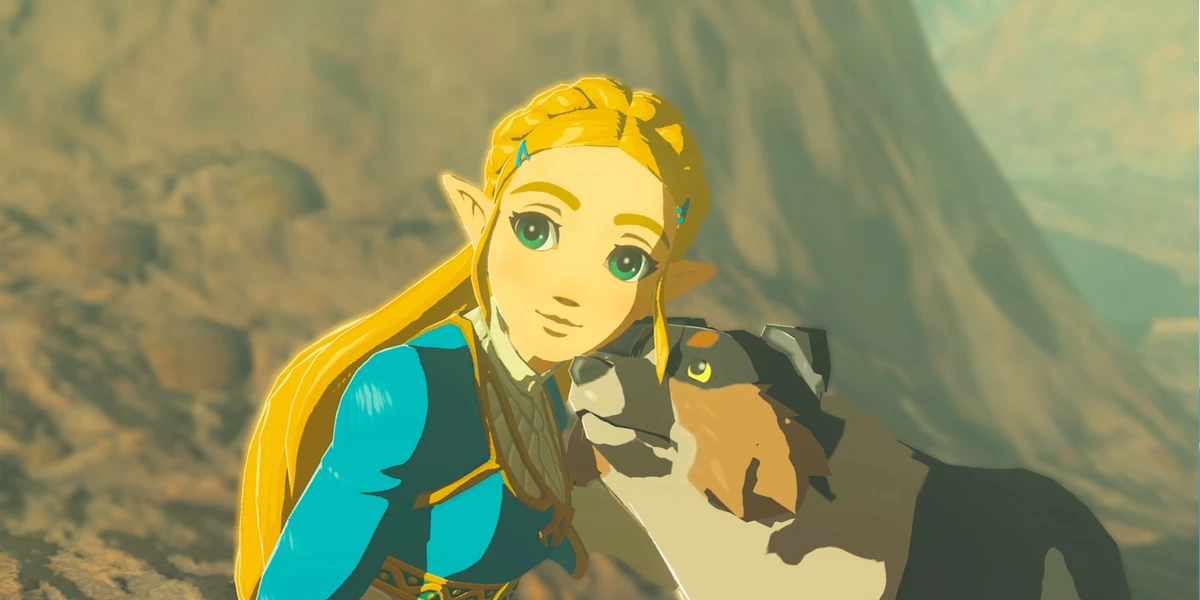
Princess Zelda is the royal figure of Hyrule who often combines the roles of damsel in distress and wise ruler. The lore reveals that she is the mortal reincarnation of the goddess Hylia, and in some titles she plays a more active role in story and gameplay beyond simply needing rescue. Zelda’s name became synonymous with the series. Her oracle of wisdom and connection to the Triforce provide a balance to Link’s courage and Ganon’s power.
Beyond supporting roles, Zelda becomes the playable lead in 2024’s Echoes of Wisdom.
Ganon / Ganondorf
The main antagonist of the series is most often Ganon (or in his human form, Ganondorf). He embodies the power component of the Triforce and, via repeated attempts or victories, often threatens the realm of Hyrule. Ganon represents the cyclical nature of the Zelda mythos: evil arises, the hero must respond, the realm is saved (or lost) and the cycle begins anew.
While early games portray Ganon as a monstrous final boss, later titles deepen his motives and connection to the Triforce and Hyrule’s mythology. His repeated presence across titles provides a through-line for the series.
Supporting Cast and Races
Beyond the trio above, the Zelda universe features many memorable secondary characters, allied races, and sidekicks. For example:
- Impa, a Sheikah attendant and protector of the Zelda lineage in many games
- The Zora (an aquatic race), Goron (rock-like mountain dwellers), Gerudo (a desert tribe), all of whom often assist Link in his journey
- Sidekick characters such as Navi (in Ocarina of Time), Midna (in Twilight Princess), and Tetra (in Wind Waker)
These characters allow the stories to broaden beyond the central trio and help establish the expansive nature of the Zelda universe. They contribute not just to narrative richness but to world-building, giving Hyrule a sense of history, diversity, and life.
Dungeons and Structures: The Heart of the Zelda Experience
One of the most characteristic features of Zelda games is the dungeon, an area that combines combat, exploration, puzzle-solving, and item-based progression. Dungeons are often seen as the core of Zelda’s level design.
What is a Dungeon in Zelda?
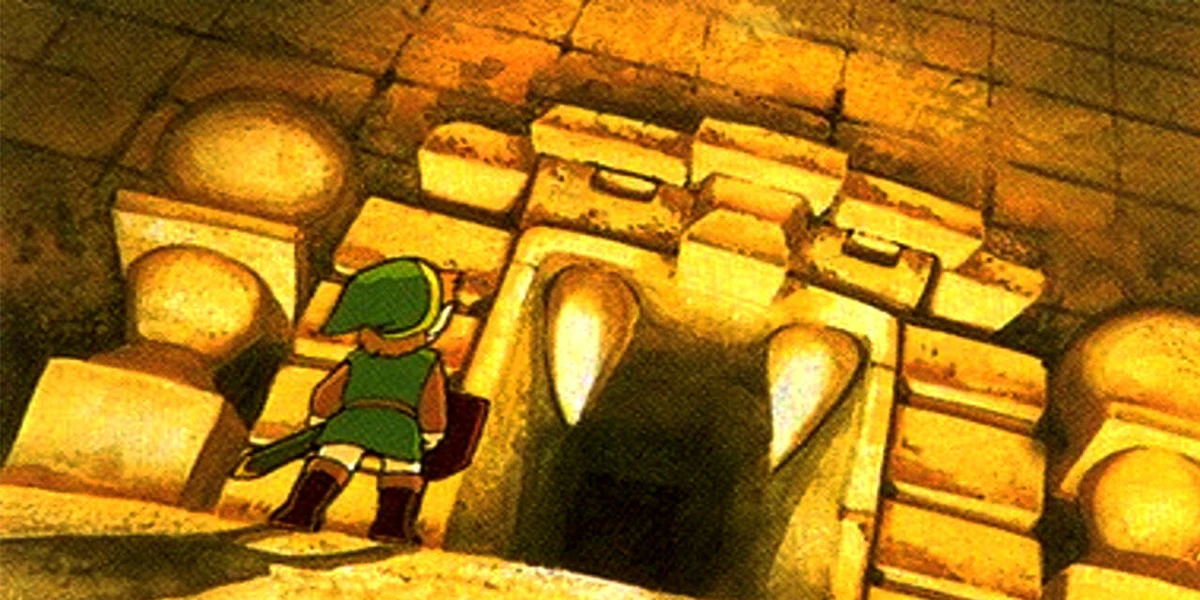
In the Zelda series, a dungeon is typically a self-contained zone, often underground or otherwise isolated from the overworld map, featuring themed rooms, locks and keys, a unique item that unlocks new areas, a boss battle, and hidden secrets. Dungeons serve multiple purposes. They provide structure to the game’s progression, they act as a testing ground for newly introduced mechanics, they give narrative weight, and they provide gameplay variety through distinct themes like water, fire, ice, or forest.
Classic Examples of Dungeon Design
A landmark title in dungeon design is The Legend of Zelda: A Link to the Past. It features one of the series’ highest dungeon counts, commonly tallied at twelve, spanning Light and Dark World locales. The variety of environments: desert, mountain, ice, swamp, dark world, and the introduction of dual world navigation made it a design milestone.
In the 3D era, The Legend of Zelda: Ocarina of Time redefined dungeon structure with verticality, dynamic camera control, and more immersive puzzles. This shift was also the first time the series used lock-on targeting for combat, which would influence action-adventure games moving forward.
In the open-world title The Legend of Zelda: Breath of the Wild, the formula changed again. Breath of the Wild pivots to 120 Shrines in the base game plus four Divine Beasts as large-scale dungeon equivalents. These Shrines functioned as bite-sized dungeon experiences, some focused on puzzles, others on combat or traversal.
The Anatomy of a Zelda Dungeon
A typical Zelda dungeon follows a recognizable structure:
- Entry into a themed environment (forest, fire, water, ice, etc)
- Exploration of rooms and corridors, facing traps and enemies
- Discovery of a special item that unlocks new mechanics or paths
- Puzzle-solving and backtracking using that item to progress further
- Boss battle in a grand chamber using the dungeon item
- Exit and acquisition of a major reward or artifact
Well-designed dungeons encourage players to think laterally, offering secrets, optional areas, and clever integration between item use and environment. The best ones feel like miniature stories in themselves, with rising tension, a mechanical “twist,” and a rewarding climax.
Evolution of Dungeon Design
Earlier Zelda titles had relatively linear dungeon layouts, progressing room by room, unlocking paths with small keys. Over time, designers experimented with open layouts, layered environments, and nonlinear progression. Some games like Majora’s Mask emphasized time constraints and environmental effects, while Twilight Princess pushed atmospheric design and scale.
Breath of the Wild altered the structure completely. Instead of eight large fixed dungeons, the world became one massive playground of emergent puzzles. The player could tackle objectives in any order, and Shrine content replaced traditional dungeon gating. This design shift allowed the series to embrace player freedom and sandbox interaction, rather than strictly curated sequences.
Gameplay Innovations: Tradition Meets Reinvention
One of the defining strengths of the Zelda series is its ability to balance the familiar and the new. Every installment aims to preserve core mechanics: exploration, puzzle-solving, dungeon crawling, item collection, while introducing bold changes in how the player interacts with the world. This section breaks down some of the most important innovations over the decades.
Open World and Save Function from the Start
The original Legend of Zelda, released in 1986, stood out because it offered a degree of player freedom that was uncommon at the time. Players were dropped into a large overworld without much handholding. They could explore almost any area from the beginning, provided they had the right tools. Just as important, the game featured a save system built directly into the cartridge, allowing long adventures to span multiple sessions, a major innovation in its era.
This approach laid the groundwork for the idea that Zelda is not about strictly following instructions, but about wandering into the unknown, making discoveries, and solving problems through observation and experimentation.
The Leap to 3D with Ocarina of Time
The Legend of Zelda: Ocarina of Time, released in 1998 for the Nintendo 64, marked a turning point in the series and in the gaming industry as a whole. It was the first Zelda title to be fully realized in 3D. This transition came with a host of new gameplay mechanics that would influence countless future games.
Key innovations included:
- Z-targeting system: A method of locking on to enemies in combat that made third-person action smoother and more precise.
- Context-sensitive actions: Buttons that changed function depending on Link’s environment or target, streamlining controls.
- Musical mechanics: Link used an ocarina to trigger in-game effects like weather changes or time travel. Players learned actual melodies using controller inputs.
- Day and night cycle: A real-time clock altered events in the world depending on time of day, adding immersion.
These features were revolutionary for their time. Ocarina of Time is still often cited as one of the greatest games ever made because of how seamlessly it blended narrative, exploration, and interactivity in a 3D space.
Items, Tools, and the Puzzle-Combat Loop
Throughout the series, Zelda has relied on a distinctive mechanic loop: dungeons and exploration are tied to key items. Each item unlocks new abilities or regions, such as the boomerang to activate distant switches or the hookshot to cross gaps.
Classic items include:
- Hookshot and Longshot: Used for traversal and pulling enemies or items.
- Bombs: Blow up cracked walls or secret paths.
- Bow and Arrows: For long-range combat and precision-based puzzles.
- Magic Rods: Introduced in titles like A Link to the Past and used to control elements like fire and ice.
- Flute or Ocarina: Used to teleport, alter time, or communicate.
This toolbox of items is a major part of the Zelda identity. Players learn to think creatively about how tools interact with the world, enemies, and level layouts. Later games pushed this concept further by introducing tool synergy, using two or more items in tandem to solve a problem or beat a boss.
The Master Sword and Iconic Symbols
No discussion of Zelda would be complete without mentioning the Master Sword, the legendary blade often wielded by Link to defeat evil. Introduced canonically in A Link to the Past, the sword is typically obtained mid-game as a rite of passage for the hero. Pulling it from its pedestal is one of the most iconic moments across the franchise.
The Master Sword usually represents the moment Link becomes strong enough to face his true enemy. It also symbolizes destiny, with only the chosen one able to wield it. Across the series, this item reinforces narrative weight and serves as a reward for progression.
Other recurring symbols that reinforce Zelda’s identity include:
- The Triforce: A triangle made of three smaller triangles, representing Power, Wisdom, and Courage.
- The Hylian Crest: A winged symbol often emblazoned on shields and banners.
- The green tunic: Worn by Link in most entries, symbolizing his role as the Hero of Courage.
These visual elements help create continuity and nostalgia, while allowing room for stylistic evolution.
Breath of the Wild: A Redefinition of Zelda’s Formula
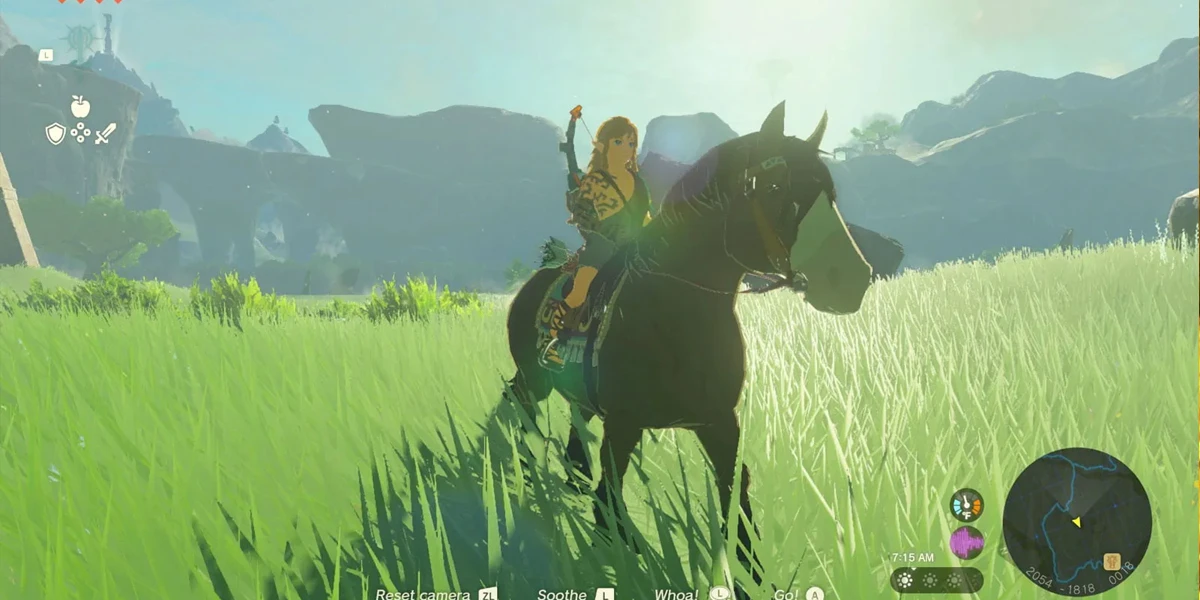
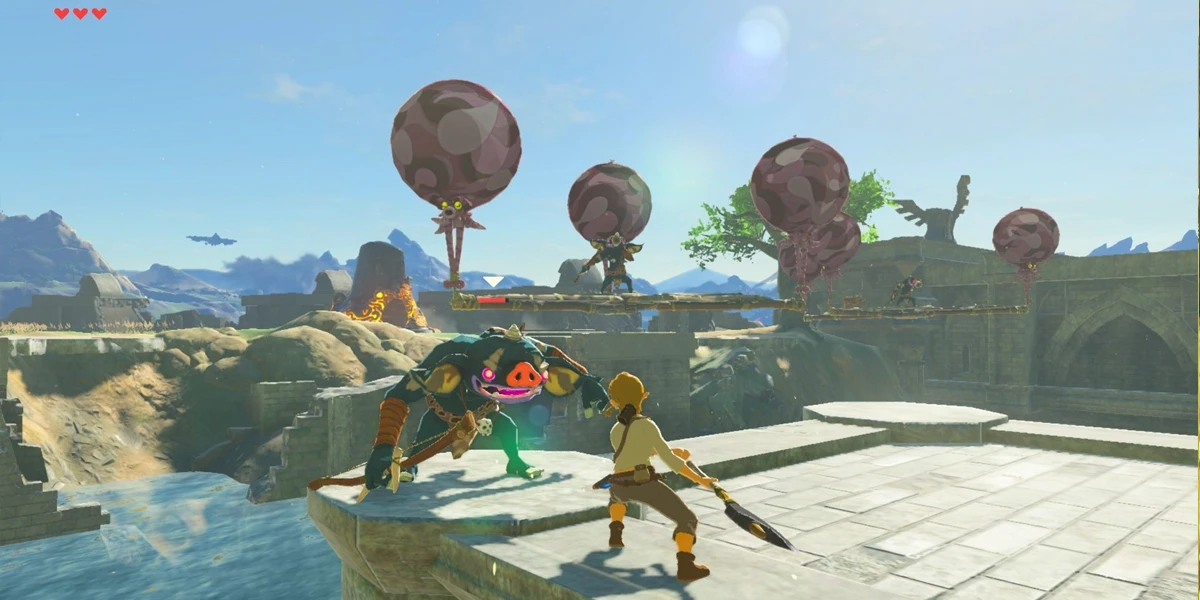
In 2017, The Legend of Zelda: Breath of the Wild reinvented the series by embracing a vast open-world design and allowing unprecedented player freedom. This game removed many of the traditional structures: linear dungeons, gated story beats, item-locked progression, and replaced them with a physics-driven world where creativity was the main tool. Breath of the Wild became the best-selling Zelda game to date, with 33.34 million units sold as of September 2025.
Major changes included:
- Climb-anywhere mechanics: Mountains, towers, buildings, if you can see it, you can climb it, limited only by stamina.
- Breakable weapons: Encouraged players to adapt constantly and use what they could find.
- Crafting and cooking: Players could combine ingredients found in the world to create meals and elixirs.
- Environmental interaction: Objects could be set on fire, metal conducted electricity, wind carried scents, and more.
- Over 100 Shrines: Small dungeon-like challenges scattered across the map that replaced traditional dungeon formats.
- Nonlinear main quest: Players could face the final boss at any time, provided they were skilled enough.
This sandbox approach meant that there was no “correct” way to play. Players could rush to the end, explore every corner, or simply experiment with the world’s systems.
Tears of the Kingdom and Modern Mechanics
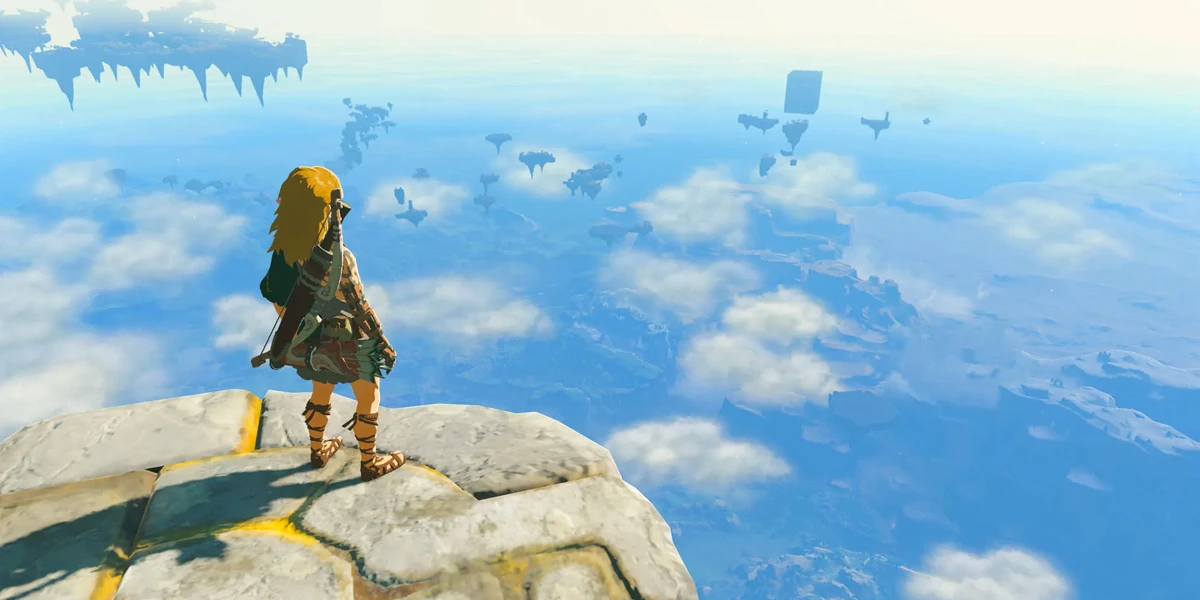
Released in May 2023, The Legend of Zelda: Tears of the Kingdom expanded on Breath of the Wild’s foundation while introducing its own innovations. The world was not only bigger, it was deeper and taller, with underground depths and floating sky islands.
TOTK introduces Ultrahand, Fuse, Ascend, and Recall as the headline abilities, with Autobuild as a fifth power for recreating contraptions, and Zonai devices powered by an Energy Cell system.
These systems introduced emergent gameplay that blurred the line between puzzle, combat, and sandbox experimentation. While some long-time fans missed the structured dungeons of earlier entries, most critics and players praised the ambition and creativity of the new mechanics.
Why Zelda Still Resonates
Almost four decades after its debut, The Legend of Zelda continues to be a touchstone in gaming. What makes it so enduring?
- A Universal Hero’s Journey
At its heart, Zelda follows the timeless myth of the hero’s journey: a young protagonist rises from obscurity, gains wisdom and strength, confronts evil, and restores balance. Whether Link is a farm boy, a sailor, or a knight-in-training, the pattern connects players emotionally.
This structure makes the series accessible to new players while providing longtime fans with a comforting rhythm. There is always a sword to earn, a princess to protect, a force of darkness to overcome. - Balance of Challenge and Wonder
Zelda games are famous for their ability to challenge without overwhelming. Combat is rarely about brute force, it’s about timing, tools, and understanding enemy patterns. Puzzles require logic and observation more than trial and error.
At the same time, there is a sense of wonder: the thrill of finding a hidden cave, discovering a new item, or piecing together a story told through the environment.
This mix of mental and physical gameplay keeps the experience fresh across titles. - Constant Reinvention
Very few franchises take as many risks as Zelda. From Wind Waker’s cartoon-like art style to Majora’s Mask’s time-loop mechanics to Skyward Sword’s motion controls, Nintendo has never let the series go stale. Breath of the Wild and Tears of the Kingdom are prime examples of that design bravery.
Each game reinterprets the Zelda formula for a new generation. Some players prefer the classic 2D top-down format. Others love the grand scale of the 3D worlds. The important thing is that both can coexist and thrive. - A Living, Breathing World
Hyrule and its surrounding lands aren’t just settings, they feel alive. Across each game, the world reflects the player’s progress. Townspeople react, weather changes, dungeons crumble, and enemies grow more dangerous.
The characters, even minor ones, are often full of charm and mystery. Whether it’s a strange mask vendor or a village of talking birds, the world always feels crafted with care.
In the latest entries, this world has become even more dynamic. Environmental systems, random events, and sandbox freedom make Hyrule feel less like a backdrop and more like a playground with its own logic and surprises.
Conclusion
The Legend of Zelda is more than just a video game series. It’s a legacy of adventure, imagination, and innovation. From 8-bit pixels to vast open worlds, Zelda has continually challenged the limits of game design while staying true to its roots.
What started as a simple story about a boy, a princess, and a villain has grown into a mythos that spans time, space, and generations of players. With each new title, Zelda asks the same question: What if you were the hero? And then it hands you the sword and says, go find out.
The future of the franchise looks just as promising. Whether Nintendo returns to a more structured dungeon format, continues to expand its open-world vision, or explores completely new directions, one thing is certain: Zelda will always find a way to surprise, inspire, and invite us back into its world.
Explore our collection of games t-shirts and celebrate your passion for epic adventures today!
