
No products in the cart.
Games
Why Super Mario is a Global Cultural Phenomenon
Introduction
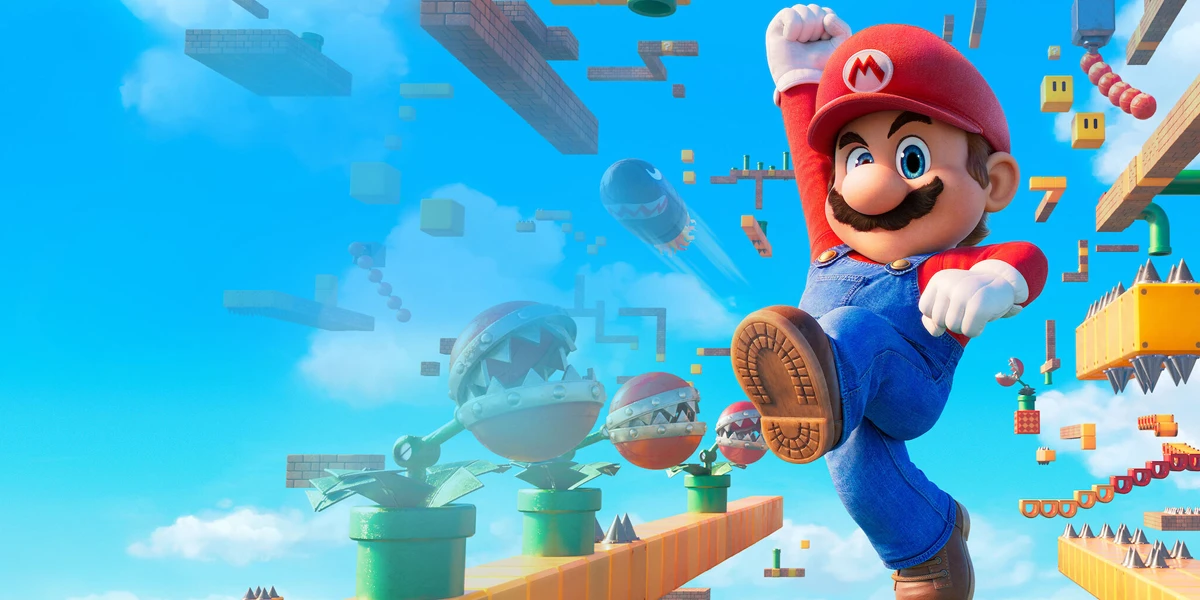
Super Mario is not just a successful platform game series but also an enduring cultural phenomenon, capable of connecting multiple generations of players worldwide. The appeal of this brand does not come from a single factor but is the result of a refined design ecosystem, iconic easily recognizable imagery, memorable music, a dynamic creative community, and appropriately timed innovation strategies through each era. When mentioning Mario, most players can immediately picture the red hat with the M, the blue overalls, the distinctive mustache, and the familiar precise jump. Those visual and auditory signals create a common language that makes newcomers feel familiar, while veterans still find depth to explore.
This article aims to explain why Super Mario can maintain its longevity, while providing conceptual frameworks to help readers systematically understand the design philosophy, development history, aesthetic value, and cultural impact. The content is directed at various audiences: newcomers who want to start in the right place, long-time players who want in-depth reading on design, families needing suitable recommendations, and those interested in Mario’s role in popular culture. Important historical milestones will be mentioned concisely, accurately, and with context, avoiding exaggeration or speculation.
The core point throughout the article is the combination of accessibility and replay depth. Even if you only play for a few minutes, Mario still provides smooth controls, clear objectives, and evenly distributed small rewards. But if you spend more time, you will see a series of sophisticated design techniques: natural difficulty curves, repeating motifs with variations, secrets that encourage curiosity, along with music rhythms and sound effects calculated to support movement. From there, Mario becomes an exemplary model for user-friendly yet deep game design, serving as both entertainment and a basic lesson for those wanting to learn the art of game making.
Origin and Brand Identity
Mario first appeared in Donkey Kong in 1981 under the name Jumpman, then became the official character named Mario and gradually developed into its own brand. The major turning point came in 1985 with Super Mario Bros. on Famicom and NES, when the seamless level structure, tight controls, and philosophy of teaching mechanics through situations set new standards for platform games. From classic 2D foundations, the series continued to evolve into 3D space with Super Mario 64 in 1996, opening up playground thinking with flexible cameras and diverse objectives. Subsequent milestones like Super Mario Galaxy on Wii or Super Mario Odyssey on Switch illustrate how the brand continuously refreshes the core experience while maintaining the familiar Mario feel.
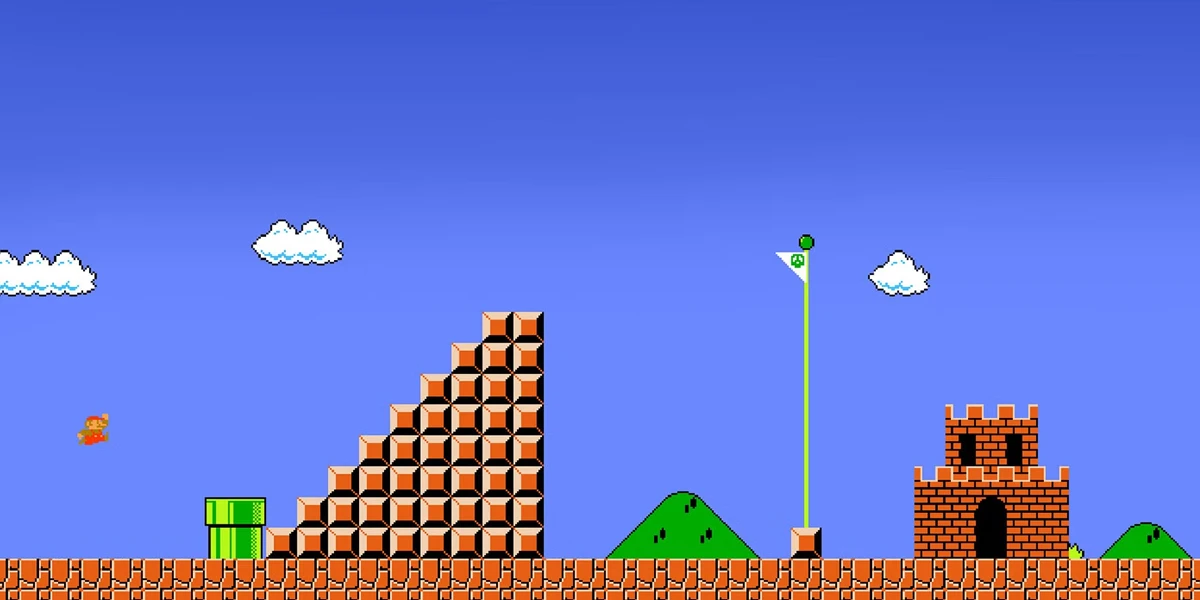
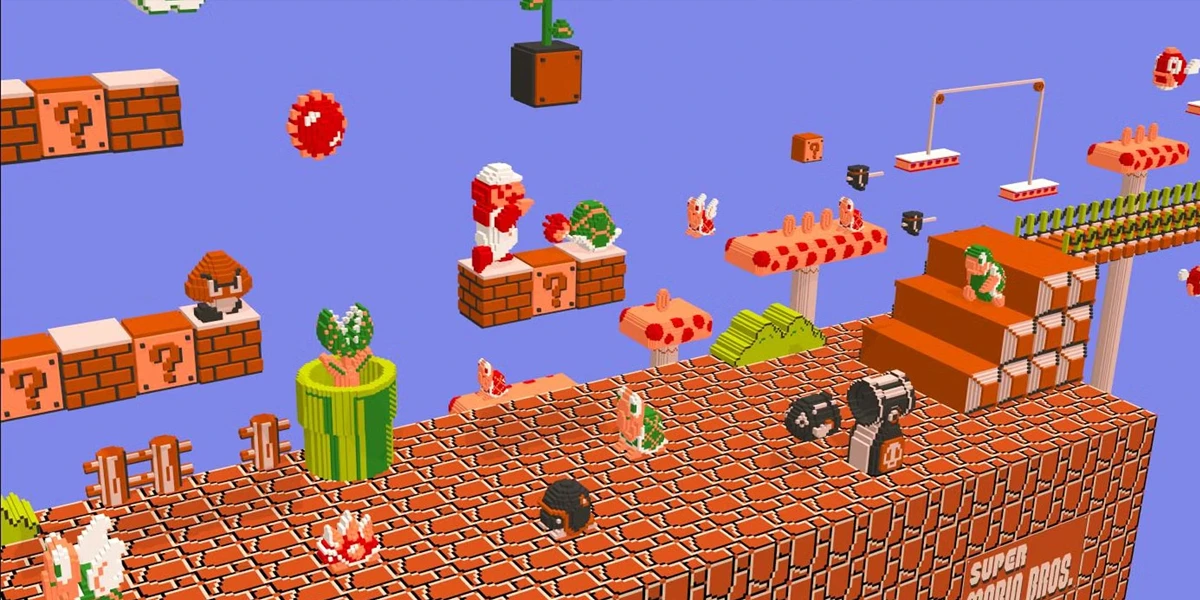
Mario’s visual identity is shaped by simple but highly iconic elements: contrasting red-blue color palette, the hat with M, the mustache that highlights the face, and easily readable shapes even from a distance. Character and enemy designs follow clear silhouette principles, helping players quickly recognize functions and behaviors. Kingdoms, brick blocks, pipes, flag goals, and gold coins create a visual vocabulary that allows players to implicitly understand the rules without much explanation. Over decades, these signals have been maintained and cleverly adjusted to fit contemporary hardware and aesthetics, from resolution, frame rate to material styles and lighting.
In addition to visuals, Mario’s music also plays a core role in identity. The thematic melodies are rhythmic, catchy, often syncing with movement rhythms and character speed. Background music and sound effects not only create atmosphere but also convey gameplay information, for example signaling power-ups, time warnings, or confirming successful actions. When visuals and audio blend, players form muscle memory and auditory memory, making mechanic learning natural and fun. Thus, the brand identity is not just logos or colors, but a multi-sensory experience meticulously refined over generations. For the latest updates, visit the official home of Super Mario.
Design Philosophy That Makes It Playable by Anyone
The starting point of Super Mario’s design philosophy is making basic operations reliable and satisfying. Mario’s jump has acceleration, skid distance, height, and horizontal range tightly linked to prior velocity, helping players predict outcomes intuitively after a few tries. The input window is calibrated to be forgiving for newcomers yet precise enough for experienced players. The satisfying feel comes from consistency between visuals, velocity, inertia, and audio feedback. When basic actions are solid, players are ready to absorb new mechanics at a faster pace without feeling overwhelmed.
Mario’s way of teaching mechanics relies on situations rather than long text. A good level usually introduces an idea in a safe environment, then deploys variations with increasing risk, and concludes with a concise climax accompanied by clear rewards. This structure helps players understand rules through action, remembering via experience rather than reminders. Elements like coin trails, enemy positions, stepped terrain, or brick blocks are deliberately placed to suggest optimal paths without depriving players of experimentation rights.
The difficulty curve in Mario is built on friendly and fair principles. The game alternates challenging moments with rhythmic breathing segments, keeping focus without exhaustion. Failure usually stems from player choices or timing rather than ambiguous systems, so when learning the rules, success rates visibly increase. Small objectives like collecting coins, finding hidden paths, or hitting time marks create micro-motivations, while large objectives like completing levels or unlocking areas maintain macro-progress. Thanks to carefully calculated reward-punishment rhythms, newcomers can progress steadily, while veterans have space to optimize skills and times.
Finally, the easy to learn but hard to master philosophy is not just a slogan but a consistent decision system spanning from motion physics, level layout, enemy placement to music rhythms. When every small detail serves the big goal of transparent and satisfying experience, Super Mario becomes a common meeting point between families, learners, and challenge enthusiasts. This is the foundation for the brand to transcend the boundaries of a single game, advancing to the status of a global cultural phenomenon.
Control Feel and Camera
If choosing only one factor to explain why players often say controlling Mario feels great, it would be the internal consistency between motion physics and immediate feedback. When pressing the jump button, you clearly feel the landing phase, light skid after impact, and horizontal acceleration range. Each action has stable rules, so after a few minutes of familiarization, the brain starts accurately predicting landing positions or necessary distances to overcome obstacles. From this foundation, all advanced mechanics like wall jumps, flips, slope slides, gliding on slippery surfaces, or stepping platforms become organic extensions of a unified motion grammar.
The camera plays an equally important role. In 2D contexts, screen layout, scroll speed, and space ahead of the running path are calculated to let players read situations one beat early. The camera maintains a reasonable distance to see far enough without losing near details. In 3D, the camera shifts to a considerate companion role. It avoids obstructing views, provides angles that highlight paths and interactive objects, and smoothly transitions between areas so players do not feel overwhelmed. When camera and movement work together, newcomers achieve control feel after just a few minutes, while experts can exploit every frame to optimize trajectories.
Response time factors are also meticulously handled. Small sound effects like picking up coins, breaking bricks, or signals when reaching flag goals arrive right on time, confirming success and maintaining forward momentum. Fine adjustments like forgiveness windows on landing or allowing a fraction-of-a-second buffer when pressing buttons early or late make the experience more tolerant without losing necessary precision. As a result, players rarely blame the system; instead, they realize they can practice to do better. This sense of fairness is the long-term bond.
Intelligent Level Design
Level design in Mario is like teaching a concise, clear, and fun lesson. An idea appears in a safe environment where failure causes little harm. Then the idea is varied with different enemy positions, more complex terrain, or faster movement rhythms. At the level end, players face a final exam version where they must fully apply what they just learned. This structure respects time and attention, as it does not require reading long instructions but encourages learning through doing. As Shigeru Miyamoto explained, World 1-1 of Super Mario Bros. set enduring game design principles.
Levels always have a clear main path and hidden branches for the curious. Coins placed in chains suggest optimal jump trajectories, enemy positions reveal safe timing to dash through, while brick blocks or pipes appear in logical spots to invite checks. Hard-to-spot shortcuts create reward feelings for those who observe. Tension and relaxation rhythms are distributed like breathing, helping players alternate focus and release pressure. Even in failure, players understand why they erred and how to fix it next time. The elegant design of Super Mario Bros. levels continues to inspire developers decades later.
One notable feature is idea density. Instead of extending one mechanic over dozens of levels, Mario tends to introduce many small ideas, each presented deeply enough to create memories, then yields to the next. This keeps the pace fresh, avoids fatigue, and creates continuous discovery feelings. Each level is like a themed short piece, remembered by images or specific moments, not just length or difficulty alone.
Power-Ups as Gameplay Verbs
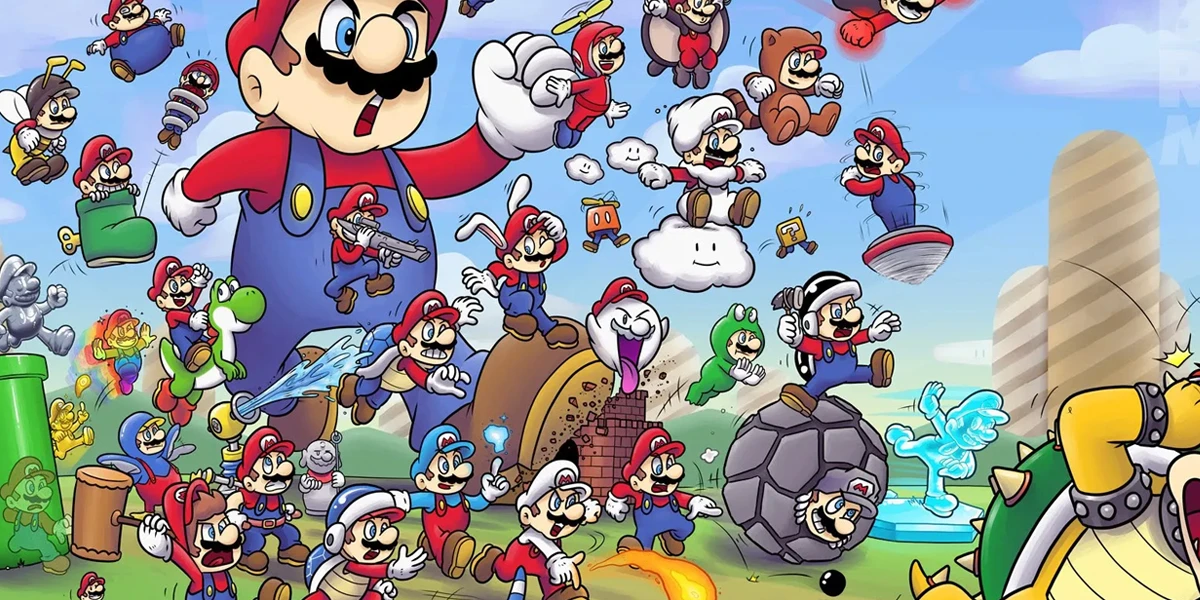
Power-ups in Mario are not just strength upgrades but ways to add new verbs to the play grammar. When receiving an item, you not only become stronger but also gain action choices. Fire Flower opens ranged attacks, Cape or Tanooki change jump trajectories, Spin Jump allows interactions with special surfaces, Cappy or modern variants open creative situation-solving styles. Each power-up comes with its own rule set, and good levels create situations for players to self-discover uses rather than forcing them.
The introduction sequence for power-ups is always consistent. First is a safe space for experimentation. Next are variations with increased risk or requiring coordination with other mechanics. Finally is a challenge testing application in fast rhythms. Mastery feeling arises in the third step, when players realize they not only memorize uses but also coordinate smoothly with terrain, enemies, and level rhythms. Clever design also encourages swapping power-ups mid-stage, forcing players to consider strategies instead of sticking to one path.
Power-ups also nurture curiosity. Many secrets only unlock with suitable items, creating motivation to revisit old levels for thorough exploration. This cycle both extends content lifespan and does not pressure newcomers, as the main path is always completable without full collection. That is the balance between freedom and objectives, between exploration and speed.
2D and 3D Sharing the Same DNA
Despite shifting from 2D to 3D, Mario still keeps a common design DNA. In 2D, the structure resembles multi-lane racetracks. Newcomers take safe lanes, experienced players choose time-shortening lanes with hard jumps or shortcuts. Each level is concise but idea-dense, making even a few-minute session memorable. In 3D, the structure turns to more open playgrounds, where objectives split into many small milestones. Players self-select completion order, exploring areas via subtle guidance from terrain, lighting, and object layouts.
The common point of both styles is stable control feel. Mario still jumps with predictable rhythms, the camera supports decisions, and unified visual language helps quick situation reading. Both emphasize teaching mechanics through experience. 2D focuses on efficient linear trajectories, 3D encourages multiple approach angles. This difference does not conflict but complements, expanding player audiences without losing identity.
The success key lies in how each entry sets a central idea then revolves around it. Whether unusual gravity mechanics, multi-functional hats, or strange transformation states, the game always introduces, varies, builds to climax, then rewards within clear frameworks. Thus, despite changing settings and tools, players still recognize it as Mario. For a ranking of key titles in the series history, see this 40th anniversary retrospective.
Music and Sound Creating Emotions
Music in Mario is both identity and gameplay tool. The theme melodies have easy-to-catch rhythmic structures, corresponding to character movement and jump speeds. When background music syncs with control rhythms, players subconsciously time jumps more accurately. Small sound layers like breaking bricks, picking coins, entering pipes, or getting power-ups form continuous confirmation chains, maintaining forward motivation.
Music is not just beautiful but flexible by context. Underwater versions are slow and floating, icy versions bright and light, lava area versions more tense. This subtle change does not impose emotions but increases eye-ear harmony. In modern entries, orchestration expands, but core melodies keep high recognizability. Many players can identify an area atmosphere from just a few notes, proving music has become community shared memory.
Art and Quick Situation Reading
Mario’s art prioritizes situation reading ability. Character and enemy silhouettes are clear, distinct even when shrunk or viewed from afar. Color palettes use reasonable contrasts to separate background and interactive layers. Emphasized objects are often brighter, with predictable cycle movements, or placed in strategic frame positions. Thus, players do not confuse static backgrounds, jumpable surfaces, or avoidable items.
UI is minimized to yield space for content. Necessary stats appear on time, without blocking views. When communicating new rules, the game often uses icons, effects, and object positions more than text. This makes the experience nearly language-barrier-free, contributing to Mario crossing national borders and becoming a global phenomenon.
Exploration, Secrets, and Replay Motivation
One of Mario’s enduring joys is the feeling that something interesting awaits behind the next wall. Hidden paths, sub-areas, bonus rooms, or optional objectives are sprinkled like spices, enriching the journey. Players follow the main path while eyeing unusual signs like odd wall patterns, upward-leading coin chains, or suggestive sounds. When finding secrets, rewards are not just items but small prides and memories of that spot.
Collection mechanics also create long-term goals. Some aim to complete main objectives, others to gather full item sets per area, others passion for time records. Design always allows these play styles to coexist. Thus, each person writes their own story, extending game lifespan without forcing.
Community, Speedrunning, and Player Creativity
The community has turned Mario into an endless playground. Speedrunning is a prime example, where players compete by seconds via optimized jump angles, paths, and enemy interactions. Because mechanics are stable and feedback reliable, practicing per frame makes sense. The community develops knowledge treasures, from fast routes to advanced techniques, creating a sharing and mutual learning culture.
Beyond speedrunning, fan creativity blooms through custom maps, analysis videos, fan art, cosplay, and countless other content. Each creative product becomes a brand extension arm, bringing Mario images to new audience groups. This community culture nurtures positive cycles. More participants mean more new knowledge, more motivation for others to return and try more.
Brand Ecosystem and Cultural Influence
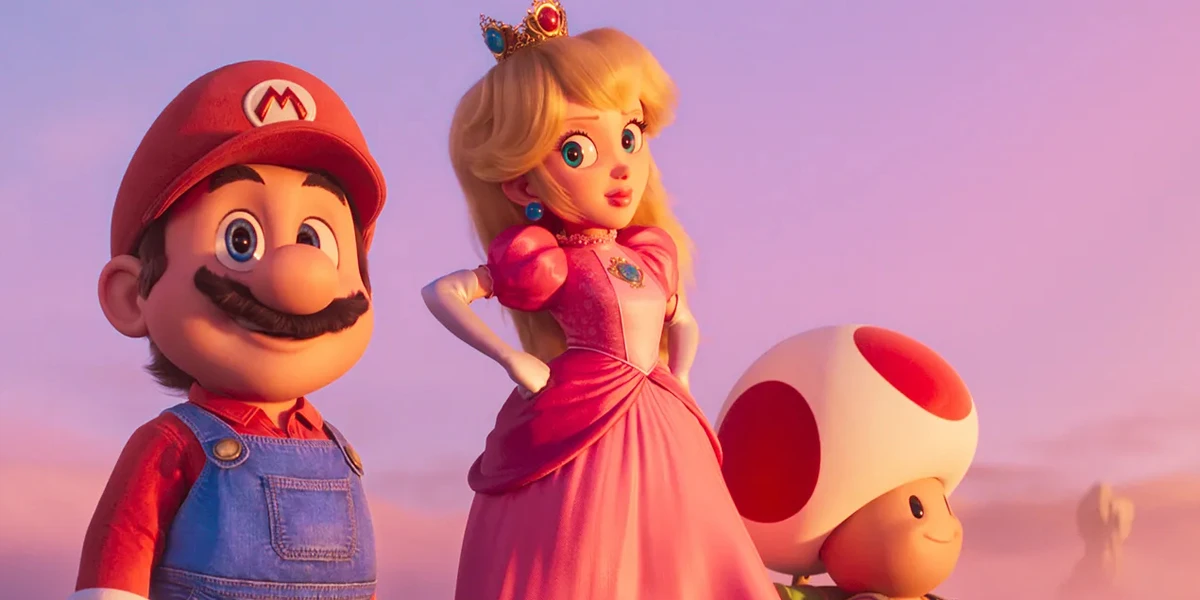
Mario does not stop at games. Character images, music, and icons have stepped into daily life through films, collectibles, apparel, toys, events, and experience spaces. This expansion does not dilute the core because it always revolves around initially defined values: fun, clear, friendly, and exploration-encouraging. When an icon enters everyday life, it transcends generational boundaries. Parents who played games years ago can now share joys with children, creating rare intergenerational bonds. Fans can also express their passion with vibrant Mario-themed apparel collections.
Cultural influence also comes from symbolism. The red hat, gold coins, green pipes, goal flags, or brick blocks have become universally recognized visual signs. Mass media exploits these icons as common language, making Mario present in ads, entertainment programs, classes, and community events. Each appearance reinforces collective memory position.
Economic and Commercial Milestones
From an economic view, Mario shows how a sustainable brand can accompany hardware over generations. Releasing flagship entries at key stages attracts newcomers and returns old players. Collections and re-releases keep heritage accessible, bridging history while reducing barriers for young players. Content strategies balance innovation and inheritance, helping each launch have its own story, avoiding formula repetition to boredom.
Mario’s product lifecycle thus counts not by release months but years. When an entry has exploration depth, flexible mechanics, and active community, it continues revenue from sources like expansions, items, events, and related content. Solid foundations allow bolder experiments without betting too much on fleeting trends.
Family Suitability and Educational Value
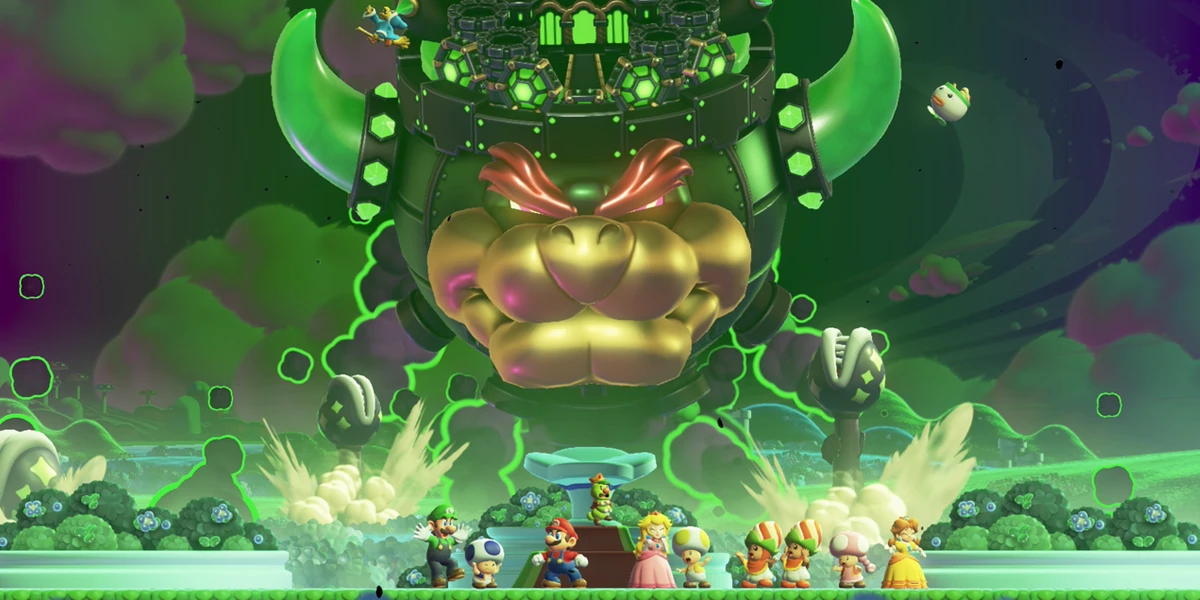
Mario is designed for whole families to play together. Co-op modes encourage coordination but keep fun paces. Games set age-appropriate challenges via easy-to-follow main paths, while sub-branches provide skill practice space for proficient players. Thanks to clear visual language and guiding sounds, parents can easily instruct children on basic rules.
Educationally, Mario hones reflexes, hand-eye coordination, pattern recognition, short-term planning, risk management, and trial-error thinking. The way games teach mechanics through situations illustrates practical action-based learning methods. When children learn that failure is adjustment information rather than an end, they form gradual improvement habits. These are skills transferable to studies and life.
Multi-Platform Presence
Through hardware generations, Mario always finds suitable expressions. On home consoles, games exploit processing power and precise controls for complex multi-layered levels. On handhelds, focus shifts to short sessions, clear goals, and quick rewards, fitting mobile lifestyles. In any environment, the core is reliable controls, clear situation reading, and steady progress feel.
Platform flexibility also reinforces player memory chains. Someone growing up with classic versions can return on modern hardware and see familiar principles implemented with new looks. This continuity builds trust that each return, Mario meets quality standards, while inviting new discoveries.
Controlled Innovation Through Entries
A big lesson from Mario is that innovation needs pacing and boundaries. Each entry sets a central idea then revolves around it with clear level chains. The idea is not to overwhelm players but let them feel reasonable learning curves. When players master it, the game offers creative variations or mechanic combinations for surprises. This approach keeps identity undiluted, while expanding creativity scopes.
Controlled innovation also shows in choosing what to keep unchanged. Core controls, response speeds, foundational visual language, and main audio signals are usually maintained. Changes occur in setting layers, central mechanics, and objective structures, helping each entry have unique souls without strangeness. Players thus feel both returning home and excited to explore a new room.
Sustainability Through Generations
Finally, Mario is sustainable because it consistently meets three things: low entry threshold, high skill ceiling, and quality reliability. Newcomers start easily, veterans have practice ground, and everyone trusts time invested will be rewarded with smooth experiences. When a brand maintains this promise over generations, it exceeds entertainment roles and becomes part of collective memory.
The overall picture shows Super Mario as a global cultural phenomenon not just due to sales or fame, but by a consistent design principle system always centering players. The combination of reliable controls, considerate cameras, intelligent level design, meaningful power-ups, recognizable music and art, creative communities, and rhythmic innovation strategies has created a rare icon. Whether newcomer or long-attached, each new journey start gives reasons to smile and keep jumping forward.
Regional Influence and Localization
Super Mario’s global spread comes not only from game quality but also how the brand adapts to each region. In Japan, home gaming habits and craft respect culture lay foundations for meticulous design reception. In North America, family entertainment spirit and visual storytelling combinations help Mario quickly become pop icons. In Europe, language diversity forces localization to focus on wording, expressions, and screen reading paces to keep original emotional rhythms.
Localization in Mario does not stop at text translation. Item names, action descriptions, interface hints, and sometimes tutorial implementations are adjusted to feel natural in target languages. Since most knowledge is taught through situations, development teams have advantages reducing text reliance, making experiences easier to cross language barriers. When text is needed, editing style aims for conciseness, neutrality, and consistency, minimizing ambiguous mechanic phrases.
Regional taste differences also show in play habits. Some prefer relaxing short-level play, others deep exploration and 100 percent completion. Mario accommodates both via tiered objective structures. Main paths are concise, while sub-branches are idea-rich enough for challenge lovers. This approach maintains stable appeal, regardless of regional cultures and lifestyles.
Play Roadmap Guidance by Goals
There is no single correct roadmap for everyone. Mario’s strength is allowing enjoyment suited to time, preferences, and control experience.
- For Newcomers: Prioritize entries with clear onboarding and friendly difficulty slopes. The goal here is building reliable control feel and learning series visual language. Do not hunt secrets immediately. Complete main paths first, then revisit favorite levels to experiment with more precise jumps or check suspicious spots.
- For 2D Style Lovers: Choose versions with short idea-dense levels, clear reward-punishment rhythms. Practice reading coin chains and enemy positions as trajectory guides. Set personal goals by level completion times, then escalate requirements like no deaths, limited power-up swaps, or selected item collections. This climbing way keeps progress measurable.
- For 3D Style Lovers: Focus on area-based exploration rhythms. Each area often has many small-size objectives for steady achievement feels. Get used to cameras, finding wide views for terrain reading and close angles for precision. Do not hesitate leaving hard objectives for later. Objective-switching cycles avoid fatigue and keep positive exploration paces.
- For Families and Co-Op: Choose entries with clearly designed coordination modes. Agree on small play rules beforehand like alternating leads, supporting through hard parts, or setting per-session goals to unlock certain areas only. When playing with young kids, prioritize main paths and items giving immediate positive feedback. The key is maintaining fun and fair atmospheres, so everyone has shining moments.
- For 100 Percent Completion Enthusiasts: Note suspicious hidden path areas by noticing sounds, unusual coin chains, or distinct brick patterns. Define looping criteria like collecting by area before totaling, or completing objectives by mechanic groups like wall jumps, special surface interactions, time challenges. Specific small milestones help make 100 percent journeys less overwhelming.
Influence of Music, Art, and Visual Signals in Practical Use
When applying above roadmaps, you will see music and art are not just decorations. Area theme music often suggests movement rhythms, indirectly reminding jump or dash timings. Visual icons like flags, pipes, characteristic bricks indicate interactable spots. Color palettes layer foreground, midground, background to help eyes prioritize information in instants. Being aware of these signals turns you from reactive to intentional players.
Experience Overcoming Obstacles and Quick Error Fixes
When hitting hard segments, break down problems small. Observe enemy movement rhythms by cycles, mark geometric spots like ledge edges, brick positions, or distances by tile counts. Try opposite jump trajectories, one safe, one risky, to determine allowance margins. If levels require power-up coordination, prioritize types widening error margins first, then switch to high-efficiency ones. This layered approach helps you see clearly why you failed and what to adjust next.
Why Mario Fits Modern Lifestyles
Each level is usually short, with clear goals and small rewards evenly spread. This structure fits busy schedules well. You can complete one or two objectives in ten minutes, still feeling complete and progressed. When freer, you can revisit multi-layered areas for depth exploitation. Scalable session lengths make Mario not demand long commitments upfront, but still open for lengthy journeys when ready.
Exemplary Value for Game Makers
From professional angles, Mario is a timeless design solution collection. Ways of teaching mechanics through situations, using enemies as teaching tools, employing coins and terrain layouts for guidance are principles transferable to many genres. Consistency between motion physics, cameras, and audio signals shows immediate feedback importance. Controlled innovation emphasizes that central ideas need shining space, instead of chaotic competition with too many systems.
Why Cultural Phenomena Need Intergenerational Ties
A cultural phenomenon only endures with abilities to connect different generations through shared experiences. Mario achieves this with age-understandable games, fun images, memorable music, and positive messages about exploration, curiosity, and progress. Parents can pass learned skills to children, while kids bring fresh views and first-discovery joys. Meetings between memories and discoveries create unforgettable family moments.
Brand Integrity in Multi-Field Expansion
When a brand steps beyond game scopes, identity dilution risks always exist. Mario avoids this by holding core values firm. Whether events, items, or expanded content, fun, clear, friendly, and experiment-encouraging messages still guide. The result is every touchpoint reinforces recognition, not breaks. That is the foundation for cultural activities to mesh, instead of just riding temporary fame.
Conclusion
Super Mario becomes a global cultural phenomenon because it converges a sustainable principle ecosystem, all directed at player experiences.
- First, reliable controls and considerate cameras create smooth feels right in initial minutes.
- Second, intelligent level design teaches mechanics through situations, turning each level into concise but idea-rich lessons.
- Third, power-ups act as new verbs, expanding action grammars without confusion.
- Fourth, music and art combine for quick situation reading, long memories.
- Fifth, tiered objective structures accommodate all styles, from relaxation to record conquests.
- Sixth, controlled innovation strategies help each entry have unique identities while keeping common DNA.
- Seventh, subtle localization and multi-platform flexibility bring experiences across language barriers and lifestyles.
When these pillars operate harmoniously, Mario is not just a successful game but a cultural meeting point, where memories and explorations meet, where newcomers are welcomed and veterans have shining grounds. Regardless of coming to Mario for family joys, design passions, or conquest desires, you can find suitable roadmaps. And that accommodating ability is the secret for Super Mario to continue thriving in collective memory, through multiple generations of players worldwide.
