
No products in the cart.
Games
Deep Dive into Resident Evil Lore: Umbrella and the Viruses

The Resident Evil universe is built on scientific overreach. At its center stands the Umbrella Corporation, a pharmaceutical empire whose obsession with human evolution and control unleashed a chain of viral disasters, from the fall of Raccoon City to worldwide bioterrorism. This analysis breaks down Umbrella’s rise and collapse, and the major mutagens that define the series, from the T Virus and G Virus to later threats like Uroboros and the Megamycete mold, using current canon including remake revisions.
The Rise of Umbrella: Eugenics Disguised as Medicine
Umbrella Corporation was founded in 1968 by Oswell E. Spencer, Edward Ashford, and James Marcus after discovering the Progenitor Virus in Africa. Publicly, Umbrella operated as a pharmaceutical company developing vaccines and treatments. Privately, it pursued Spencer’s eugenics ideology, using viruses to force human evolution and eliminate those deemed inferior.
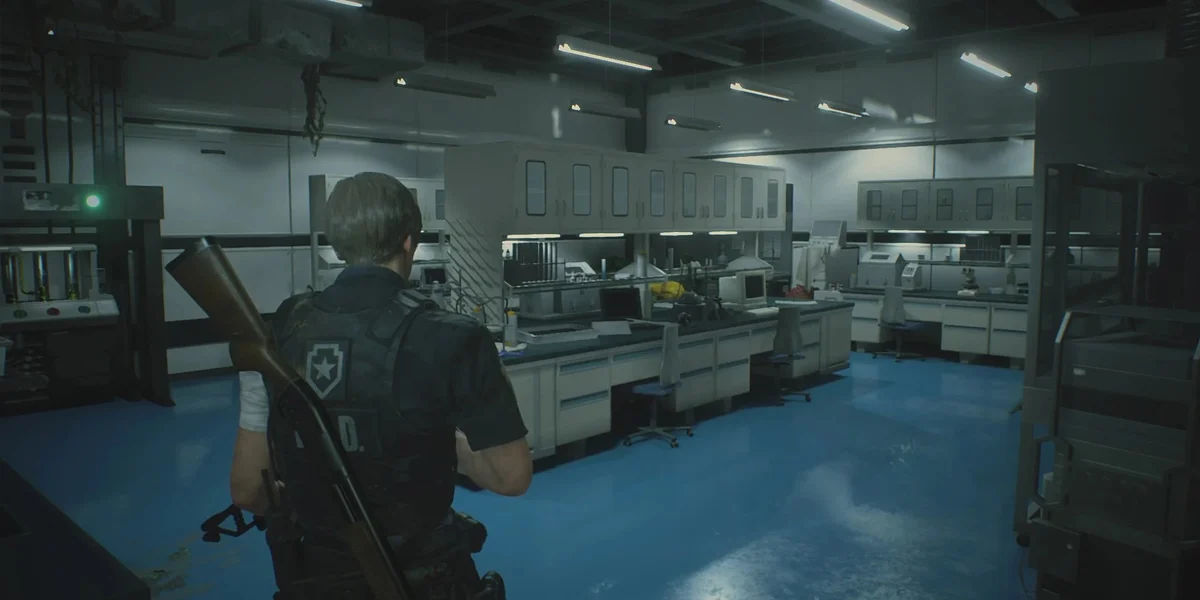
Spencer’s worldview was shaped earlier by Mother Miranda’s mold research in Eastern Europe, though he later abandoned fungal approaches in favor of viral weaponization. Umbrella expanded rapidly through subsidiaries and front companies, embedding itself into global infrastructure while secretly constructing laboratories such as the Arklay facility and the underground NEST complex beneath Raccoon City.
Internal conflict was constant. Marcus’s obsession with leeches and Ashford’s refinement work clashed with Spencer’s authoritarian control. By eliminating rivals and consolidating power, Spencer pushed Umbrella toward full scale bioweapon production, including Project W, which experimented on children like Albert Wesker. By the late 1980s, Umbrella was technologically dominant but structurally unstable, built on secrecy, betrayal, and unchecked ambition.
The T Virus: Zombies and Mass Production of Horror
The T Virus became Umbrella’s first scalable bioweapon. Developed in the late 1970s, it reanimated dead tissue, destroyed higher brain function, and produced aggressive undead hosts. Humans, animals, and plants mutated unpredictably, creating creatures such as Cerberus dogs, Hunters, Lickers, and carnivorous plants.
In rare cases, the virus stabilized, allowing the creation of Tyrants, massive humanoid weapons engineered for obedience and raw power. Variants such as T 002, Mr. X, and Nemesis represent escalating attempts to improve control, intelligence, and battlefield effectiveness.
Containment failed repeatedly. The Arklay Mansion incident, the Ecliptic Express outbreak, and ultimately the Raccoon City disaster all stemmed from T Virus leaks and internal sabotage. The RE2 remake canonically establishes rats as the primary vector that spread infection through the city’s sewer system, accelerating collapse.
The G Virus: Birkin’s Uncontrolled Evolution
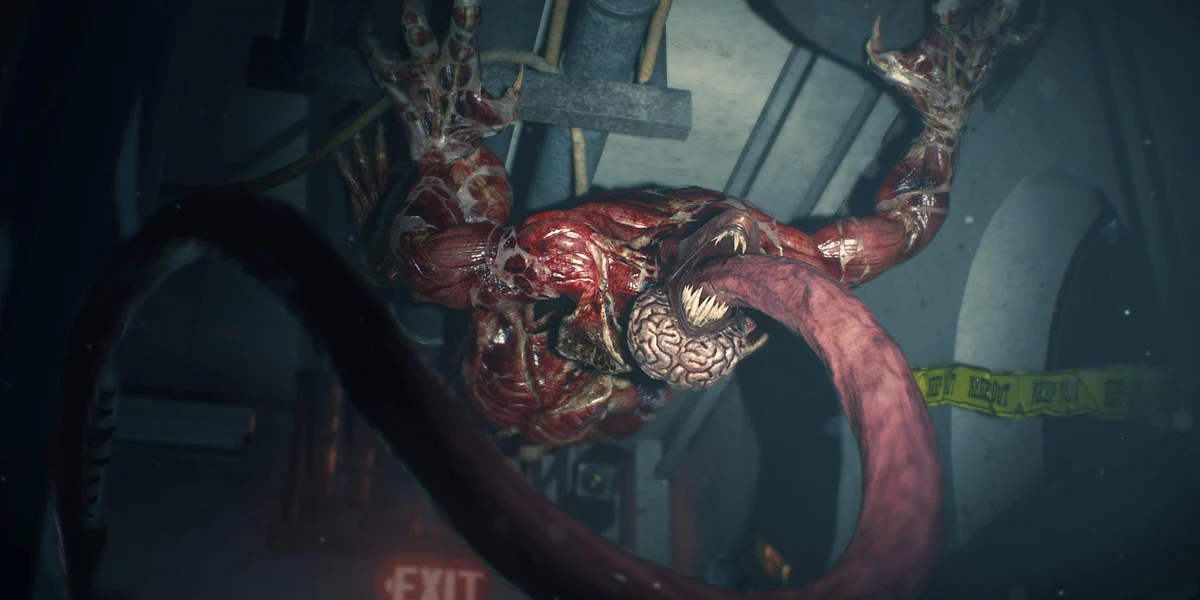
The G Virus, created by William Birkin in the early 1990s, abandoned reanimation in favor of aggressive mutation and reproduction. Instead of creating zombies, G transformed living hosts into self evolving organisms capable of regenerating and reproducing through forced implantation.
Compatibility was extremely rare. Birkin himself became the primary subject, mutating through multiple grotesque forms during the Raccoon City incident. The virus attempted to propagate by embedding embryos into new hosts, including Birkin’s daughter Sherry, highlighting its parasitic design.
While Umbrella viewed G as the ultimate weapon, its volatility made it unusable. Even after Umbrella’s collapse, fragments of G continued to resurface, reinforcing its role as a cautionary example of unchecked innovation driven by personal obsession.
After Umbrella: Plagas, Uroboros, and the C Virus
Umbrella’s 2003 bankruptcy did not end bioterrorism. Its research spread to new actors.
Las Plagas, an ancient parasite rediscovered in Spain, allowed direct neural control of hosts while preserving intelligence. This organic alternative to viruses enabled coordinated combat units and influenced later hybrid weapons.
Uroboros, developed by Albert Wesker, combined Progenitor research with Plagas data. It selectively enhanced compatible hosts while destroying the rest, directly reflecting Spencer’s original eugenics ideology.
The C Virus, deployed by Neo Umbrella, merged multiple viral lines into a highly adaptable weapon. It produced soldiers capable of regeneration, mutation mid combat, and large scale urban infection, marking the peak of post Umbrella bioterror warfare.
The Mold and Modern Bioweapons
Resident Evil 7 and Village shifted focus from viruses to the Megamycete, a fungal super organism predating Umbrella. Exploited by Mother Miranda and later The Connections, the mold functioned as a distributed consciousness, controlling hosts through spores, hallucinations, and regenerative properties.
Unlike viral necrosis, mold infection preserved identity while enforcing loyalty. Eveline’s control over the Baker family and Miranda’s Cadou experiments demonstrated a more insidious form of domination, blending emotional manipulation with biological control.
Village confirmed the link between Miranda and Spencer, unifying early Umbrella philosophy with modern threats. Although the Megamycete was destroyed, later events suggest remnants and derivative research persist.
Umbrella’s Fall and Lasting Impact
The destruction of Raccoon City in 1998 triggered investigations that led to Umbrella’s legal collapse in 2003. Lawsuits, leaked data, and internal betrayals dismantled the corporation, but its technology lived on through successor groups, black markets, and splinter organizations.
Umbrella’s story critiques corporate secrecy, militarized science, and the illusion of control. Every virus, parasite, and mold strain reflects the same failure: attempting to engineer superiority inevitably creates monsters.
For fans interested in the visual side of the franchise, you can browse the Resident Evil t shirt collection inspired by Umbrella, classic viruses, and iconic characters.
