
No products in the cart.
Music
The Smiths’ Drummer Mike Joyce: From Hits to Morrissey Feud
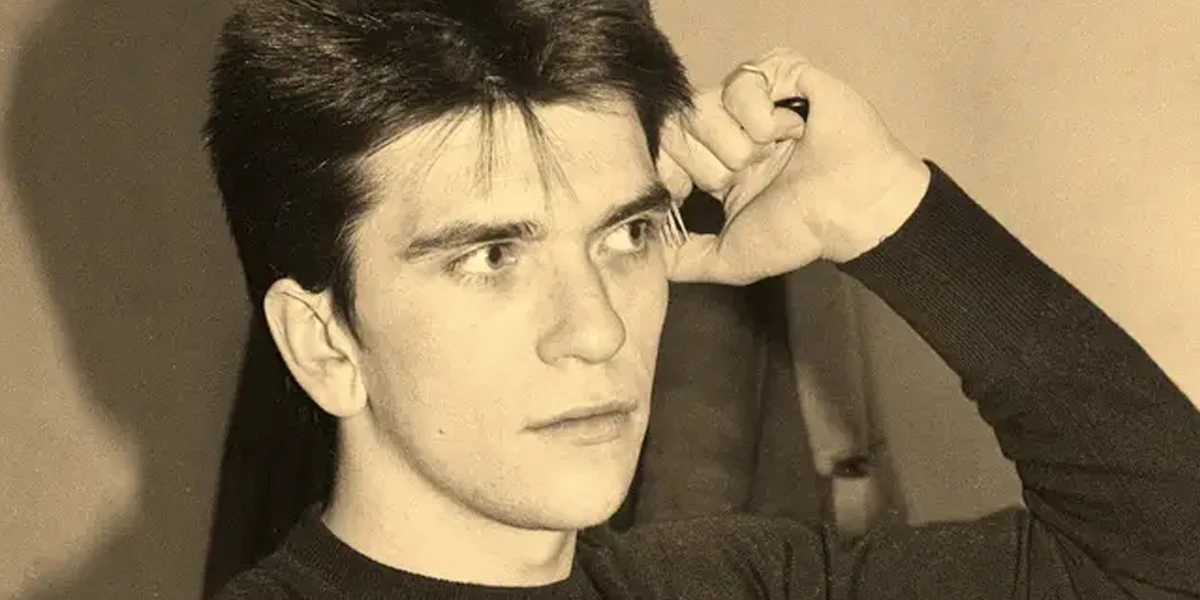
The Smiths’ Drummer Mike Joyce: From Hits to Morrissey Feud
Mike Joyce, the drummer of the legendary band The Smiths, played a key role in shaping 1980s indie rock music with his steady and understated drumming style behind timeless hits like “How Soon Is Now?” and “This Charming Man.” From a young man in Manchester to the center of a fiery legal dispute with Morrissey in 1996, Joyce’s journey is a story of music, friendship, betrayal, and enduring pop culture legacy, especially with his upcoming memoir The Drums set for release on November 6, 2025.
This article delves into Mike Joyce’s life in detail, from his early days joining the band to the royalties lawsuit that shook the rock world, his role in The Smiths’ sound, and his career afterward, all based on verified information from interviews, court documents, and reliable sources. If you are a Smiths fan, this is your chance to gain deeper insight into the man who provided the rhythm for songs that changed the music world.
Early Life and Joining The Smiths
Michael Adrian Paul Joyce was born on June 1, 1963, in Manchester, England, a gritty industrial city famous for its punk and post-punk music culture that nurtured talents like Joy Division and The Smiths. As the youngest in a working-class family, Joyce grew up in a modest environment where music served as an escape from everyday hardships. From a young age, he was fascinated by drums, starting to play at 13 after being influenced by punk bands like The Clash and Sex Pistols. He played for local groups such as The Hoax and Victim, a punk band from Northern Ireland, before gaining fame.
In 1982, at just 19 years old, Joyce was introduced to The Smiths through a mutual friend, leading to a simple audition at a Manchester studio. The band, formed by Morrissey on vocals and Johnny Marr on guitar, was seeking a drummer to complement bassist Andy Rourke. Joyce, with his dynamic and precise drumming, was quickly selected. He debuted in The Smiths’ first performance in Manchester on October 4, 1982, marking the start of a five-year journey filled with success and turmoil.
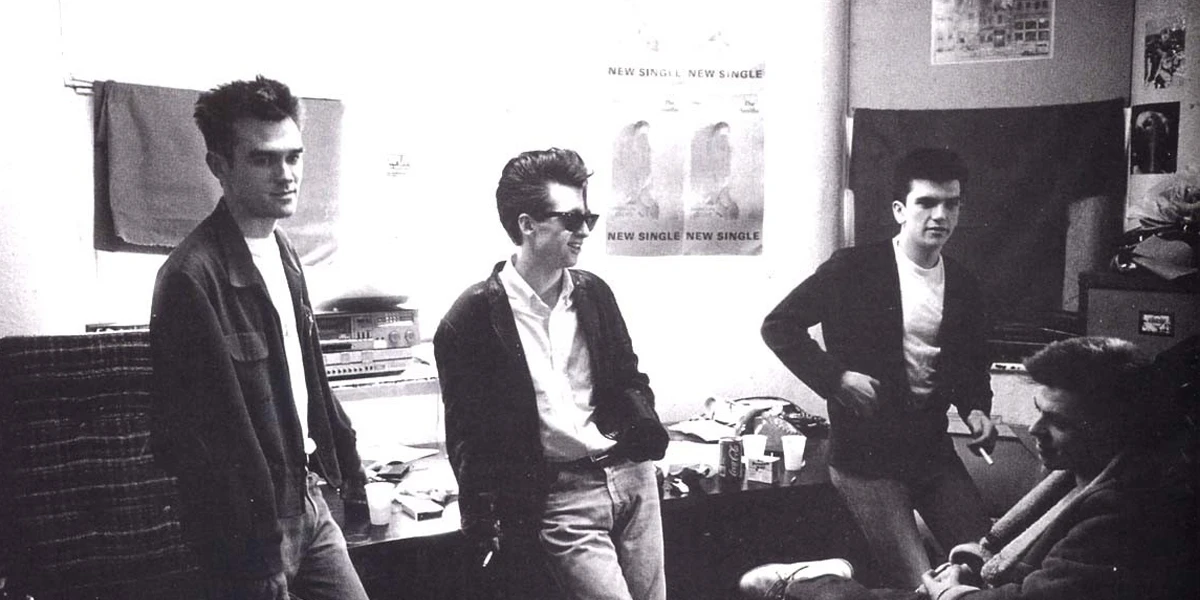
The early years with The Smiths were a time of learning and bonding. Joyce described in interviews how the band felt like a family: Marr as a “genius artist” with signature jangly guitar riffs, Rourke providing smooth basslines, and he and Rourke forming the solid “rhythm section,” a crucial element in the band’s dark, poetic indie rock sound. They soon signed with Rough Trade Records, releasing their debut single “Hand in Glove” in 1983, which signaled their breakthrough. Joyce, humble and reserved, often stayed in the background, but his skills were praised for supporting Morrissey’s emotive vocals without overpowering them.
Using a simple drum kit (often Zildjian cymbals and Ludwig snare), Joyce brought modest rhythms that supported without showing off, fitting the band’s themes of isolation, love, and society. His drumming formed the foundation of the band’s iconic indie rock sound, blending Marr’s jangly guitar, Rourke’s smooth bass, and Morrissey’s poetic vocals.
- On The Smiths (1984), his beats shine in “Reel Around the Fountain” with slow, brooding rhythms creating an introspective mood, and in “What Difference Does It Make?” where the rhythm builds urgency.
- Meat Is Murder (1985) features experimentation on “How Soon Is Now?” with a repeating groove that transforms it into a club staple. He also added backing vocals in “That Joke Isn’t Funny Anymore,” enhancing emotional layers.
- The Queen Is Dead (1986) is the high point: “The Boy with the Thorn in His Side” has refined drumming that echoes Morrissey’s downbeat lyrics, while “Bigmouth Strikes Again” highlights speed and punk drive. Joyce said, “I play to support, not to lead, like the band’s heartbeat.”
- The last album Strangeways, Here We Come (1987) includes “I Know It’s Over” with slow, sorrowful drums contributing to the sense of parting, and “This Charming Man” (earlier single) with punk energy.
Behind the success were signs of cracks. In 1987, The Smiths disbanded abruptly after a U.S. tour, with the official reason being “creative differences.” Joyce, then 24, felt overwhelmed by fame but had no idea the breakup would lead to a prolonged legal battle.
Why Did Mike Joyce Sue Morrissey? Explaining the 1996 Royalties Dispute
The lawsuit between Mike Joyce and Morrissey is one of the biggest dramas in rock history, stemming from unequal royalties after The Smiths’ breakup. In 1989, Joyce and Andy Rourke, the band’s rhythm section, began questioning profit distribution. Under the initial agreement (without formal legal representation for performance royalties), Morrissey and Marr received 40% each from songwriting, while Joyce and Rourke got only 10%, despite all four considering themselves equal members. Joyce felt he was “kept in the dark” about financial details, and royalties from album sales (over 20 million worldwide) did not reflect his drumming contributions.
The case escalated in 1996 at London’s High Court of Justice. Joyce sued Morrissey and Marr, demanding recognition as an “equal partner” and a 25% royalties share instead of 10%. Rourke initially joined but settled out of court for a one-time £83,000 and retained 10% royalties afterward. Joyce pressed on, arguing the split was not clearly agreed upon. Judge Hugh Weeks ruled in Joyce’s favor: He received £1 million in back pay and 25% royalties from then on, totaling millions over the years.
The trial was dramatic with heated testimonies. Joyce was described as “straightforward and honest,” while Morrissey was labeled “devious, truculent, and unreliable,” and Marr as “willing to embroider evidence.” Morrissey reacted sharply in Melody Maker: “The lawsuit is a micro-history of The Smiths: Mike says a lot but nothing meaningful, Andy forgets his own name, Johnny tries to please everyone but no one is satisfied, and Morrissey under courtroom lights is interrogated.” The 1998 appeal failed, but minor disputes continued until around 2005.
Joyce’s reasons for suing went beyond money to recognition: He felt undervalued after five years of dedication, especially as Morrissey and Marr exclusively benefited from The Smiths’ catalog (used in ads and covers). In his memoir The Drums (November 6, 2025 release), Joyce calls it a “necessary step to tell the truth,” and it destroyed reunion hopes, particularly after Rourke’s 2023 death from pancreatic cancer. Fans are divided: Some call Joyce “greedy,” but he still has support from Marr (they reconnected at Rourke’s 2023 memorial). The lawsuit not only impacted finances (Joyce used funds to support Back on Track charity) but also shaped The Smiths’ image as a band with chaotic internal dynamics, contrasting their clean musical legacy.
| Member | Initial Split (%) | Post-1996 Joyce Win (%) |
|---|---|---|
| Morrissey | 40 | 37.5 |
| Marr | 40 | 37.5 |
| Joyce | 10 | 25 |
| Rourke | 10 | 10 (settled) |
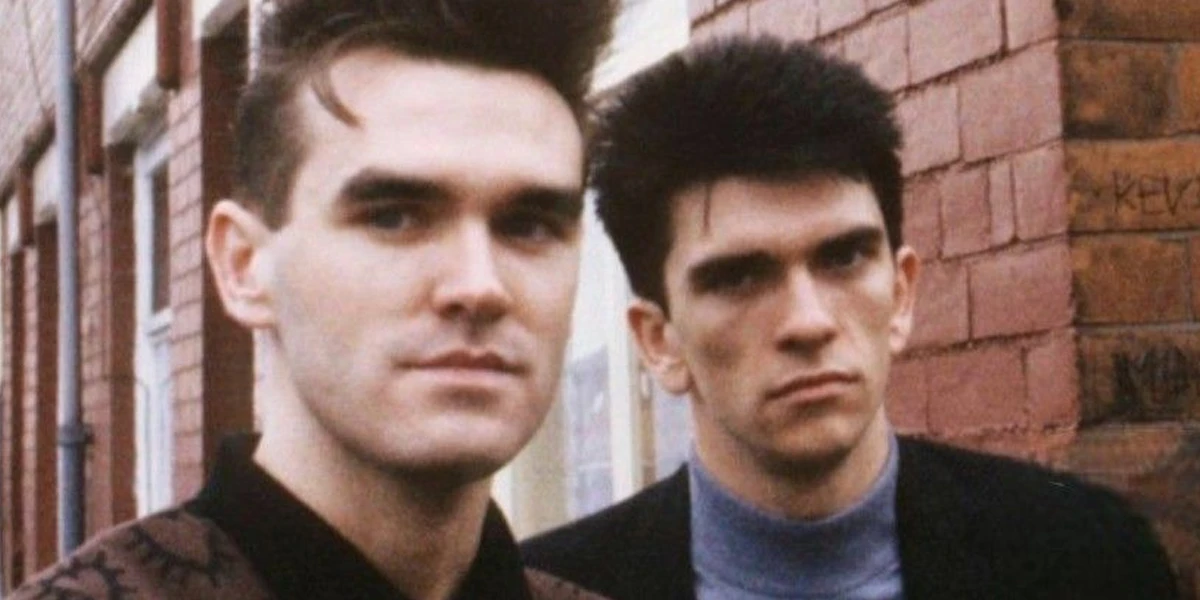
Mike Joyce’s Role in The Smiths Legacy
Joyce was not the brightest star in The Smiths, but his drumming was essential. He influenced later indie rock, from Oasis to Arctic Monkeys and Fontaines D.C. The Smiths’ live shows, with Joyce behind the drums, were legendary: The 1985 to 1986 tours sold out across the UK and US, where he kept the beat for Morrissey’s dancing with gladioli. Though the lawsuit overshadowed things, Joyce’s contributions were acknowledged in the Rock & Roll Hall of Fame (The Smiths inducted in 2014, despite Morrissey’s boycott).
Post-Smiths Career and 2025 Memoir
After the 1987 breakup, Joyce collaborated with Sinéad O’Connor on The Lion and the Cobra (1988), drumming on “I Want Your (Hands on Me).” Along with Rourke and Craig Gannon, they played on Morrissey’s solo singles “Interesting Drug” and “The Last of the Famous International Playboys” (1989).
In the 1990s, Joyce drummed for Buzzcocks on Trade Test Transmissions (1993), Public Image Limited, Julian Cope, P.P. Arnold, and Pete Wylie. He joined Moondog One with Aziz Ibrahim and Bonehead, releasing an album in 2005. In 2007, with Rourke, he produced the DVD Inside the Smiths, sharing behind-the-scenes stories.
Beyond music, Joyce became a DJ and broadcaster: Hosting a show on XS Manchester since 2015 (nominated for ARIA 2018 Best Specialist Music Show), guesting on BBC 6 Music, and The Coalition Chart Show on East Village Radio. He supports Back on Track charity in Manchester, running cooking programs with clients from his vegetable garden, and presenting on ITV Granada.
The memoir The Drums (New Modern, November 6, 2025) is the pinnacle: A “no-holds-barred” account, Joyce shares the feelings of being in The Smiths, from 1982 auditions to the 1987 breakup. He honors Marr as a “riff genius” and Rourke as a “blood brother,” answering “Where did it all go right?” (his running joke with Rourke). The book focuses on human insights rather than retelling history, with frank reflections on the lawsuit and why reunion is impossible after Rourke’s passing. Joyce reconnected with Marr at the 2023 memorial but has not spoken to Morrissey since 1992. Fans anticipate revelations about the “complex” Morrissey.
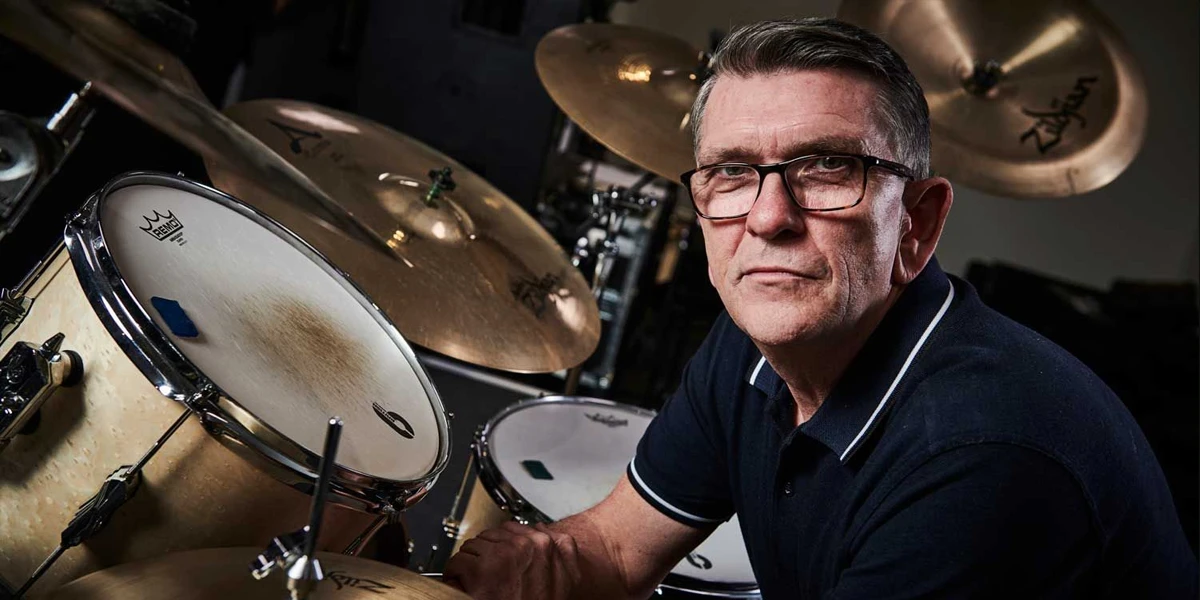
In 2025, Joyce continues touring with The Drums events (conversation shows), playing live with Vinny Peculiar and Bonehead. He remains the “biggest Smiths fan,” living modestly in Manchester, avoiding drama but proud of his legacy.
Frequently Asked Questions (FAQs)
- Who is Mike Joyce? Mike Joyce (born 1963 in Manchester) is the drummer for The Smiths from 1982 to 1987, known for his supportive drumming in the band’s indie rock sound. After The Smiths, he collaborated with Sinéad O’Connor, Buzzcocks, and worked as a radio DJ.
- Why Did Mike Joyce Sue Morrissey? In 1996, Joyce sued for fairer royalties (from 10% to 25%), as the 40:40:10:10 split was not clearly explained. He won £1 million in back pay plus 25% royalties, with the judge ruling Morrissey and Marr failed to prove the agreement.
- What Are Mike Joyce’s Standout Contributions with The Smiths? He drummed on hits like “How Soon Is Now?” (repeating groove), “This Charming Man” (punk energy), “Bigmouth Strikes Again” (high speed), and “The Boy with the Thorn in His Side” (subtle melancholy), all from the four studio albums.
- What Does Mike Joyce’s Memoir The Drums Cover? Releasing November 6, 2025, the book shares the “feel” of being in The Smiths, honoring bandmates, and reflecting on the lawsuit and reunion, focusing on human stories with humor and vulnerability rather than historical retelling.
- Will Mike Joyce Participate in a Smiths Reunion? No, he says reunion is “impossible” after Rourke’s 2023 death, though he reconnected with Marr. The feud with Morrissey persists, but Joyce holds no grudge and views the lawsuit as a “necessary step.”
Conclusion
From the understated beats that defined The Smiths’ sound to the legal feud that altered his life, Mike Joyce embodies the resilience of an indie artist who sought no spotlight yet left a profound legacy in pop culture. His journey, from 1980s hits to the 2025 memoir, reminds us that The Smiths’ music was more than Morrissey or Marr; it was the harmony of four members. If you’re passionate about The Smiths legacy, explore the collection of The Smiths graphic tees at Inkrare – designs inspired by album art and band spirit, celebrating Mike Joyce and classic hits.
