
No products in the cart.
Movies & TV Series
Why Star Wars Visions Is So Bad: 6 Major Flaws in Volumes 1–3 (2025 Update)
Why Star Wars Visions Is So Bad: 6 Major Flaws in Volumes 1–3 (2025 Update)
Star Wars: Visions burst onto Disney+ in 2021 as a bold experiment: an anthology of animated shorts reimagining the galaxy far, far away through the eyes of global anime studios. Free from canon constraints, it promised lightsaber duels with fluid anime flair, Force visions twisted into psychological horror, and fresh takes on Jedi lore. Critics hailed the visuals—Volume 1 snagged 96% on Rotten Tomatoes, Volume 2 a perfect 100%, and Volume 3 (released October 29, 2025) holds 100% based on 16 reviews. Yet, audience scores paint a different picture: 66% for Volume 1, 61% for Volume 2, and a preliminary 64% for Volume 3 (under 50 ratings). On Reddit’s r/StarWarsCantina and X (formerly Twitter), fans vent: “Why is Star Wars Visions so bad?” Threads dissect rushed plots, cringy dubs, and “fake lore” that feels more like fanfic than franchise extension. Why Star Wars Visions Is Bad isn’t just hype; it’s a symptom of untapped potential in a series that dazzles visually but stumbles narratively.
This 2025 deep dive unpacks six recurring flaws across all three volumes, drawing from verified reviews (IGN, Polygon, ScreenRant), audience data, and fan discussions. We’ll break down specific episodes, compare to hits like The Animatrix, and balance with pros; because amid the gripes, Visions delivers jaw-dropping moments like Trigger’s explosive fights. Data as of November 5, 2025; scores may shift as Volume 3 gains traction. If you’re a die-hard, grab your lightsaber tees and dive in; let’s Force-choke these issues.
Reason 1: Storytelling Often Strays Too Far from Star Wars Lore
At its core, Star Wars thrives on a mythic balance: the Force as a mystical energy binding light and dark, Jedi as guardians of peace, Sith as seductive tyrants. Visions’ non-canon freedom lets studios like Trigger or Kamikaze Douga remix this into wild anime fever dreams; think kyber crystals granting god-like powers or Stormtroopers unraveling in psychedelic horror. But for many fans, these “innovations” cross into “why Star Wars Visions is so bad” territory: lore drift that feels disrespectful rather than daring.
Take Volume 1’s “The Twins” (Studio Trigger, directed by Hiroyuki Imaishi). Twin siblings Karre and Am (voiced by Neil Patrick Harris and Alison Brie) wield Sith powers amplified by unstable kyber crystals, “stealing” Force energy in a way that shatters decades of established rules from The Phantom Menace to Revenge of the Sith. It’s visually stunning; crimson blades clashing amid a crumbling Star Destroyer; but narratively? It reduces the Force to a battery pack, ignoring its spiritual depth. Reddit user Thanatos I echoes this: “Suffering from ‘Jedi are evil’ tropes constantly… stories didn’t catch my attention.” Compared to The Animatrix‘s bold Matrix expansions (like “The Second Renaissance” recontextualizing AI without gutting lore), “The Twins” prioritizes shock over substance, leaving hardcore fans feeling betrayed.
“More girlboss stories that show how Jedi can be evil. Just like Disney Star Wars, it’s the opposite of what most fans want.” – Bill S, RT Audience Review (Volume 3)
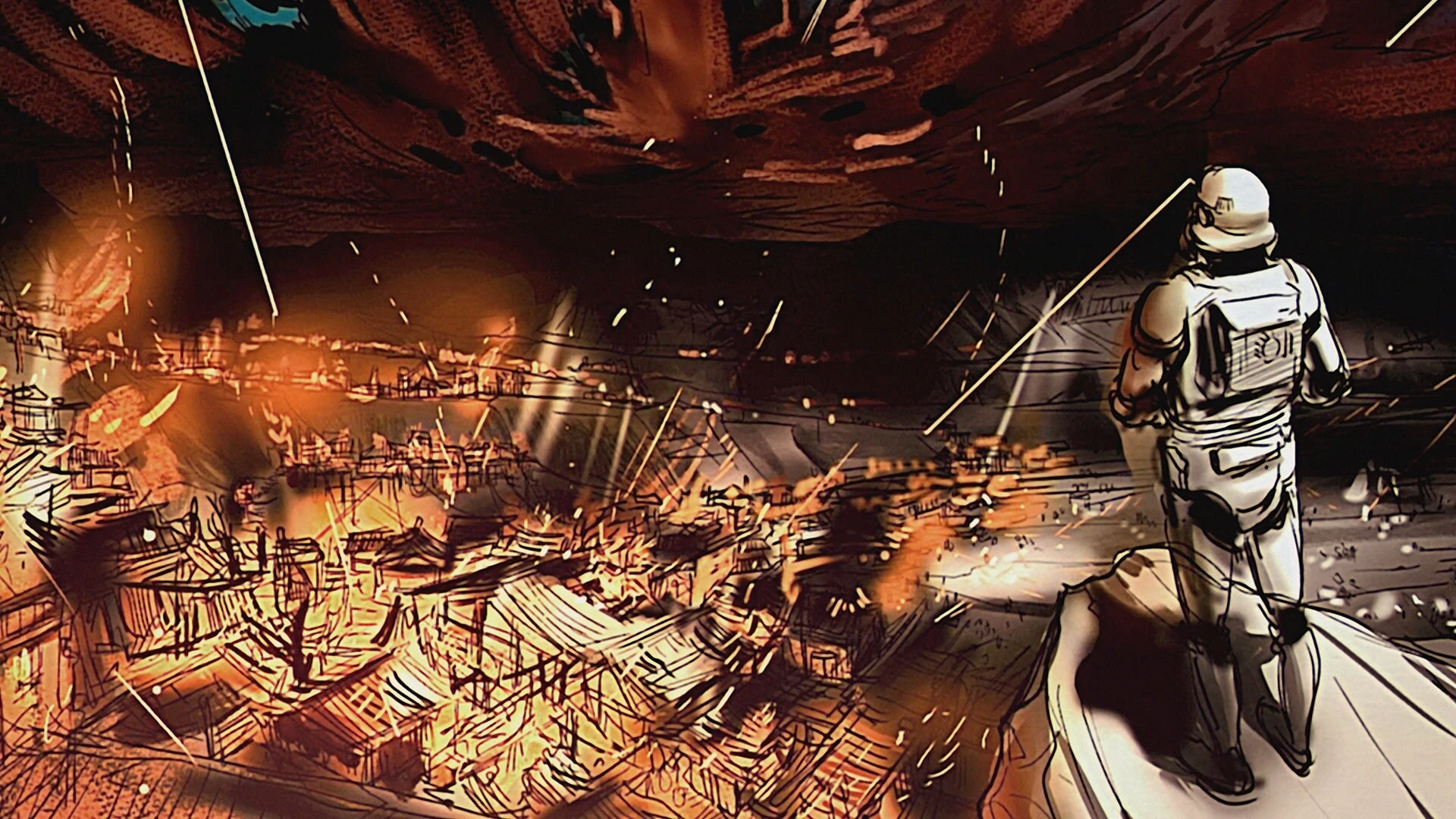
Volume 3 doubles down with “BLACK” (david production, directed by Shinya Ohira), a silent, jazz-fueled descent into a Stormtrooper’s fractured psyche. No dialogue, just abstract flashes of trauma; Imperial conditioning clashing with buried humanity; in a style evoking Akira‘s nightmarish bike chases. IGN calls it “real gold,” praising its experimental edge. But RT audience Christopher M gripes: “Fake lore from an anime perspective… very tame, weird, and pointless.” Why so bad? It diverges so far (Stormtroopers as tragic anti-heroes sans Clone Wars ties) that it feels unmoored, alienating viewers craving saga echoes. ScreenRant notes Volume 3’s sequels like “The Lost Ones” (Kinema Citrus, sequel to “The Village Bride”) try bridging this; F’s Force visions now haunt a rebellion; but even they amplify non-canon elements like “cursed” kyber, sparking X debates: “Visions so bad because it plays fast and loose with mythos.”
- Episode Breakdown: “The Twins” (V1): Highs; explosive sibling duel. Lows; Force as power-up ignores balance.
- “BLACK” (V3): Highs; surreal trooper horror. Lows; no ties to canon, feels isolated.
- “The Lost Ones” (V3): Highs; emotional sequel payoff. Lows; cursed artifacts stretch lore thin.
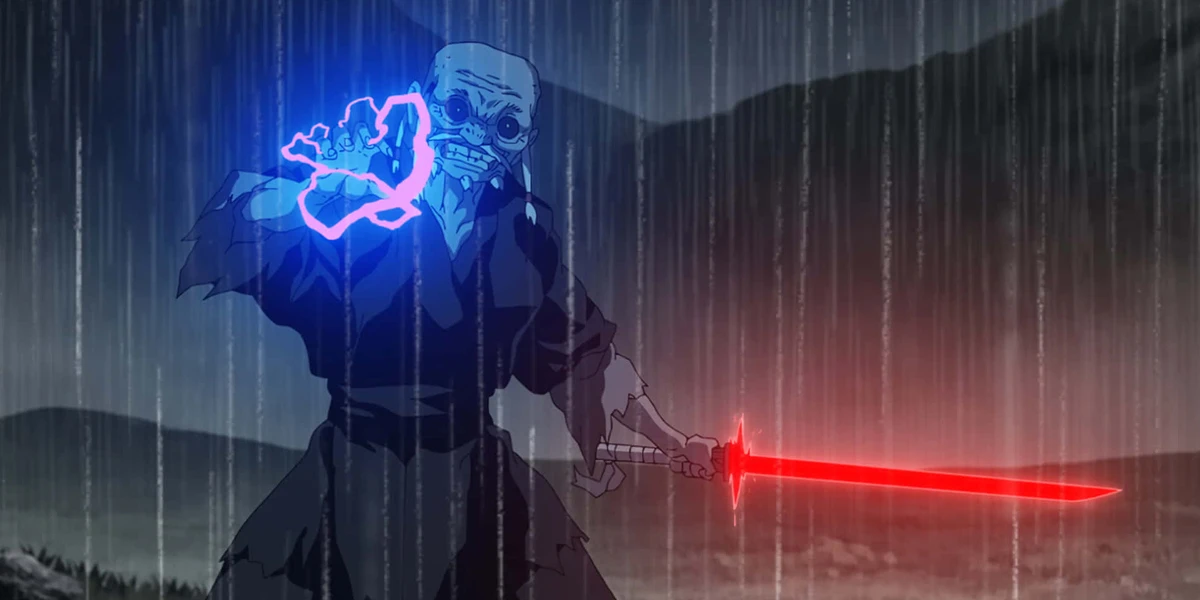
Pro to Balance: This drift enables gems like “The Duel: Payback” (Kamikaze Douga/ANIMA), expanding Ronin’s ronin saga into a three-way saber frenzy that’s pure adrenaline. Polygon notes how it repeats a “Marvel-style mistake” but highlights thrilling iconography in sequels like Payback. Limit: Without tighter Lucasfilm oversight, lore becomes a suggestion, not a strength; contributing to Metacritic’s user dip to 6.8 for Volume 1. In a franchise rebuilding post-Sequels, Visions could unify fans; instead, it divides them.
Reason 2: Rushed Pacing Leaves Stories Feeling Incomplete
Visions’ 15-20 minute format echoes Love, Death & Robots: bite-sized brilliance for busy viewers. But unlike Netflix’s hit (where 80% episodes land emotional punches), Visions often crams galaxy-spanning arcs into trailers, sacrificing depth for dazzle. This pacing plague; hasty intros, abrupt twists, unresolved threads; is a top “why Star Wars Visions is bad” complaint, with many reviews noting rushed narratives as a common issue.
Exhibit A: Volume 1’s “Tatooine Rhapsody” (Studio Colorido). Jay (Joseph Gordon-Levitt), a blind musician, uncovers a Force-imbued guitar amid a band heist gone wrong; Boba Fett cameos, blasters fly. It’s a 15-minute riot of neon Tatooine nights and rock riffs echoing Kubo and the Two Strings, but the plot sprints: Characters bond in seconds, twists (Jedi artifact reveal) hit without buildup. IGN’s 2021 review flagged it as “frustratingly shallow,” a sentiment revived in Volume 3’s “The Smuggler” (Trigger, directed by Masahiko Ōtsuka). Emma Myers voices a rogue hauling a royal fugitive (echoing A New Hope), but the chase; speeder mechs, Imperial pursuits; ends mid-climax, leaving alliances dangling. ScreenRant critiques: “Action outpaces arcs; feels like a teaser.”
Volume 3’s “Yuko’s Treasure” (Kinema Citrus) fares worse: A treasure hunt on a cursed planet devolves into Force visions and betrayals, but at 18 minutes, subplots (rival hunters, ancient artifact lore) evaporate unresolved. Fans on X lament: “Pacing so bad, it’s like they ran out of runtime mid-adventure.” Binge-watching amplifies this; Volume 2’s global mix (Aardman stop-motion in “I Am Your Mother”) added variety, but V3’s all-Japanese focus repeats “hero discovers power, fights Empire” beats, per IGN: “Novelty wears off; repetitive elements shine in binges.” Unlike Attack on Titan‘s deliberate builds, Visions prioritizes spectacle, dropping viewers post-cliffhanger.
“It was interesting… but a lot of them were very tame, weird, and pointless. Nice animation otherwise.” – Christopher M, RT Audience (V3)
- Episode Breakdown: “Tatooine Rhapsody” (V1): Highs; musical action fusion. Lows; bonds form too fast.
- “The Smuggler” (V3): Highs; high-stakes chase. Lows; unresolved betrayals.
- “Yuko’s Treasure” (V3): Highs; curse lore tease. Lows; subplots vanish abruptly.
Pro to Balance: Tight pacing shines in action like “The Bounty Hunters” (WIT Studio), a high-octane heist with seamless chases; The HoloFiles rates the volume 8.5/10 for thrill. Limit: Anthology curse; short runtime demands edits that gut empathy, fueling audience frustration (61% V2 low). Lucasfilm could pilot 25-minute pilots for spin-offs, but as is, it teases worlds without inhabiting them.
Reason 3: Subpar Voice Acting and Dubbing Kills Immersion
Celeb dubs were Visions’ hook: Gordon-Levitt rocking out, Brie as a Sith diva. But mismatched accents, flat deliveries, and cultural clashes turn lightsaber clashes into cringefests. Western audiences (default dub viewers) cite this in many IMDb complaints; far from the seamless VO in Arcane.
Volume 1’s “Tatooine Rhapsody” exemplifies: JGL’s Jay strains in high-energy raps, accents wobbling amid bounty hunter banter. It’s enthusiastic but unnatural; blending American twang with anime flair feels forced, like a cover band butchering Queen’s “Bohemian Rhapsody.” r/StarWarsCantina threads recommend subs: “Voice acting sounded like random DnD characters.” Volume 2’s “Screecher’s Reach” (Cartoon Saloon) worsens it; child voices (flat, scripted) undermine the horror of a cliff-dwelling clan vs. Empire, per IGN: “Falls flat in emotion.”
Volume 3 improves slightly with Simu Liu in “The Ninth Jedi: Child of Hope” (Production I.G), his chemistry elevating Kara’s journey alongside voices like Kimiko Glenn and Freddie Highmore; but accents clash in “The Bounty Hunters” (WIT), where ensemble banter during a heist feels dubbed-over awkward; Ronny Chieng voices the droid IV-A4 effectively. ScreenRant praises Highmore’s emotional wails in the volume, but notes: “Voice acting can sometimes be inconsequential.” X users echo: “Dubs so bad, subs only way to survive.” Why persistent? Japanese originals prioritize animation sync; English retakes lose nuance, unlike Castlevania‘s polished VO.
“Voice acting frankly sounded like random people putting on voices for their DnD characters.” – Reddit User, r/StarWarsCantina (V3 Thread)
- Episode Breakdown: “Tatooine Rhapsody” (V1): Highs; JGL energy. Lows; strained accents.
- “Screecher’s Reach” (V2): Highs; horror setup. Lows; flat kids’ VO.
- “The Ninth Jedi: Child of Hope” (V3): Highs; Liu/Glenn chemistry. Lows; clash in action scenes.
Pro to Balance: Standouts like George Takei as a mentor figure in “The Bird of Paradise” add iconic gravitas; perfect for surreal guidance. Limit: Accessibility barrier for dub-reliant viewers; bilingual tracks could fix, but as is, it tanks immersion (RT audience 64% V3).
Reason 4: Inconsistent Animation Creates a Patchwork Experience
Visions’ studio-hop is its USP: Seven Japanese teams in V1, nine global in V2, eight anime-focused in V3 (Kamikaze Douga, Trigger, WIT, etc.). It yields highs like Kamikaze’s ink-wash duels, but lows in cohesion; rigid 3D vs. fluid 2D, muddy effects vs. crisp lines; make binges jarring. Den of Geek called V1 a “patchwork quilt”; V3’s “most uneven” tag from IGN persists.
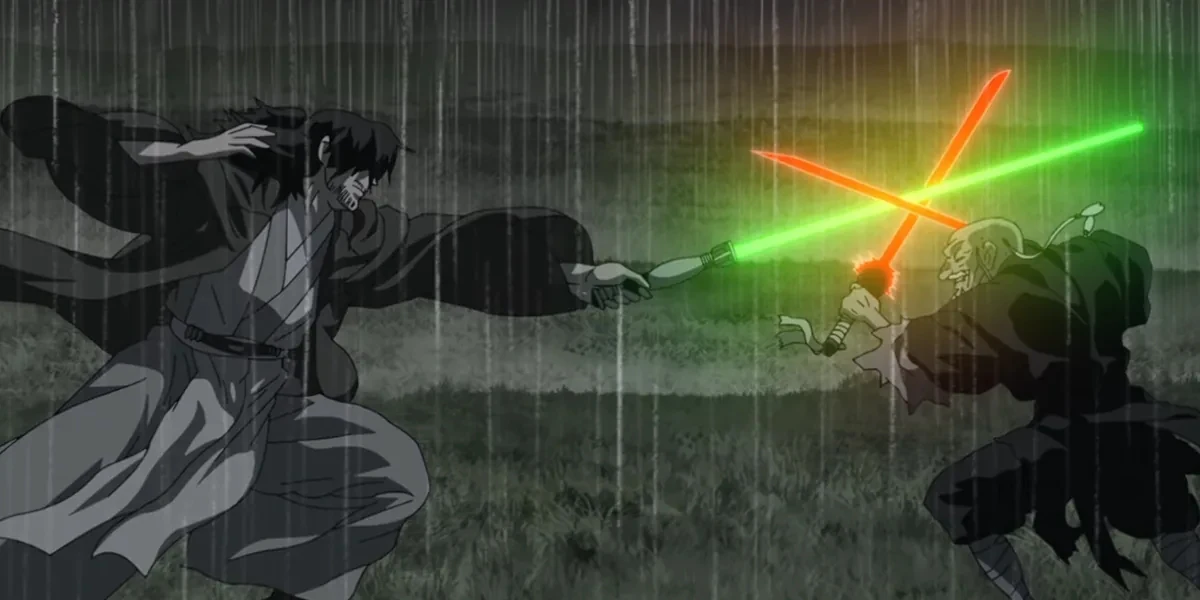
V1’s “The Duel” (Kamikaze Douga) masters sumi-e elegance; Ronin’s black-and-white wanderings explode into color-saber fury, evoking samurai epics. Contrast “The Ninth Jedi” (Production I.G): Stiff rigs and dim Force glows feel generic, like a PS4 cutscene. Volume 3’s “The Bird of Paradise” (Polygon Pictures) pushes 3DCG boundaries; a blinded Padawan’s cave trial in vibrant, game-like hues (Sonoya Mizuno shines); but Space.com dings it as “video game-like in a negative way.”
V2’s global flair (Aardman’s claymation) added charm, but V3’s anime-only return narrows variety; Kinema Citrus’ lush “The Lost Ones” (F’s haunted sequel) flows beautifully, yet next to david production’s abstract “BLACK” (psychedelic trooper meltdown), it whiplashes. Polygon: “Diversity fuels uniqueness, but uneven vs. V2.” Unlike Cyberpunk: Edgerunners‘ unified cyber-noir, Visions’ patchwork dilutes impact.
“Animation is not bad, but stories didn’t catch… Male characters must look feminine.” – Thanatos I, RT (V3)
- Episode Breakdown: “The Duel” (V1): Highs; ink artistry. Lows; style shift to color abrupt.
- “The Bird of Paradise” (V3): Highs; vibrant 3D trials. Lows; game-like rigidity.
- “BLACK” (V3): Highs; abstract flow. Lows; jarring vs. lush neighbors.
Pro to Balance: Peaks like “BLACK”‘s jazz-synced abstraction are franchise-best visuals; IGN 9/10 for innovation. Limit: No V2-level oversight; tighter style guides could unify without stifling.
Reason 5: Repetitive Tropes Stifle Creativity
Promised “reimagination,” Visions recycles “plucky orphan awakens Force” or “lone rogue vs. Empire” ad nauseam; V2’s “Journey to the Dark Head” (Studio Mir) is a masked warrior’s dark quest, echoing The Mandalorian sans Baby Yoda. IGN on V3: “Too much rote Jedi/Sith battles; revolving door of orphan heroes.” Safe fan-service over risks, per Metacritic trends (V3 75/100).
V3’s “The Bounty Hunters” (WIT Studio) typifies: A crew (diverse voices) hunts relics amid Imperial siege; fun mechs, but “been there” fatigue hits, like V1’s ronin tales. “The Smuggler” mirrors Solo‘s heist, with Myers’ rogue quipping through betrayals. Fans on X: “Visions so bad; plays it safe.” Vs. The Animatrix‘s AI apocalypses, Visions opts clichés.
“Half phenomenal, half decent to pretty bad… lowest a 3.5/10.” – X User @Sayngelic (V2, echoed V3)
- Episode Breakdown: “Journey to the Dark Head” (V2): Highs; masked mystery. Lows; Mando retread.
- “The Bounty Hunters” (V3): Highs; mech action. Lows; relic hunt cliché.
- “The Smuggler” (V3): Highs; quippy rogue. Lows; Solo echo without twist.
Pro: Twists in “The Duel: Payback” elevate tropes to poetry. Limit: Predictability caps engagement (61% V2 audience).
Reason 6: Volumes Fail to Evolve Meaningfully
V3 returns to anime roots post-V2 global experiment, with sequels teasing spin-offs (e.g., “The Ninth Jedi” series 2026). Critics love (100%), but audience stagnates at approx. 64% avg; pacing/VO issues repeat. Here’s the data:
| Volume | Year | Critics (RT) | Audience (RT) | Metacritic |
|---|---|---|---|---|
| 1 | 2021 | 96% (53 reviews) | 66% | 79/100 (15 critics) |
| 2 | 2023 | 100% | 61% | 88/100 (5 critics) |
| 3 | 2025 | 100% (16 reviews) | 64% (early, <50 ratings) | 75/100 (4 critics) |
V3’s “The Lost Ones” deepens F’s curse, but tropes linger; CGMagazine 7/10 for the volume. Pro: Sequels like “Payback” show growth. Limit: No bold fixes; audience trends hint fatigue.
- Volume Evolution: V1: Bold start, lore risks. V2: Global variety, but dips. V3: Anime return, sequels tease, yet repeats flaws.
Summary
Why Star Wars Visions Is So Bad boils down to lore liberties run amok, pacing pitfalls, dub disasters, style shocks, trope tiredness, and stalled progress; flaws dimming its 100% critic shine amid 64% audience reality. Yet, with “BLACK”‘s psychedelia and “Payback”‘s fury, it reminds us Star Wars animation could soar. Gear up with our Star Wars Graphic T-Shirts; lightsaber tees for true fans.
