
No products in the cart.
Music
Names Mentioned in Arctic Monkeys Songs: A Complete Lyrics Breakdown
Overview of Names Mentioned in Arctic Monkeys Songs
The table below summarizes prominent names from Arctic Monkeys’ lyrics, drawn from main albums and select b-sides up to The Car (2022). It includes the song, album, name type, a key excerpt, and brief context. These selections represent direct mentions; later albums like Tranquility Base Hotel & Casino (2018) and The Car shift toward abstract language with fewer explicit names.
| Name | Song | Album (Year) | Type | Lyrics Excerpt | Context |
|---|---|---|---|---|---|
| Arabella | Arabella | AM (2013) | Girls | “Arabella’s got a ’70s head / But she’s a modern lover” | Portrays a free-spirited woman in a nightclub setting, symbolizing allure and escapism. |
| Mardy | Mardy Bum | Whatever People Say I Am, That’s What I’m Not (2006) | Girls (Nickname) | “Well, now then, mardy bum / I’ve seen your frown” | Describes a moody partner in a lighthearted argument, using local slang for grumpiness. |
| Rio | I Bet You Look Good on the Dancefloor | Whatever People Say I Am, That’s What I’m Not (2006) | Girls | “Your name isn’t Rio, but I don’t care for sand” | Flirty denial of a Duran Duran reference, grounding the dancefloor fantasy in reality. |
| Brian | Brianstorm | Favourite Worst Nightmare (2007) | Boys | “Brian, top marks for not trying / So kind of you to bless us” | Satirizes a rival in a competitive, stormy social scene, highlighting jealousy. |
| Chun-Li | Chun Li’s Spinning Bird Kick | I Bet You Look Good on the Dancefloor single (2006) | Other (Fictional) | Instrumental track; title references the Street Fighter character | B-side evoking video game energy through its name and style. |
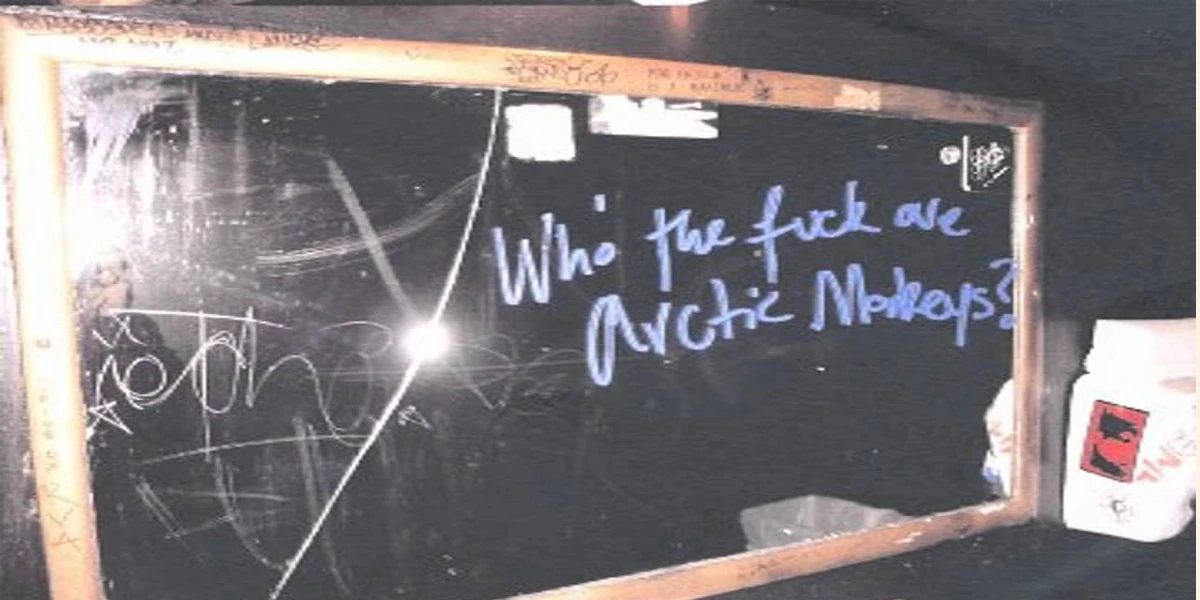
| Fiona | Cigarette Smoker Fiona | Who the Fuck Are Arctic Monkeys? EP (2006) | Girls | “Sat at the side of the pool at one of your houses / With wet white trousers on” | Portrays a hazy late-night party scene with Fiona as the central figure. |
| Mr Schwartz | Mr Schwartz | The Car (2022) | Boys | “Mr Schwartz is stayin’ strong for the crew / Wardrobe’s lint-rollin’ your velveteen suit” | Observes a producer-like figure in a reflective, industry-themed narrative. |
This overview captures seven key mentions, with girls’ names comprising about 50% and appearing mostly in relational contexts. Early albums favor concrete, playful uses, while mid-period tracks like “Arabella” add symbolic depth, and late examples like “Mr Schwartz” introduce isolated, observational references.
Names Mentioned in Arctic Monkeys Songs from Early Albums
The band’s debut era, spanning Whatever People Say I Am, That’s What I’m Not (2006) and Favourite Worst Nightmare (2007), features the most frequent and direct name mentions. These early lyrics draw from Sheffield’s nightlife and interpersonal drama, using names to create vivid, snapshot-like scenes. Girls’ names often evoke flirtation or tension, while boys’ references add rivalry. This period’s raw style makes names feel immediate and colloquial.
Names here serve as anchors for storytelling, contrasting the band’s abstract metaphors elsewhere. For instance, the debut album introduces chaotic energy through fictional and denied names, setting a tone of youthful observation. As seen in the overview table, these mentions cluster around social interactions, reflecting the albums’ themes of parties, arguments, and fleeting connections.
Girls Names in Early Lyrics
Girls’ names dominate early tracks, portraying women as central to romantic or social chaos. In “Mardy Bum” from the 2006 debut, “Mardy” functions as a nickname for a grumpy partner, drawn from Yorkshire dialect meaning sulky. The lyrics capture a bickering couple: “Well, now then, mardy bum / I’ve seen your frown / And it’s like looking down the barrel of a gun.” This affectionate jab highlights everyday relationship friction, making the song a relatable anthem for young love’s annoyances.
“I Bet You Look Good on the Dancefloor,” also from 2006, denies “Rio” in a nod to Duran Duran’s “Rio,” emphasizing authenticity amid club frenzy: “Your name isn’t Rio, but I don’t care for sand.” Rio represents an idealized escape, but the denial grounds the narrative in a real, sweaty dancefloor encounter. Similarly, the b-side “Cigarette Smoker Fiona” from the 2006 EP introduces Fiona in a smoky, late-night scene: “Sat at the side of the pool at one of your houses / With wet white trousers on / And worlds collide as the evening continues.” Fiona embodies a posh, enigmatic partygoer, adding intrigue to the track’s hazy atmosphere drawn from early demos.
These girls’ names (Mardy, Rio, Fiona) illustrate early Arctic Monkeys’ focus on flawed, vibrant female characters, often tied to nightlife or emotional push-pull. They humanize the band’s observational wit, turning abstract frustration into personal vignettes.
Boys and Other Names in Early Lyrics
Boys’ names appear in competitive or satirical contexts, underscoring male dynamics. “Brianstorm” from Favourite Worst Nightmare (2007) centers on “Brian” as a hapless rival: “Brian, top marks for not trying / So kind of you to bless us with your effortlessness / We’re grateful and so strangely comforted / And I wonder are you putting us on?” The song mocks Brian’s effortless charm in a whirlwind of jealousy, using the name to personify social posturing in the indie scene.
Fictional elements also appear around this era in the instrumental b-side “Chun Li’s Spinning Bird Kick” (2006), whose title nods to the Street Fighter video game character and reinforces the band’s early fascination with pop-culture references for energetic flair.
Early boys’ and other names like Brian and Chun-Li emphasize rivalry and fantasy, complementing the girls’ relational focus. This balance creates dynamic, character-driven lyrics that capture the band’s youthful edge.
Names Mentioned in Arctic Monkeys Songs from Mid-to-Late Albums
From Humbug (2009) through AM (2013), Tranquility Base Hotel & Casino (2018), and The Car (2022), name mentions become rarer and more symbolic. The shift reflects the band’s maturation: early directness gives way to evocative, less literal references. Girls’ names persist in themes of desire and nostalgia, while boys’ appearances are limited, appearing only occasionally in later works. As the overview table shows, mid-period highlights like “Arabella” stand out amid sparser usage.
Later albums prioritize mood over specificity, with names serving as focal points for emotional arcs rather than plot drivers. This evolution aligns with Arctic Monkeys’ sound, from garage rock urgency to cinematic polish, where a single name can evoke entire narratives.
Girls Names in Mature Themes
“Arabella” from AM (2013) is the era’s standout, opening with the line “Arabella’s got a ’70s head / But she’s a modern lover” and building her up as a ’70s-styled, almost sci-fi muse in a hazy club setting. The song paints Arabella as an enigmatic nightclub figure, blending attraction with unreality.
Though fewer in later works, explicit girls’ names remain rare on main albums like Humbug (2009) and Suck It and See (2011), opting for implied characters. In Tranquility Base Hotel & Casino (2018), no explicit girls’ names surface, shifting to sci-fi abstraction. The Car (2022) broadly follows suit, with songs like “Body Paint” and “Big Ideas” focusing more on mood and imagery than on clearly named female figures.
Mid-to-late girls’ names, primarily Arabella, symbolize idealized romance amid growing sophistication. They mark a transition from early chaos to contemplative longing, with Arabella’s allure contrasting Mardy’s grounded flaws.
Boys and Other Names in Later Lyrics
Boys’ names dwindle after 2007, with almost no prominent examples on Humbug or Suck It and See, and only the occasional later outlier like “Mr Schwartz” on The Car (2022): “Mr Schwartz is in town / But not for long.” This track observes a producer-like figure in a reflective, industry-themed narrative, using the name to personify behind-the-scenes pressures.
Other/fictional nods are absent in later albums, though cultural allusions persist indirectly. This scarcity underscores the band’s move toward universal emotions, where names once used for immediacy now yield to metaphor.
Tracks like “Arabella” (with its media ties, as explored in soundtrack placements) show how lingering name usage enhances thematic depth in mature work.
Patterns and Recurring Themes in Names Mentioned
Across their discography, names mentioned in Arctic Monkeys songs reveal consistent patterns: girls’ names (about 50% of instances) anchor romantic and social narratives, often portraying women as muses, conflicts, or ideals. Early examples like Mardy and Rio depict flawed, everyday figures in chaotic settings, while Arabella represents a polished fantasy. Boys’ names, like Brian and the late Mr Schwartz, introduce rivalry or observation, typically in social or professional spheres.
Fictional/other mentions, such as Chun-Li, inject energy and pop nods, appearing only in debut-era b-sides. The decline in names post-2013 correlates with thematic shifts: from literal Sheffield stories to abstract introspection in TBHC and The Car, where implied characters suffice. Girls’ names evolve from gritty (Mardy Bum’s arguments) to seductive (Arabella’s allure), mirroring the band’s musical growth.
- Relational focus: Most names tie to love or tension, humanizing abstract emotions.
- Evolution by era: Debut and early b-sides are packed with named characters; mid-period keeps a few symbolic standouts like “Arabella”; later albums use names much more sparingly, with isolated examples such as “Mr Schwartz”.
- Balance: Girls dominate romance, boys rivalry or reflection, others for whimsy—creating dynamic lyricism.
- Underrated angles: Lesser-known b-sides like “Cigarette Smoker Fiona” offer hidden gems; see underrated Arctic Monkeys songs for more.
These patterns enrich the lyrics’ intimacy, making names pivotal tools for storytelling. For deeper insights into the overall meanings and inspirations behind these lyrics, refer to our article about what Arctic Monkeys songs are really about.
Conclusion
Names mentioned in Arctic Monkeys songs, from Mardy’s frowns to Arabella’s ’70s head and Mr Schwartz’s fleeting presence, add personal texture to the band’s evolving sound, turning observations into vivid tales. Early directness gives way to subtlety, but these references consistently ground themes of desire, rivalry, and chaos across albums.
If these lyrics resonate and you want to express that connection through style, explore our Arctic Monkeys graphic tees for exclusive designs inspired by the band’s iconic tracks.
