
No products in the cart.
Anime
Sailor Moon Universe Explained: Lore, Kingdoms, and Cosmic Mythology
The Silver Millennium and the Architecture of Celestial Royalty
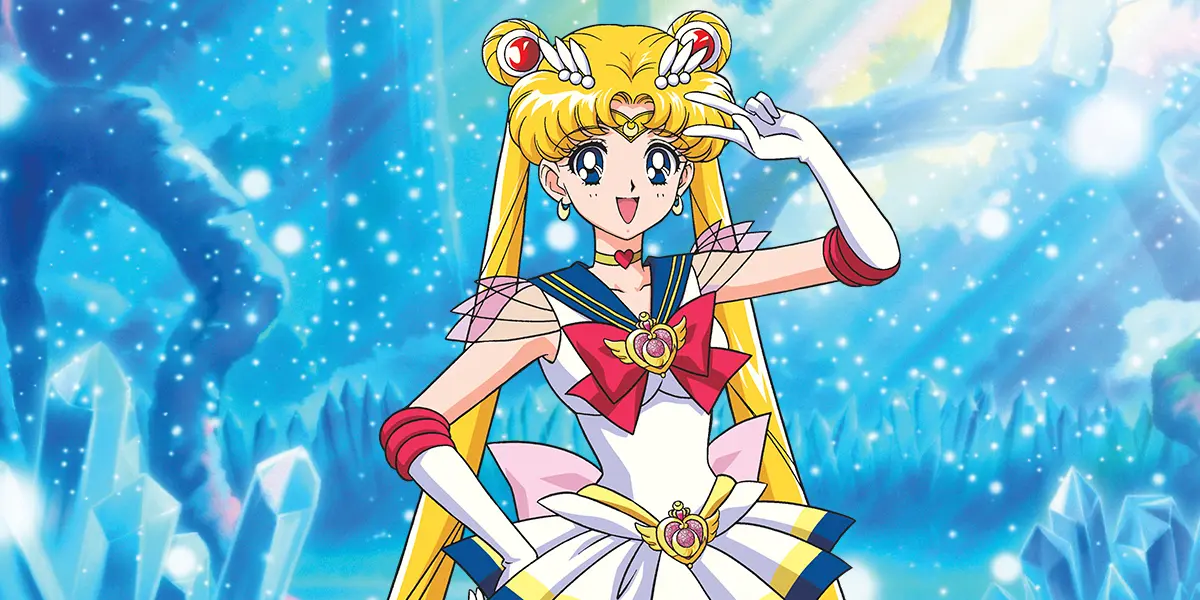
The Silver Millennium is not just a lost golden age. It is a cosmological blueprint. In the manga by Naoko Takeuchi, the Moon Kingdom exists as a literal extension of Queen Serenity’s power, sustained by the Silver Crystal and positioned as a stabilizing force in the solar system. This is not incidental worldbuilding. It frames the universe as monarchic, but not in a feudal sense. Authority is metaphysical. Rule is tied to resonance with a planetary essence.
Each guardian princess corresponds to her planet not merely by name but by mythic temperament. Mars burns with sacred fire, Jupiter embodies thunderous strength, Mercury channels fluid intelligence, Venus carries both love and martial discipline. The planetary courts mirror Greco Roman deities, but filtered through shōjo romanticism. The Moon stands apart. Unlike the Roman Luna or Greek Selene, Princess Serenity is less a goddess and more a vulnerable sovereign whose power is inseparable from empathy.
The 90s anime softens the aristocratic structure into something closer to fairy tale nostalgia. The manga is sharper. It implies hierarchy as cosmic law. Earth is not equal to the Moon. Endymion’s Golden Kingdom exists in tension with the Silver Millennium, suggesting an ancient polarity between solar and lunar power. This tension reflects mythic traditions where the sun symbolizes sovereignty and the moon governs hidden emotional tides.
The Silver Millennium falls not because it is weak, but because it attempts to deny conflict as a necessary cosmic force. Its destruction is less a tragedy and more a recalibration. The Moon Kingdom’s collapse establishes a fundamental rule of the Sailor Moon universe: harmony is never static. It must be reforged across lifetimes.
Reincarnation, Fragmented Memory, and the Burden of Selfhood
Reincarnation in Sailor Moon is not a narrative convenience. It is a metaphysical engine. The guardians are reborn without memory, but not without imprint. Their civilian identities are shaped by the same planetary dispositions that once defined their royal forms. Ami’s intellectual solitude, Rei’s spiritual intensity, Makoto’s protective physicality, Minako’s longing for romance and recognition, these are echoes, not accidents.
The manga treats memory as something almost violent when it returns. Awakening to a past life fractures the present. Usagi’s identity is destabilized when she learns she is Princess Serenity. The 90s anime frames this as destiny fulfilled. The manga frames it as existential rupture. Who are you when your life is revealed to be a repetition?
The Silver Crystal intensifies this theme. It responds to emotional extremity. Power is not unlocked by training but by grief, love, or desperation. That mechanism implies that identity in this universe is emotionally constructed. The stronger the feeling, the stronger the reality it can manifest. In this cosmology, the self is both fragile and immeasurably potent.
Reincarnation also disrupts linear time. The present is layered with past trauma and future inevitability. Sailor Pluto, guardian of time, exists as proof that chronology is secondary to duty. Her isolation at the Space Time Door emphasizes that knowledge of all timelines does not grant freedom. It imposes constraint.
The question underlying every awakening scene is not who were we, but are we allowed to become something different. The manga occasionally hints that deviation from destiny is possible, but only through extraordinary will. That tension between predestination and agency defines the emotional logic of the universe.
The Dark Kingdom and the Necessity of Cyclical Conflict
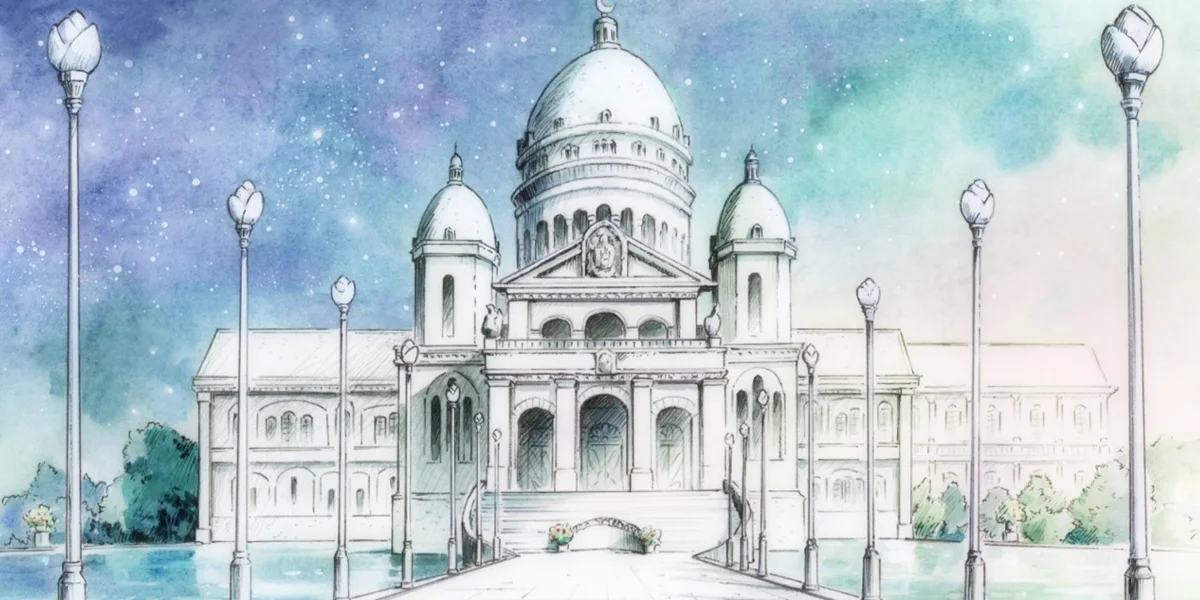
The Dark Kingdom is often reduced to a villainous faction, yet in structural terms it is the shadow twin of the Silver Millennium. Queen Beryl and Queen Metaria are not random threats. They represent suppressed desire, resentment, and ambition that the Moon Kingdom’s idealism could not contain.
In the manga, chaos is not external. It is primordial. Later arcs reveal Chaos as an origin force, the dark seed from which antagonists emerge across eras. This reframes the Dark Kingdom retroactively. It is not a singular rebellion. It is the first visible manifestation of a cosmic duality that cannot be erased.
The 90s anime tends to individualize antagonists, giving them melodramatic motivations. The manga abstracts them. Pharaoh 90, Mistress 9, Nehelenia, Galaxia, these figures are embodiments of cosmic imbalance. Their presence suggests that every luminous kingdom generates an equivalent abyss.
This cyclical structure resembles mythic apocalyptic traditions where destruction precedes renewal. However, Sailor Moon refuses nihilism. Each confrontation affirms that emotional connection can purify even the most corrupted force. The Silver Crystal does not annihilate evil in a permanent sense. It restores equilibrium, temporarily.
The Dark Kingdom arc establishes a pattern repeated in later arcs: infiltration, corruption, awakening, sacrifice, rebirth. This is less a storyline than a cosmological rhythm. The universe of Sailor Moon pulses between radiance and collapse. The guardians are not eradicators of darkness. They are mediators in an eternal oscillation.
Crystal Tokyo and the Paradox of Utopian Futurity
Crystal Tokyo complicates everything. The future ruled by Neo Queen Serenity appears utopian, luminous, eternal. Yet its existence implies that Usagi’s current struggles are steps toward an already secured destiny. If Crystal Tokyo is guaranteed, what is the meaning of present risk?
The manga leans into this paradox. Chibiusa arrives from a future that has already crystallized. Her very presence confirms that Usagi survives, ascends, and reigns. But that certainty does not prevent catastrophe. Black Moon Clan threatens the stability of the future itself, suggesting that utopia is not immune to decay.
Crystal Tokyo also reframes monarchy. Neo Queen Serenity is nearly divine, ageless, sustained indefinitely by the Silver Crystal. This echoes mythic immortal queens, but it also distances her from ordinary humanity. In some manga panels, she is serene to the point of abstraction. The emotional volatility of teenage Usagi becomes an almost sacred calm.
The 90s anime softens this transformation, preserving warmth. The manga allows it to feel alien. This raises a quiet question: does ascension cost something? When Usagi becomes an eternal sovereign, does she lose the fragile immediacy that once made her powerful?
Crystal Tokyo embodies a tension between stasis and growth. A perfect kingdom risks petrification. Yet Sailor Moon’s cosmology suggests that emotional evolution continues even in apparent eternity. The future is not static crystal but living light, vulnerable to distortion and requiring constant reaffirmation.
Cosmic Mythology and Planetary Symbolism
At its core, Sailor Moon is planetary mythology refracted through adolescence. Each guardian channels not just a celestial body but the symbolic weight assigned to that body across cultures. Mars carries priestess energy aligned with Shinto and Roman war deity Mars. Mercury blends intellect and fluid adaptability, echoing Hermes and Mercury as messengers and thinkers. Jupiter fuses Roman thunder god imagery with domestic protectiveness, a deliberate softening of patriarchal force into nurturing strength. Venus, historically associated with both love and victory, becomes the prototype soldier of love.
Saturn is the most striking. Sailor Saturn, tied to destruction and rebirth, mirrors the Roman Saturn and Greek Cronus, deities of time and harvest, often linked with endings that enable renewal. In the manga’s Infinity arc, her awakening is apocalyptic. She is not evil. She is necessary entropy.
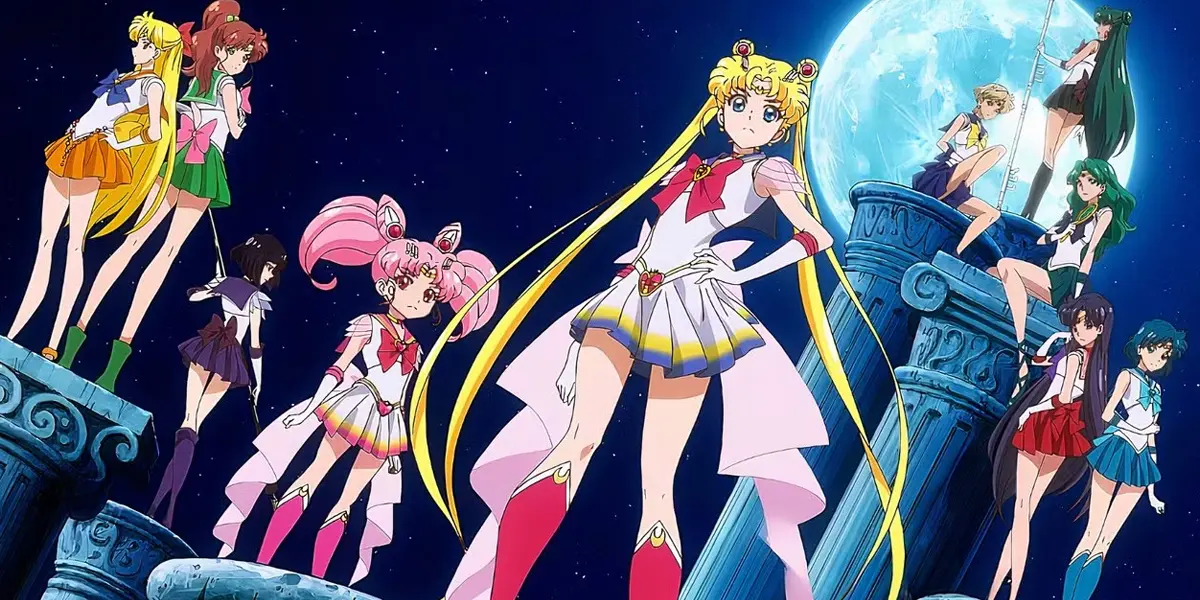
Uranus and Neptune complicate traditional gendered mythology. Sailor Uranus embodies sky god boldness, traditionally masculine, while Neptune carries oceanic intuition and refinement. Their partnership destabilizes rigid binaries, reflecting Takeuchi’s interest in fluid identity. Pluto, guardian of the underworld and time, retains the mythic solitude of Hades, but with sacrificial nobility.
Galaxia in the Stars arc expands the mythology beyond the solar system. She represents corrupted cosmic sovereignty, a warrior who absorbed Chaos to contain it and was consumed. Her arc reframes heroism as a spectrum rather than a binary. Even the most radiant guardian can fall.
The cosmology ultimately suggests that identity is planetary but not deterministic. Each sailor soldier channels an archetype, yet expresses it through personal emotion. Power is not granted by astronomy alone. It is activated by inner alignment. The Silver Crystal responds to love because, in this universe, love is not sentimental. It is the binding force of celestial order.
Across manga and anime, tonal differences shift emphasis, but the underlying structure remains consistent. The universe is monarchic yet emotionally democratic. Anyone can awaken if their heart resonates strongly enough. Cosmic authority is measured in empathy, not conquest.
Sailor Moon’s mythology endures because it treats adolescence as a cosmic threshold. Becoming oneself is framed as inheriting an ancient star. Memory is both gift and burden. Destiny is vast, but it does not erase vulnerability. The Moon Kingdom falls. The Dark Kingdom rises. Crystal Tokyo glitters on the horizon. And through every era, the same truth persists: emotional power is not metaphorical. It is the literal engine of the universe.
For many longtime fans, that cosmic mythology continues to live not only in memory but in everyday symbols, including pieces inspired by the Sailor Moon graphic shirt collection.
