
No products in the cart.
Anime
The Summer Hikaru Died Author: Mokumokuren and the Debut Journey
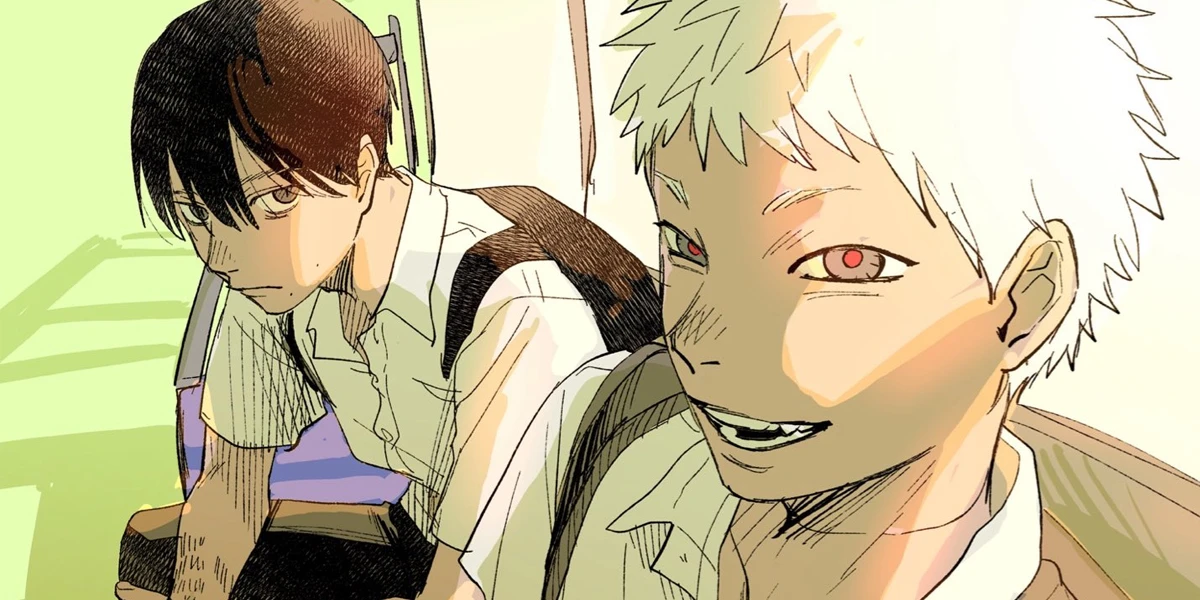
Introduction: Who Is Mokumokuren and Why This Debut Matters
Mokumokuren is a Japanese mangaka and the creator of the manga “Hikaru ga Shinda Natsu” (The Summer Hikaru Died), a work that blends horror, slice of life and coming of age themes with a clear queer presence. The series began serialization on Kadokawa Shoten’s web manga platform Young Ace Up on August 31, 2021, and quickly gained attention. The first collected volume was reprinted multiple times and had more than 200,000 copies in circulation within its first three months, making it one of the standout horror manga of recent years.
Since then, The Summer Hikaru Died has steadily built a reputation both in Japan and overseas. It topped the Kono Manga ga Sugoi! 2023 list for male readers, received nominations for several manga awards, was licensed in English by Yen Press, and later inspired a television anime by CygamesPictures that aired from July to September 2025 and streamed on Netflix in many regions.
This article focuses on Mokumokuren’s debut journey, from the first spark of the idea during exam preparation to posting artwork on Twitter and being approached by editors at Young Ace Up. It also looks at how the author balances horror and human emotion to create a manga that feels both haunting and quietly intimate. If you are not yet familiar with the series as a whole, you may want to read our overview of The Summer Hikaru Died anime before diving into the creative background of the author.
Where the Idea Came From: Teenage Years and the First Concept
According to interview summaries, Mokumokuren first came up with the core idea for The Summer Hikaru Died while studying for high school entrance exams. Worries about the future, feelings of isolation and the atmosphere of rural Japan all fed into a story about a friendship torn apart by death and the arrival of a strange, human shaped entity that takes over a body. At the heart of the manga are questions about loss, identity and what it means to stay attached to someone who is no longer the same person you once knew.
The rural setting in the manga is based on the area where Mokumokuren’s grandmother lives, a mountain town where houses are close together and neighbors freely visit each other’s homes. The author researched local speech patterns and built a fictional town in the mountains of Mie Prefecture, with some characters speaking in a Mie dialect. This choice makes the village in The Summer Hikaru Died feel both familiar and closed off. It helps explain why it is so difficult for the characters to leave and why the sense of “everyone knows everyone else” is so strong in the story.
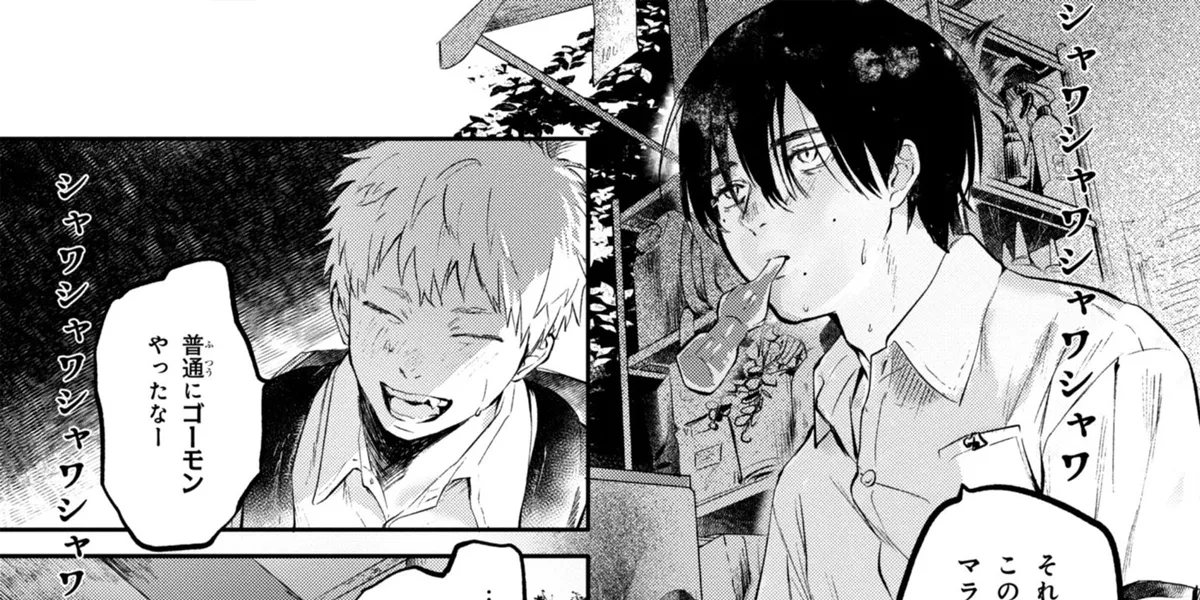
On the conceptual side, The Summer Hikaru Died follows a supernatural being that takes over Hikaru’s body and steps into his life. The situation naturally invites philosophical questions about replacement and identity. Critics and readers outside Japan have often compared the premise to the Swampman thought experiment, which imagines a perfect copy of a person that appears without a history. This comparison is a way for readers to talk about the manga’s themes of “not quite the original self” rather than an official statement of inspiration from the author.
Mokumokuren has mentioned being a fan of various action manga in magazines like Weekly Shonen Jump and Weekly Young Jump, especially Tokyo Ghoul, where horror is used to deepen character psychology instead of only delivering shocks. The author has also referred to the idea of the suspension bridge effect, where intense fear can heighten emotional bonds, as one of the tools behind the relationship between Yoshiki and “Hikaru”. The result is a story that uses horror to sharpen feelings of attachment, not to replace them.
From the beginning, The Summer Hikaru Died was not conceived as a simple monster story. It was built as a horror tale about how people face loss, about the loneliness of living in a quiet town and about emotions that live somewhere between friendship, love and obsession.
First Steps in the Career: Posting on Twitter and the Debut Chance
After finishing school, Mokumokuren began spending free time drawing scenes and images related to the idea that would become The Summer Hikaru Died. In January 2021, the author started posting illustrations on Twitter, showing two boys in a rural town, heavy summer air and unsettling details that did not quite fit peaceful everyday life. These images gradually drew attention from manga readers thanks to their distinct art style, the focus on cicadas and summer sound, and the constant low level tension in the compositions.
Posting regularly on Twitter created a living portfolio in public. Editors at Young Ace Up noticed Mokumokuren’s work and reached out with an invitation to turn the idea into a full serialization on Kadokawa’s digital web manga platform. The author accepted, and The Summer Hikaru Died officially began serialization on Young Ace Up on August 31, 2021.
The early chapters received positive reactions. The slow pacing, emphasis on silence and focus on small gestures between Yoshiki and “Hikaru” made the series stand out from many other horror manga that chase constant climaxes and jump scares. The small town setting, the use of Mie dialect for some characters and the difficulty the teens have in leaving their hometown all give the story a grounded feeling that draws on real rural life in Japan.
In 2022, the first collected volume was released and had to be reprinted several times. Within the first three months, more than 200,000 copies were in circulation. Over the following years the total number of copies in print climbed into the millions. At the same time, The Summer Hikaru Died appeared again and again in rankings and award nominations, establishing Mokumokuren as a notable new voice in horror and coming of age manga with queer themes.
Creative Process and Debut Challenges
In interviews about the series, Mokumokuren has repeatedly emphasized that the goal of The Summer Hikaru Died is not simply to scare readers. The real focus is on using horror to magnify very human feelings, such as the fear of losing someone important, the sense of drifting at the edge of adulthood and the instability of identity. The author deliberately keeps the explicit horror elements relatively restrained and instead highlights everyday scenes, quiet moments between the two leads and the way the village as a whole reacts to the strange presence around Hikaru.
In terms of genre labels, some early coverage referred to the manga as boys love, but Mokumokuren later clarified that the series was not serialized as a BL title. It has been consistently presented as coming of age horror that includes clear queer themes. The relationship between Yoshiki and “Hikaru” is meant to be read as queer, but the story does not follow classic BL formulas. The author has described it as a queer story without positioning it as a straightforward romance, which leaves room for different readers to focus on different parts of their bond. For a closer look at that dynamic, you can read our dedicated article on Hikaru and Yoshiki’s relationship.
Visually, Mokumokuren pays close attention to unusual onomatopoeia, especially the sound of cicadas and other summer noises. These sound effects often spill past panel borders and give the pages a dense, suffocating atmosphere. The rural backgrounds, with narrow roads, bushes and cramped house exteriors, are drawn in a grounded, realistic way so that supernatural moments feel sharply out of place when they occur.
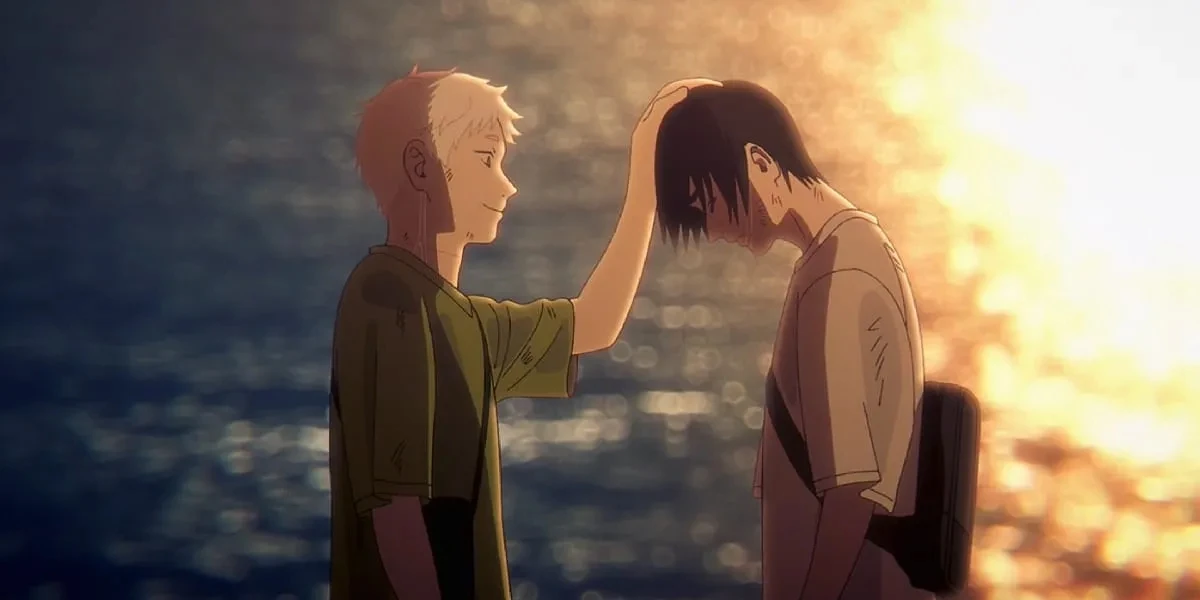
One of the ongoing challenges during the debut was maintaining balance. If the horror was too heavy, the emotional core could be buried. If the focus shifted too far toward teen drama, the suspense and unease would weaken. Working with editors, responding to reader reactions on the digital platform and adjusting the pacing chapter by chapter helped Mokumokuren refine a narrative rhythm that serves both sides. By 2023, the series had reached several milestones, including topping the Kono Manga ga Sugoi! 2023 list for male readers, earning nominations for awards such as the Next Manga Award, the Manga Taisho, the Tsutaya Comic Award and international honors like the Eisner Awards, and being licensed in English by Yen Press.
By the time the television anime adaptation made by CygamesPictures began airing on NNS and streaming on Netflix in 2025, seven volumes of the manga had already been released. That timing marked a new stage in the series’ life. A story that began as a private idea during exam prep and a handful of Twitter posts had grown into a multi platform property, appearing in book sales charts and seasonal anime lineups at the same time.
Conclusion: Mokumokuren’s Legacy After a Successful Debut
Mokumokuren’s debut with The Summer Hikaru Died shows how a personal idea, nurtured from school days and developed through shared artwork online, can become a widely recognized work. Instead of chasing shock oriented horror, the author chose a slow, quiet, lingering approach that centers on the relationship between Yoshiki and “Hikaru” and on the feeling of being stuck in a small town where every change is noticed and judged.
The most important part of Mokumokuren’s legacy so far does not lie only in sales numbers, awards or the anime adaptation. It lies in the way The Summer Hikaru Died opens up space for horror manga with queer themes. It is a story that is both frightening and sincere, about loving, losing and trying to accept someone who is no longer the person they used to be. With a careful storytelling style and a clear view of youth and its anxieties, Mokumokuren has created a work that readers and viewers are likely to keep discussing and revisiting long after they close the book or finish the last episode.
If you enjoy anime and manga that feel quietly unsettling and character driven, you can also explore the anime graphic t-shirts collection on Inkrare to find designs that let you carry some of your favorite stories into everyday life.
